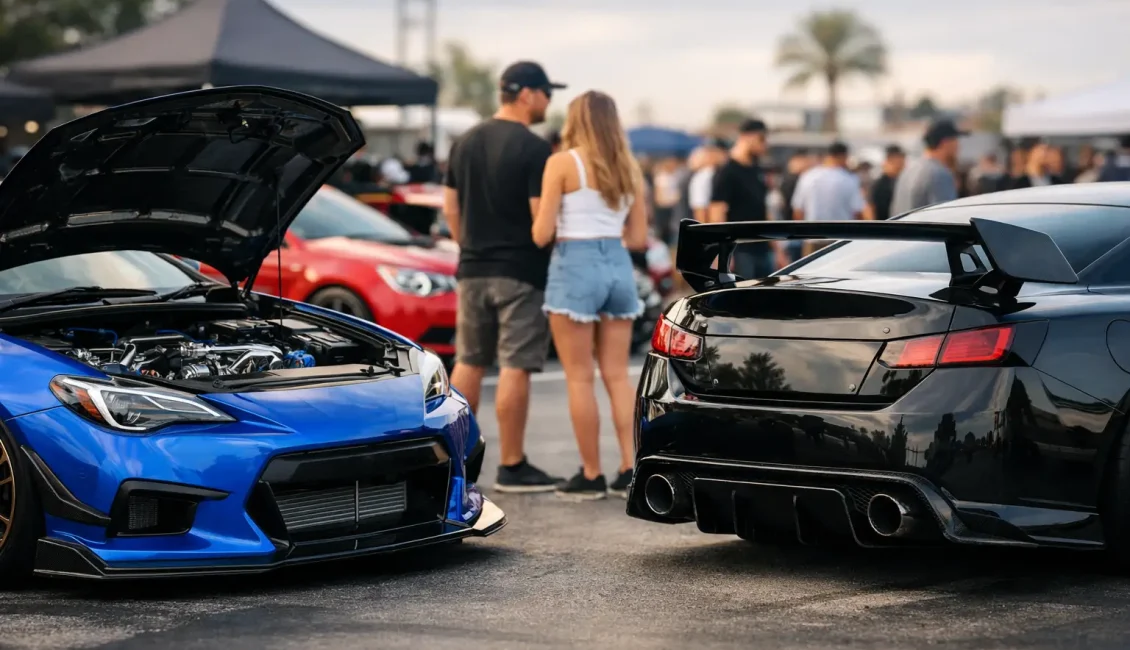
There is a moment at every good show when the noise, colour and craftsmanship all land at once. You turn a corner and spot a perfectly aired-out hatchback beside a wide-arch Japanese coupe, a beautifully trimmed interior catching the light while owners swap build stories with complete strangers. That is the modified car show experience at its best – not just rows of cars, but a live celebration of personality, engineering and community.
Modified cars have always brought their own energy to the wider motoring scene. They are personal, often bold, sometimes divisive, and almost always conversation starters. Unlike a showroom line-up, every build tells you something about the owner’s taste, priorities and patience. At a well-run event, that mix creates a day out that feels bigger than the sum of its parts.
Why the modified car show experience stands out
A classic concours can impress with originality and rarity. A supercar display can deliver theatre and headline appeal. Modified cars do something slightly different. They reward attention. The more time you spend looking, the more you notice – the custom fabrication tucked behind a grille, the wheel fitment dialled in to the millimetre, the retrimmed boot install, the engine bay that is cleaner than most kitchens.
That makes this side of the hobby especially engaging for visitors. You do not need to know every chassis code or tuning brand to enjoy it, but if you do, the day becomes even richer. One person sees stance and paint. Another sees hours of welding, wiring, mapping and problem-solving. Both get a proper show experience.
There is also a more social feel to modified displays when they are curated well. Owners are often close to their cars throughout the day, happy to talk through what has changed, what still needs finishing and what they would do differently next time. That honesty matters. Not every build is a six-figure masterpiece, and that is part of the appeal. You will see immaculate show cars, usable street builds and project cars that are still evolving.
The cars matter – but atmosphere matters just as much
The strongest modified events understand that visitors are not only coming to inspect paintwork and polished metal. They are coming for atmosphere. Good layout, strong variety, a lively trade area and a venue with real character all make a difference.
That is especially true when modified cars sit within a broader motoring event. Seeing custom builds alongside classics, performance cars and club displays gives the day more pace. Families can wander between different areas, serious enthusiasts can spend hours with the finer details, and casual visitors never feel boxed into a niche they do not fully know. It keeps the event open and approachable without watering down what makes modified culture special.
Venue choice plays a bigger role than many people realise. A modified hatchback or saloon can look completely different when set against a historic estate, a grand hall or a well-kept parkland setting. The contrast works brilliantly. It lifts the photography, improves the sense of occasion and turns a good meet into a proper day out.
What visitors want from a modified car show experience
For some, it is inspiration. They are planning their next set of wheels, suspension setup or audio upgrade and want to see ideas in the metal before spending money. Photos online can help, but they rarely tell the full story. At a live show, you can judge stance properly, compare finishes and ask owners what works in the real world.
For others, it is about discovery. A strong event should surprise people. That might mean a rare period-correct build, a carefully restored nineties icon, a modern turbo project with huge attention to detail, or a bike and car mix that adds variety across the showground. The best displays do not feel repetitive.
Comfort counts too. If a show is easy to access, clearly organised and packed with enough to do across the day, people stay longer and enjoy it more. Traders, food, passenger attractions, club areas and live features all support the main display. They are not distractions. They help build momentum and give the event a rhythm.
What exhibitors and car clubs bring to the day
Any memorable modified show relies on the people who bring the metal. Individual exhibitors give the event character, but clubs give it depth. A well-presented club stand tells a story about a scene, a model, a marque or even a particular era of styling. It also creates a welcoming point for visitors who want to ask questions without feeling they are interrupting someone’s day.
That club culture has long been one of the strengths of the UK scene. It turns ownership into participation. It encourages people to show, share ideas and travel to events together. It also raises standards. When clubs care about how they present themselves, the whole event looks better.
There is a useful balance to strike, though. Too much uniformity can make a display feel flat, while too little structure can make it feel scattered. The best organisers understand how to mix standout individual builds with cohesive club areas so the show has both spectacle and flow.
Modified car show experience for serious enthusiasts and casual visitors
One of the biggest misconceptions about modified events is that they only appeal to people already deep in the scene. In reality, a good modified car show experience works on several levels at once.
For serious enthusiasts, there is the technical side – fabrication quality, paint depth, wheel choice, engine swaps, interior work, period correctness or deliberate rule-breaking. They notice what has been done properly and what has been done for effect alone. They enjoy the detail, and they are usually the first to appreciate a build that takes a less obvious route.
For casual visitors, the appeal is more immediate. The cars are dramatic, colourful and varied. Children respond to the visual impact. Families enjoy the movement and atmosphere of a busy showground. People who would never call themselves petrolheads still stop for a good modified build because it looks like nothing else on the road.
That broad appeal is valuable. It helps keep events lively, commercial and sustainable, while still giving enthusiasts what they came for. The trick is not to talk down to either group.
Judging, presentation and the question of taste
Modified culture has always involved strong opinions. One person’s dream build is another person’s too much. That is part of the fun, but it does mean judging and show presentation need care.
A well-judged event rewards quality, originality and execution, not just noise or cost. A subtle OEM-plus build done beautifully can deserve as much attention as a full wide-body show car. Likewise, older styles and trends should not be dismissed simply because the scene has moved on. The best shows recognise that modified culture has eras, and each one has its own following.
Presentation matters as well. Cars need space to be seen properly. Signage helps. So does thoughtful placement that avoids cramming similar builds together. When visitors can follow a clear route and still stumble across something unexpected, the whole event feels stronger.
Why live shows still matter in a digital world
Social media is brilliant for keeping up with builds, but it can flatten everything into the same scroll. Every car gets the same screen size. Every reel fights for the same few seconds of attention. Live events restore context.
You see scale. You hear the engines. You notice how a wheel finish changes in natural light and how much work sits behind a smoothed bay or custom boot install. More than that, you get the human side of the hobby. Owners explain setbacks, changing plans and the realities of building a car over months or years. That is where respect for the scene is built.
It is also where new people get drawn in. A teenager seeing a dream build in person, a family enjoying a first motoring event, or a former owner reconnecting with a model they once had – those moments happen far more easily at a show than on a phone.
For event organisers, that is the opportunity. The aim is not simply to gather cars in one place. It is to create a setting where modified culture feels exciting, accessible and worth coming back for. That means good venues, strong display quality, a friendly welcome and enough variety to keep people talking on the drive home.
At its best, a modified car show experience gives everyone something to take away, whether that is inspiration for the next build, a conversation with a fellow enthusiast, or just the pleasure of spending a day around remarkable machines in a great setting. If a show can deliver that, people do not just attend once – they make it part of the calendar.