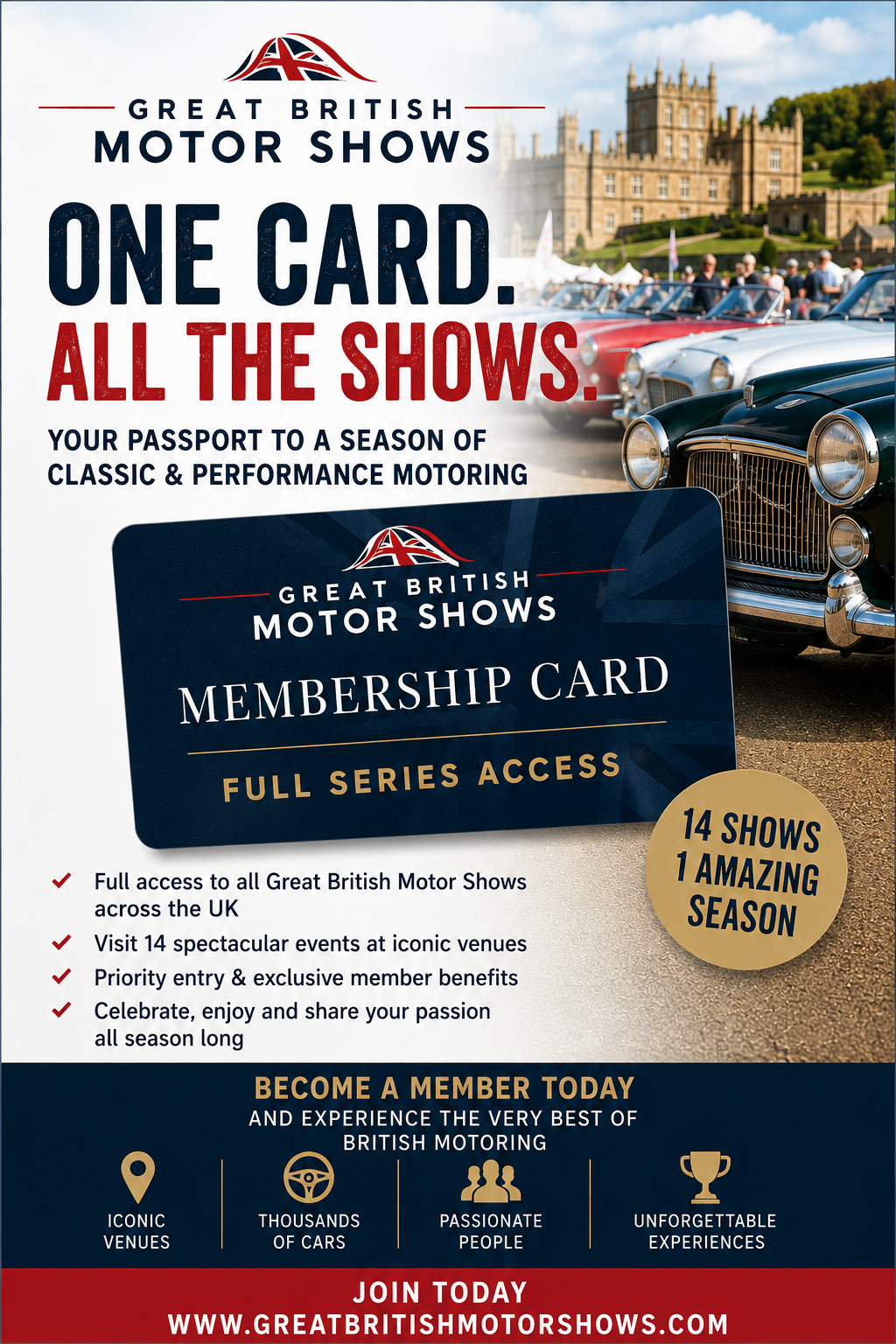

You can tell a lot about a show by the car park before you even reach the gate. A tidy line of classics arriving under their own steam, a family pointing out a supercar they have only seen on a phone screen, club members rolling in together after an early start – that is the real appeal of regional motor shows. They do not rely on hype alone. They work because they bring proper motoring culture within reach, in places people actually want to visit.
For enthusiasts across the UK, that matters more than ever. Not everyone wants to travel halfway across the country for one major event, pay city-centre prices, and spend the day fighting through crowds just to glimpse a handful of headline cars. A strong regional show offers something different. It gives visitors variety, atmosphere, and a sense of community, while still delivering the spectacle people come for.
What makes regional motor shows different
The best regional motor shows are not simply smaller versions of national exhibitions. They have their own pace and personality. Venue plays a huge part. Put classic cars on the lawns of a historic estate, performance machinery against the backdrop of a grand hall, or a packed club display in a well-known parkland setting, and the whole experience changes. It feels less like a trade hall and more like a proper day out.
That shift matters because motoring enthusiasm is not one-dimensional. Some visitors arrive to study paintwork, provenance, and period details. Others want the noise, the stance, the engineering, and the variety of modified and performance builds. Many just want a family-friendly event where there is always something to look at, photograph, and talk about. Regional shows tend to handle that mix well because they are built around live experience rather than a single headline launch.
They also feel more personal. Owners are often closer to their vehicles, clubs are easier to speak to, and traders are part of the atmosphere rather than hidden away in a distant corner. That creates a better balance between spectacle and access. You still get standout machinery, but you are not viewing it from three rows back behind a crowd with phones in the air.
Why regional motor shows suit today’s enthusiasts
There is a practical reason these events have staying power. They meet people where they are. A strong regional calendar means enthusiasts can choose events that fit their diary, their budget, and the sort of vehicles they actually care about. That sounds obvious, but it is one of the biggest strengths of the format.
For owners and clubs, local or regional access makes showing a vehicle far more realistic. A one-day trip to a quality venue is manageable. A long-distance haul, overnight stay, and expensive logistics can put people off, especially if they are bringing a classic car, a rare bike, or a carefully prepared modified build. The easier it is to attend, the broader and stronger the display tends to be.
For visitors, regional accessibility often means more freedom to come back again. Rather than pinning everything on one annual flagship event, they can build a season around several shows. One might be ideal for classics, another stronger on sports and supercars, another packed with club cars and trader stands. That variety keeps the community engaged throughout the year rather than for a single weekend.
There is also a welcome honesty to regional shows. They tend to focus less on industry theatre and more on the vehicles themselves. That does not mean they lack ambition. Quite the opposite. The strongest events know how to combine quality display cars, destination venues, exhibitor activity, and a lively crowd into something that feels substantial without losing its grassroots appeal.
The venue is part of the attraction
A great venue can elevate a motoring event before the first bonnet is lifted. Historic houses, country parks, halls, and estate grounds give a show its own identity. They add scale, atmosphere, and a sense of occasion that a generic site rarely matches.
This is especially true when the show covers several vehicle categories. Classic saloons, vintage motorcycles, modern performance cars, and supercars all bring different visual energy. Set against heritage architecture or expansive landscaped grounds, that variety becomes part of the experience rather than a logistical challenge.
It also broadens the audience. Serious enthusiasts may arrive for concours-worthy classics or rare performance machinery, but families and casual visitors are often drawn by the setting as much as the vehicle list. That wider appeal is good for the event and good for the culture around it. It keeps the atmosphere lively and helps introduce new people to the scene without making them feel out of place.
Of course, the venue alone is not enough. A beautiful site cannot rescue a weak display or poor event planning. Parking, layout, trader placement, catering, signage, and flow all matter. But when organisation is right, the venue becomes a major reason people remember the day and want to return the following year.
More than a car show
The phrase motor show can mean different things to different people, and that is part of the appeal. For some, it is about seeing rare and aspirational metal in person. For others, it is about meeting club members, sourcing parts, speaking to traders, or simply enjoying a relaxed day among like-minded people.
Regional events are particularly strong at delivering that broader mix. They create a space where collectors, restorers, weekend enthusiasts, photographers, families, and first-time visitors can all get something out of the day. A serious owner might spend an hour discussing originality and trim details with a club stand, while a younger visitor gets their first close-up look at a supercar they have only watched online.
That variety is not accidental. It is one of the reasons event-led brands such as Great British Motor Shows have built loyal followings around recurring regional calendars. People know they are not just turning up to stare at static rows of cars. They are arriving at a live gathering with movement, conversation, commerce, and atmosphere.
Traders and partners matter here too. A well-judged mix of automotive products, specialist services, memorabilia, lifestyle goods, and food stalls helps the show feel complete. Go too heavy on retail and the event loses focus. Offer too little and people drift off early. The right balance keeps energy high without turning the whole day into a shopping trip.
Why variety keeps the format strong
If there is one thing that keeps regional shows fresh, it is breadth. A single-marque event can be brilliant for the right audience, but mixed-category shows often create the strongest all-round day out. Classic British icons, retro hot hatches, American muscle, Japanese performance cars, custom bikes, prestige saloons, track-focused machines, and supercars each bring their own crowd and their own stories.
That range also reflects how enthusiasts actually enjoy the hobby. Most people appreciate more than one corner of the scene. A die-hard classic owner may still stop to admire a modern supercar. A performance fan may spend longer than expected studying an immaculate period restoration. Regional formats make those crossovers easy.
There are trade-offs, of course. A very broad event needs careful curation or it can feel scattered. Too much of one category can dominate. Too little structure can leave visitors unsure where to head first. The strongest shows avoid that by planning clear display zones, supporting clubs properly, and making sure every category feels intentional rather than squeezed in.
When that balance is right, the result is a show with genuine repeat appeal. You can attend for one reason and leave having discovered three more.
A stronger future for regional motor shows
The future of regional motor shows looks promising because the format suits the way enthusiasts want to spend their time. People still value seeing vehicles in the metal. They still want to hear engines, swap stories, compare builds, and enjoy a proper event atmosphere. Digital content can build interest, but it cannot replace walking through a showground packed with machinery and meeting the people behind it.
There is room for evolution. Better use of themed displays, stronger club engagement, smarter ticketing, and more destination-led presentation will all help. So will keeping the experience welcoming. The strongest events do not speak only to collectors or only to performance fans. They make space for all of them.
That is why regional shows continue to earn their place on the calendar. They are accessible without being ordinary, varied without losing focus, and ambitious without forgetting the enthusiast at the centre of it all. If you want a day that blends heritage, horsepower, community, and a great setting, this format still gets it right – and that is exactly why people keep coming back.