A performance car rarely needs help getting attention, but a considered display can turn a quick glance into a proper conversation. The best performance car display ideas do more than create a good photograph: they give every visitor a clear view of the car, protect the finish, and make the engineering, history or personality behind it feel worth stopping for.
At a busy motor show, cars compete with noise, colour, crowds and some seriously impressive neighbours. Whether you are bringing a modern supercar, a track-focused hot hatch, a cherished sports saloon or a rare homologation special, presentation is what helps your vehicle hold its own.
Start with the car’s character
Before buying flags, barriers or lighting, decide what the display should say. A stripped-out track car and a hand-finished grand tourer should not be presented in the same way. The first earns its space with purpose, components and competition attitude. The second may deserve a calmer setting that lets visitors appreciate its shape, paintwork and cabin.
Think about the detail that makes your car memorable. It could be an unusual factory specification, a carefully developed modified build, a race pedigree, a restoration story or a connection to a club. Use that point as the thread running through the display. A few well-chosen elements will look far stronger than a stand filled with unrelated props.
This is also where the venue matters. A performance car displayed on the lawns of a historic estate can benefit from a clean, restrained layout that lets the setting add atmosphere. In a hall or hardstanding show area, stronger signage and lighting may be needed to create the same sense of occasion.
Performance car display ideas that work at live shows
Give the car room to breathe
The simplest improvement is often the most overlooked: leave enough space around the vehicle. Visitors need room to step back and take in the profile, while photographers need an uncluttered angle. If a car is boxed in by chairs, bags, gazebos and spare wheels, its lines disappear.
Position the car so its strongest three-quarter view faces the main visitor flow. For many cars, that will mean showing the front corner and side profile rather than parking square-on. Check where people will approach from, then walk the route yourself before the event opens. A small change in angle can make a dramatic difference.
If the organiser permits it, low, discreet wheel stops or display markers can help maintain a respectful distance without making the car feel inaccessible. Avoid heavy-duty crowd-control equipment unless the value, rarity or venue rules demand it. The aim is theatre, not a fortress.
Use a clean surface beneath the wheels
A tailored display mat or smart flooring panel instantly separates a show car from an ordinary car park. Black, charcoal and dark grey work well for most performance cars because they let the paintwork take centre stage. A lighter surface can suit darker cars, but it will show tyre marks and muddy footprints more quickly at an outdoor event.
The material needs to be practical as well as smart. Choose something flat, non-slip and securely weighted or fixed at the edges. British weather is part of the show calendar, and a curled mat in a gust of wind is neither safe nor impressive. Bring a brush or cloth to keep it tidy through the day.
Tell the story with one excellent sign
A clear, well-designed information board gives enthusiasts a reason to linger and gives casual visitors a way into the car. Keep it readable from a sensible distance and write as though you are talking to someone who is interested but may not know the model.
Include the essentials: make, model, year, engine, power output and notable specification. Then add the part people cannot find from a brochure – why you own it, what has been done to it, where it has competed, or what makes it rare. If the car has a substantial build list, resist filling the board with every part number. Choose the upgrades that genuinely changed the car.
For a club stand, matching boards across several cars create a polished display while allowing each owner’s story to come through. Consistent fonts, sizes and colours make a line-up look organised without making it feel corporate.
Let the bonnet or boot do some talking
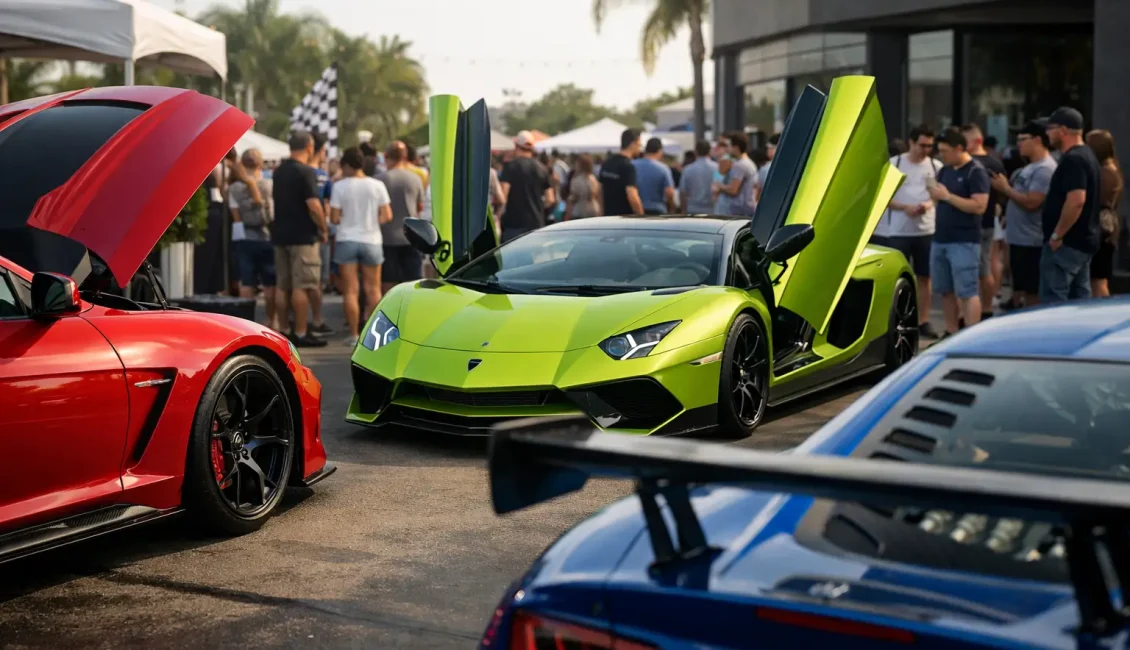
An open bonnet can be a genuine crowd-puller when there is something worth seeing beneath it: a beautifully detailed engine bay, period induction hardware, a high-spec turbo conversion, a hybrid system or motorsport preparation. It is particularly effective for visitors who enjoy the mechanical side as much as the bodywork.
There is a trade-off. An open bonnet changes the car’s silhouette and can obstruct views of the windscreen and roofline. On some modern cars, the engine bay is covered in plastic and adds little visually. If that is the case, keep it shut and focus attention on the exterior, wheels, brakes or interior instead.
Use a proper bonnet stay, keep the area spotless and never leave tools, cleaning products or loose personal items on display. If the boot is open to show a sound system, luggage set or competition equipment, apply the same rule: present it as a feature, not temporary storage.
Build a focused theme around a group of cars
A single car can make a statement. A group of three to six cars with a shared story can create a destination within the show. The theme might be turbocharged icons, British performance through the decades, road-legal track cars, V8 power, rally-bred machines or a particular marque’s fastest models.
The key is discipline. A themed display needs a visible connection, not simply several performance cars parked together. Arrange the vehicles by era, colour or model development so visitors can understand the journey at a glance. A small header board can explain the theme, with individual cards giving each car its moment.
For clubs, this approach is an effective way to welcome new members. It shows the breadth of ownership within the community and gives owners a natural reason to talk to visitors who are considering a similar car.
Add lighting only when it has a job to do
Lighting can make paintwork, wheels and carbon-fibre details look exceptional in an indoor venue or late-running event. Soft, neutral-white lighting is usually the safe choice. It keeps colours accurate and avoids turning a carefully prepared vehicle into something that looks like it belongs outside a nightclub.
Use lights to reveal a feature: the curve of a wing, an engine bay, a set of period alloy wheels or a display board. Avoid placing lamps where they create harsh reflections in paint or windscreens. For outdoor daytime shows, lighting is rarely worth the complication unless it is part of an approved enclosed display.
Any cables, batteries and power equipment must be managed safely and in line with event rules. A tidy display that works all day is better than an ambitious one that becomes a trip hazard by lunchtime.
Make detailing part of the display plan
Show preparation begins before arrival, but maintenance during the day matters just as much. Performance cars attract fingerprints around door handles, bonnet edges and glass. Dark paint can reveal dust within minutes, while polished wheels quickly lose their impact on a damp grass showground.
Pack a compact kit with microfibre cloths, glass cleaner, quick detailer, tyre dressing and a small bin for used materials. Keep it out of sight behind the stand or in a support vehicle. There is no need to endlessly polish the car in front of visitors, but a quick wipe before gates open and again later in the day keeps standards high.
Do not overdo tyre shine or heavily scented dressings. A clean, natural finish tends to photograph better and feels more appropriate for a car that is driven, enjoyed and proudly shown.
Create an interior moment
The cabin is where a performance car’s purpose becomes personal. Supportive seats, a manual gear lever, a roll cage, analogue dials or a carefully integrated modern infotainment system can all spark conversation. If safe and permitted, leave one window slightly open or display the car with the door opened at selected times, supervised by the owner.
This works especially well with cars that have unusual factory options or bespoke retrims. A simple note inviting visitors to look at a particular feature is often enough. It is better than allowing unrestricted access, which risks scuffs, loose trim and an awkward conversation when someone leans too far inside.
Keep the owner present and approachable
The most effective display feature is often the person who knows the car best. Visitors remember the owner who explains why a particular suspension set-up was chosen, what the car is like on a favourite road, or how long a restoration took. You do not need to deliver a sales pitch. Be available, be proud of the car and let genuine enthusiasm do the work.
If you are displaying with friends or a club, take turns walking around the event. An unattended car may be secure, but a stand with no one to speak to loses much of its energy. A welcoming presence also helps families and newer enthusiasts feel comfortable asking questions.
Practical details that protect the day
A great display should never compromise safety, security or show rules. Check the organiser’s guidance on arrival times, vehicle movement, fuel levels, gazebos, flags, generators, barriers and open bonnets before setting off. At Great British Motor Shows, the strongest displays are the ones that add to the spectacle while respecting the venue, fellow exhibitors and visitors.
Bring weather protection for outdoor events, but use it carefully. A cover is useful before opening or during a sudden shower, yet a car hidden beneath a cover is not contributing to the show. If rain is expected, consider a quick-dry protection product and keep a clean drying towel ready rather than building a display around a canopy that blocks sightlines.
Finally, do not mistake expense for impact. A spotless, thoughtfully positioned car with a great story will often attract more interest than a costly stand packed with gimmicks. Give visitors something real to notice, something useful to read and someone enthusiastic to talk to – then let the car do what it came to do.