
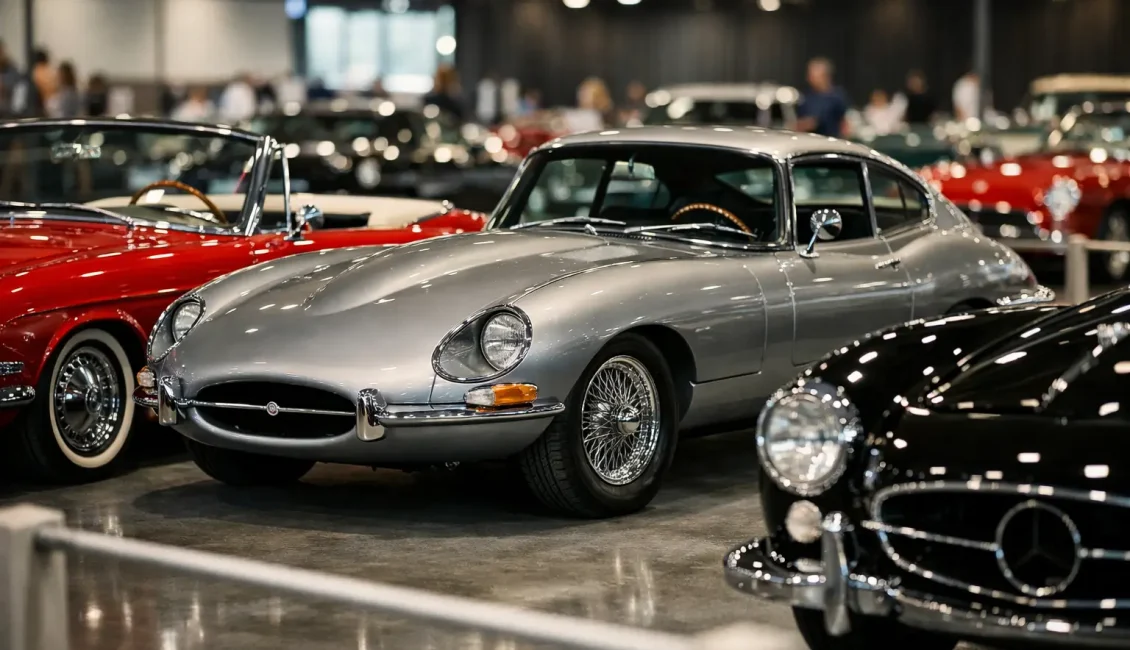
A polished stand can stop people in their tracks, but the best classic displays do more than look tidy. They tell a story in seconds. Whether you are presenting a concours-ready Jaguar, a much-loved Mini, or a club line-up of mixed British icons, this guide to classic car displays is about creating something visitors remember long after the engines have gone quiet.
At any good motor show, presentation matters almost as much as the metal itself. A rare car will always draw interest, but display quality is what turns a quick glance into a proper conversation. Done well, it gives the public a better experience, helps judges and photographers, and shows real respect for the car’s history.
What makes a classic car display work
The strongest displays have a clear point of view. Sometimes that means absolute originality, with period accessories and factory-correct details. Sometimes it means showing a restoration journey, complete with archive photos and notes on what was repaired, sourced, or remade. Both approaches work. What does not work is trying to do everything at once.
Visitors usually decide within moments whether to step closer. If the area is cluttered, if signage is confusing, or if half the interesting details are hidden, the display loses impact. A good set-up should feel inviting from a distance and rewarding up close.
There is also a balance to strike between theatre and restraint. A few thoughtful props can add depth, especially for cars from a particular era, but too much dressing can start to feel like a stage set that competes with the vehicle. The car should still be the headline act.
A guide to classic car displays starts with the story
Before you think about polish, ropes, boards or props, decide what you want people to understand about the vehicle. Is this car significant because it is rare, because it has been restored beautifully, because it has survived untouched, or because it has a personal family history? That decision shapes everything else.
If you are displaying as part of a club, it helps to agree a shared theme. You might group cars by decade, body style, competition history, or marque development. A line of unrelated vehicles can still attract attention, but a connected display gives visitors a reason to stop and compare. It also photographs better, which matters more than ever at busy public events.
For individual exhibitors, the story can be simple. A short sign explaining the model, year, ownership history and a standout detail is usually enough. People do not need a wall of text. They need a reason to care.
Layout matters more than most owners expect
Space at shows is rarely unlimited, so every placement decision counts. Cars need enough room to be appreciated from several angles, but not so much that the display looks sparse. If vehicles are too tightly packed, doors, wings and body lines disappear into one another. If they are spread too far apart without a visual link, the display can feel unfinished.
Think about sightlines first. The front three-quarter view is often the most flattering angle for classic cars, so try to position vehicles where visitors can naturally approach from that direction. Bonnet-up displays can work well for engine bays worth showing off, but they should be used deliberately. If every bonnet is raised, the line-up starts to look more like a workshop than a showcase.
Ground conditions matter too. On grass, a smart display can be spoiled by muddy mats, sinking stands or uneven wheel placement. On hardstanding, the danger is making the area feel cold and flat. Simple flooring, clean edging and a bit of symmetry can make a big difference without becoming fussy.
Signage should inform, not overwhelm
One of the easiest ways to improve a display is with better signage. It sounds obvious, but many excellent cars still sit behind windscreens with handwritten notes or no information at all. That is a missed opportunity.
Good signage should be easy to read at standing distance and quick to understand. Include the essentials – make, model, year, engine, and a short note on significance or ownership. If there is a strong restoration story or unusual provenance, add one or two lines more. Beyond that, less is often better.
Consistency helps if you are showing multiple cars. Matching boards or stands make the display feel organised and professional. If you are part of a club, a single style across the whole pitch lifts the standard instantly.
Cleanliness is not the same as over-preparation
Every exhibitor knows the urge to chase perfection. Microfibre cloth in one hand, detail spray in the other, checking every panel gap before the gates open. That care shows, and it should. But there is a point where over-preparation can strip away character.
A preserved car with a gentle patina should not be presented as if it has just left a modern bodyshop. Equally, a freshly restored example deserves to look crisp and complete. The right finish depends on the car and the story behind it.
What always matters is cleanliness in the details. Tyres should be dressed sensibly rather than glossy. Glass should be clear. Wheels, brightwork, dashboards and shut lines should be free from dust. Engine bays should be clean enough to inspect without turning them into something unreal. Visitors notice these things, and judges certainly do.
Props, period touches and club presentation
Props can elevate a display when they feel authentic. A period suitcase set in the boot of a grand tourer, a racing helmet beside a competition car, or archive photos mounted neatly behind a restoration project can add context without stealing attention. The key is relevance.
Random nostalgia pieces rarely help. If the prop does not connect clearly to the car, the era, or the owner’s story, it risks looking like filler. The same goes for flags, barriers and furniture. Keep the display open and welcoming rather than boxed off from the public.
Club displays often have more scope to create atmosphere. Branded gazebos, information tables and coordinated dress can all work, especially at larger outdoor events where visibility matters. Even then, the cars need to remain the stars. Too much kit around them can make the whole pitch feel busy.
The visitor experience is part of the display
A classic car show is not a private garage with an audience. It is a live event, and that changes how a display should function. Visitors need space to walk, pause, photograph and ask questions. If your set-up blocks movement or discourages conversation, it works against the spirit of the day.
Owners and club members make a huge difference here. A friendly greeting, a quick answer about restoration work, or a bit of background on the model can turn passive interest into real enthusiasm. That matters for younger visitors and families in particular. Today’s casual spectator is often tomorrow’s enthusiast.
It also helps to think about accessibility. Text should be legible. Pathways should remain clear. If there is something especially worth seeing, such as a rare dashboard detail or coachbuilder plaque, try not to position it where only the front row can glimpse it.
Guide to classic car displays for judging and awards
If awards are part of the event, presentation can influence first impressions even before a judge starts looking closely. That does not mean adding gimmicks. It means making the car easy to assess and understand.
Judges appreciate a display that is clean, well-labelled and logically arranged. If there is relevant documentation, present it neatly in a folder or on a stand rather than loose on a seat. If the car has unusual original features or restoration challenges that are not immediately obvious, mention them briefly on the signboard or be ready to explain them clearly.
That said, awards criteria vary. Some events value originality above all else. Others reward condition, rarity, public appeal or the quality of a restoration. It depends on the show. A display aimed at public vote may benefit from a stronger story and visual warmth, while a concours-style entry usually needs disciplined detail and authenticity.
Small touches that lift the whole stand
The difference between a decent display and a memorable one is often a series of small decisions. Straight wheels can sharpen the stance. A carefully placed mirror can reveal underbonnet or underbody details without awkward crouching. Hidden water bottles, tool bags and cleaning products keep the area looking considered rather than makeshift.
Weather planning matters as well, especially in the UK. A spare cover, discreet umbrella storage and quick-dry cloths are practical without spoiling the look. If conditions turn, a well-managed display still feels calm and professional.
And if you are attending a larger regional event, think beyond your own pitch. The strongest showgrounds are built by exhibitors who understand they are part of a wider spectacle. A quality display adds to the atmosphere for everyone, which is exactly why major event calendars continue to attract loyal clubs, collectors and weekend visitors year after year.
The best classic car displays do not rely on size, value or rarity alone. They show care, pride and a real sense of occasion. Get the story right, present the car with confidence, and give people a reason to linger – that is usually what they remember most.