A show field tells you a lot in the first five minutes. Some vehicles stop people in their tracks before the engine has even cooled. Others are beautifully prepared yet somehow disappear into the background. When people talk about the best vehicles for show display, they are really talking about presence – the kind that suits the venue, rewards a closer look and gives visitors a reason to linger.
At a live motor show, display value is not always the same as market value. A six-figure supercar will pull a crowd, of course, but so can a perfectly judged classic Ford, a period-correct motorcycle or a modified Japanese build with real attention to detail. The strongest display vehicles combine condition, character and context. They fit the event, they photograph well, and they spark conversation from every angle.
What makes the best vehicles for show display?
The answer depends on the sort of event, the venue and the audience walking through the gates. A heritage estate packed with chrome and coachwork calls for something different from a performance-led show with supercars, tuned builds and modern exotica. That is why the best display choices are not always the rarest or most expensive. They are the ones that feel right for the setting and offer genuine visual interest.
Condition matters, but it is not just about concours perfection. Honest patina can be a major draw if the vehicle has presence and a story behind it. Equally, a fresh restoration with outstanding paint and trim will always earn attention, especially in natural light across a stately home lawn or showground. Visitors respond to vehicles that feel complete. Wheels, stance, interior, engine bay and presentation all need to work together.
There is also the practical side. A display vehicle has to arrive reliably, sit well for the day and hold up under scrutiny. Something dramatic but difficult can still be worth bringing, though it helps to be realistic. A machine that spends half the morning with its bonnet up for the wrong reasons rarely creates the impression the owner intended.
Classic cars still lead the field
If there is one category that consistently delivers, it is classic cars. They have heritage, shape and instant recognition, and they appeal across generations. A properly presented Jaguar E-Type, Mini Cooper, Ford Escort Mexico or Triumph Stag has built-in crowd power because people bring their own memories to it. Some remember owning one. Some wanted one. Some simply love the way they look.
The best classics for display are often the ones with a clear identity. Period-correct examples tend to do especially well because they feel authentic rather than overworked. Factory colours, original trim and era-appropriate details help a vehicle stand out for the right reasons. That said, a tastefully upgraded classic can be just as effective if the work is coherent and finished to a high standard.
Venue matters here. Historic sites and country house settings elevate classic metal brilliantly. The surroundings do part of the storytelling, which is why these cars so often shine at outdoor events. When the light catches polished chrome and deep paintwork, a classic earns attention without trying too hard.
Performance and supercars bring instant spectacle
There is no getting around it – performance cars and supercars create theatre. Low, wide and unmistakably purposeful, they have the sort of visual impact that can define a display area from a distance. Whether it is a Ferrari, Lamborghini, McLaren or Porsche GT product, these machines generate excitement before a visitor has read a single information card.
They are among the best vehicles for show display when the event wants energy and footfall. Families stop for photos. Enthusiasts start talking specs. Younger visitors often make a beeline for them first. The trade-off is that supercars are expected to impress, so presentation has to be sharp. If the car is not immaculate, people notice.
It also helps if the lineup has variety. One supercar is exciting. A row of similar modern exotica can blur together unless there is contrast in colour, era or rarity. Mixing analogue performance icons with newer machinery often creates a stronger display than grouping every current model in one place.
Modified builds win attention through detail
Modified cars can be among the biggest crowd magnets at any show because they reward a closer look. A visitor might first notice the stance or wheel fitment, then spot the brake setup, fabrication, retrimmed cabin or carefully shaved bodywork. The best builds tell a story of effort and taste, not simply spending.
This is where balance matters most. Wild body kits, huge power figures and one-off paint can certainly pull people in, but the strongest display cars usually have a theme that runs throughout. Japanese performance models, fast Fords, German saloons and retro restomods all work brilliantly when every choice feels deliberate.
Modified vehicles also bring a more social energy to a show. Owners love talking through the build, and visitors enjoy hearing what has changed and why. That interaction is part of the display value. It turns a static exhibit into something more memorable, particularly for enthusiasts who want ideas for their own projects.
Motorcycles deserve more space in the conversation
Cars tend to dominate the headlines, but motorcycles can be superb display pieces. They occupy less space, reveal more of their engineering at a glance and often carry a strong visual identity whether they are classic British bikes, custom bobbers, café racers or modern superbikes.
A well-presented motorcycle display can stop people just as effectively as a car lineup, especially when there is variety in style and era. The simplicity of a vintage Norton, the clean aggression of a modern Ducati or the craft behind a hand-built custom all have their own appeal. Bikes are also brilliant for mixed-audience events because even casual visitors can appreciate the shape, polish and detail.
For exhibitors, motorcycles offer another advantage. They can create a strong display presence without the logistical demands of a larger vehicle. If the aim is to showcase engineering, heritage and craftsmanship in a compact footprint, bikes deserve serious consideration.
Rare everyday heroes often outperform expected stars
Some of the best reactions at shows go to vehicles that were once common but are now seldom seen in great condition. A tidy Nova SR, Peugeot 205 GTI, Sierra Sapphire, Metro GTa or original-spec hot hatch can attract a remarkably warm response because it connects with real motoring memories. Visitors are drawn to what feels familiar but has become scarce.
These cars work because they cut through with nostalgia and surprise. They may not be exotic, but that is part of their charm. When one is preserved properly, it stands out more than people expect. It reminds visitors that show appeal is not measured purely by badge prestige.
The same goes for commercial and utility vehicles with character. A restored van, period pickup or classic Land Rover can add depth to a display area, especially when the event celebrates motoring culture in its broadest sense.
How to choose the right vehicle for the right show
The smartest exhibitors match the vehicle to the event rather than assuming one car suits every field. A formal venue with manicured grounds usually favours classics, prestige cars and beautifully finished restorations. A more performance-led event can support louder colours, aggressive aero and modern horsepower. A family-friendly regional show benefits from variety, with vehicles that children recognise and enthusiasts respect.
Think about viewing distance too. Some vehicles make their impact from thirty yards away. Others need close inspection to be fully appreciated. Ideally, a display lineup should have both. Big visual statements bring people in, while intricate detail gives them a reason to stay.
Presentation around the vehicle also helps. Clean glass, dressed tyres, tidy interiors and a properly detailed engine bay all make a difference. Information boards can be useful if they add context without overdoing it. Visitors like to know what they are looking at, especially with rare models, unusual histories or major custom work.
The real winner is variety with quality
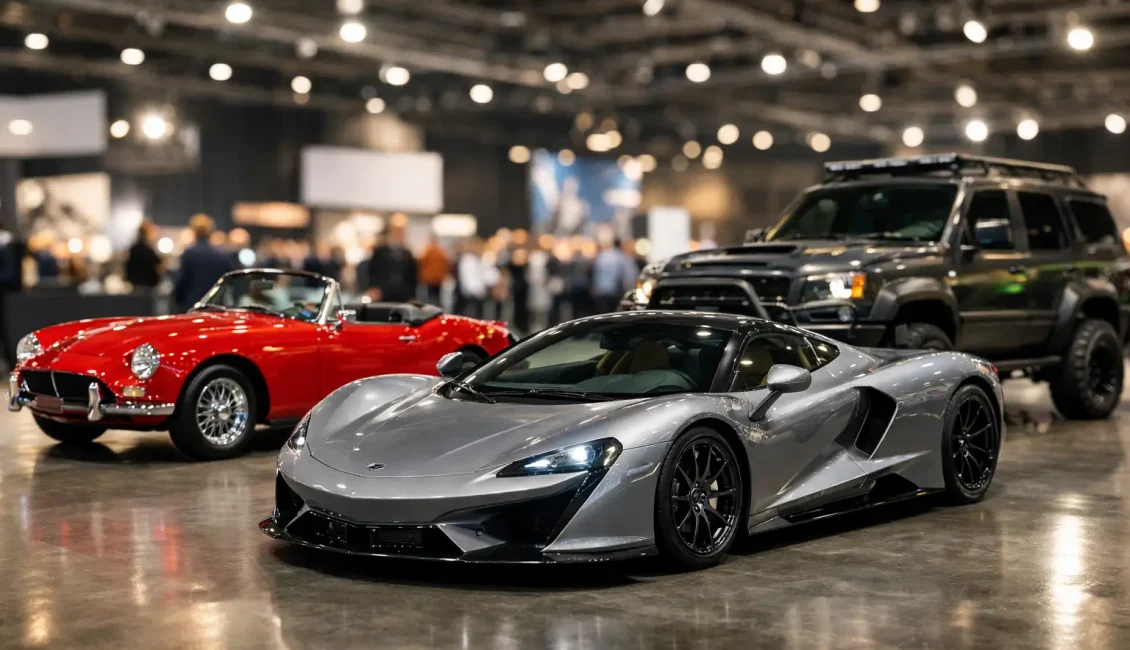
If you are curating a display rather than entering a single vehicle, the strongest approach is nearly always a mix. Heritage, performance, modified culture and two-wheeled interest can coexist brilliantly when the standard is high. A show field feels alive when every row offers something different.
That is part of what makes a well-run event memorable. The crowd wants headline cars, but it also wants discovery. One minute it is admiring a beautifully restored MG, the next it is peering into the engine bay of a turbocharged Japanese coupe or stopping to photograph a rare motorcycle in immaculate order. Great British Motor Shows thrives on that mix because it reflects how broad and passionate the UK motoring scene really is.
If you are deciding what to bring to a show, do not chase attention in the obvious way. Bring the vehicle that is best prepared, best suited to the setting and most likely to make people pause for a second look. That is usually where the real display magic happens.