Turning up to a show with a freshly polished car is only half the job. A proper car show exhibitor checklist is what separates a relaxed, enjoyable day from a frantic morning spent hunting for a microfibre cloth, a printed pass, or the right tyre dressing while the gates are already open.
Whether you are bringing a concours-ready classic, a modified weekend toy, a club display car or a rare performance machine, the basics matter. Great vehicles always draw attention, but smart preparation is what helps you arrive on time, display well, and enjoy the event rather than firefight through it.
Why a car show exhibitor checklist matters
Every event has its own rhythm. Some venues are historic estates with long access roads and strict arrival windows. Others are busy regional sites where club stands, traders and public parking all need to move smoothly from first light. If you miss a document, forget a cleaning kit or arrive without a plan for the weather, it can affect the whole experience.
That is why a checklist is not about being overly fussy. It is about protecting the effort you have already put into the car. If you have spent weeks detailing paintwork, refurbishing trim or finishing an engine bay, the last thing you want is to undermine it with poor prep on the day.
The week-before car show exhibitor checklist
The strongest show days usually start several days earlier. Leave everything until the night before and small jobs become easy to miss.
Start with the admin. Confirm your exhibitor entry, arrival time, vehicle pass and any club stand instructions. If the event requires printed details, print them. Relying on a mobile signal at a busy venue is never the clever play, especially early in the morning when everyone is trying to access maps, tickets and event emails at once.
Next, look at the car with honest eyes. Not the romantic version in your head, but the real thing sitting in the garage or on the drive. Does it need a wash, paint decontamination, interior tidy, wheel clean or glass polish? If there is a stone chip, scuffed trim or warning light, decide whether it is worth fixing now or simply presenting the car as it is. Not every vehicle needs to be perfect. Some patina, age and honest use can be part of the appeal, particularly with classics and unrestored cars. The key is that it should look intentional, not neglected.
Mechanical checks matter just as much as appearance. Check fluid levels, battery condition, tyre pressures, fuel, lights and wipers. If the show field is on grass, a car that starts reluctantly or sits on marginal tyres can become a headache very quickly. A low-slung performance car and a classic with a temperamental warm start will need different kinds of preparation. That is the trade-off with bringing more characterful machinery – it often earns attention, but it may also demand more planning.
What to pack for show day
Packing is where most exhibitors either feel brilliantly prepared or immediately annoyed with themselves. The aim is not to bring your entire garage. It is to bring the items you are most likely to need without filling the boot with clutter.
Your documents come first. Bring your pass, ID if needed, event correspondence, insurance details and breakdown cover information. Keep them in one folder or wallet so you are not rummaging through door pockets at the gate.
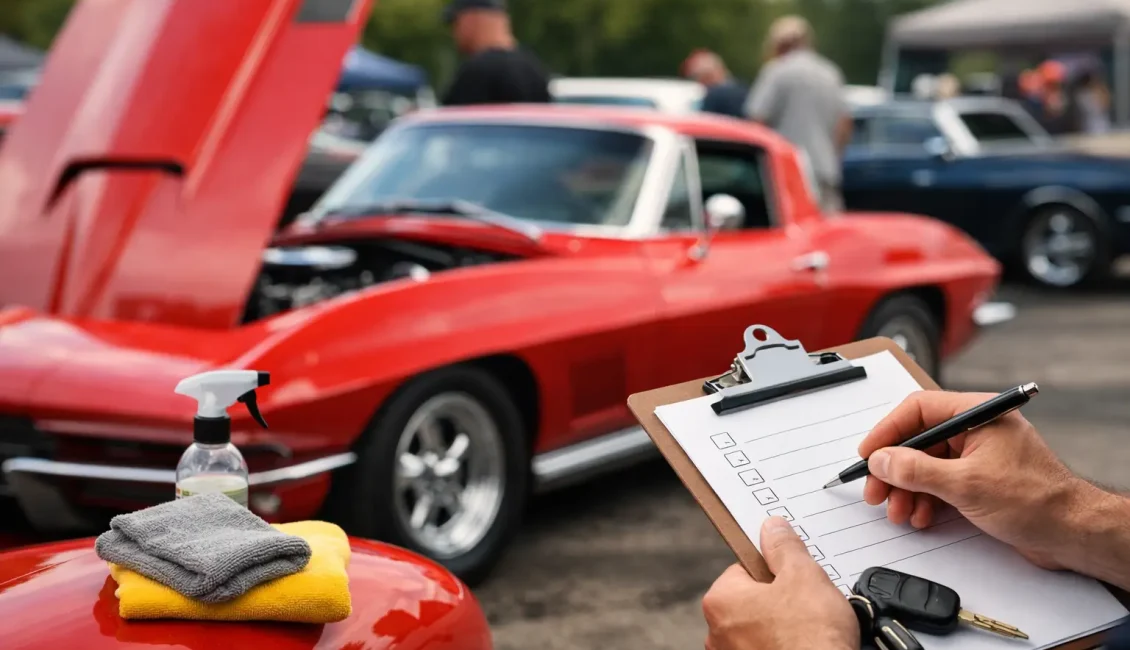
Then pack a compact cleaning kit. A few quality microfibres, quick detailer, glass cleaner, tyre dressing, interior wipes and a small bin bag will go a long way. Add a soft brush for vents and badges if your car has lots of intricate trim. You do not need a full detailing studio on site, but a final once-over after the journey can make a huge difference.
Practical items are just as important. Bring water, snacks, sunscreen, a hat, a coat and comfortable shoes. British show weather can turn in an hour, and standing around all day in poor footwear loses its charm very quickly. If the event allows display materials, a small signboard with the car’s model, year and story often helps visitors engage. People love a conversation starter, especially when there is history, restoration work or an unusual specification behind the car.
A folding chair can be useful, but it depends on the show and your display space. In some layouts it is handy. In others it can make the stand feel messy if everyone disappears behind camping gear. If you are exhibiting as part of a club, check the stand style first.
Preparing the car for display
A strong display starts before you leave home. Wash the car thoroughly, clean the wheels properly and finish the glass. Interior presentation matters more than some exhibitors realise because visitors will peer through the windows all day. Dusty dashboards, loose receipts and a boot full of jump leads spoil the effect.
If you plan to show the engine bay, clean it with care and make sure everything is dry and secure. If you plan to keep the bonnet shut, that is fine too. Not every car benefits from having every panel open. Sometimes a clean, tidy, well-stanced car presented simply is more effective than a display trying to do too much.
Think about fuel as well. You want enough to arrive comfortably and leave without stress. At the same time, if your car is going indoors or into a tightly managed area, event guidance may limit fuel levels. Always follow the organiser’s instructions.
Arrival day: timing changes everything
The best way to start a show morning is early and calm. Leave more time than you think you need. Traffic, diversions, weather and queues at the gate can all affect arrival, especially at popular venues.
Aim to arrive with enough slack to wipe the car down once parked. Even a short trip can leave road dust on the rear end, bugs on the nose and smears on the glass. Ten unhurried minutes with a cloth and detail spray will usually do more for presentation than thirty panicked minutes of half-finished cleaning after the public has already arrived.
When you park, think about how the car sits for photographs and footfall. Straight wheels, centred position and tidy spacing all help. Remove obvious clutter from around the vehicle. If you have brought bags, lunch or extra supplies, keep them hidden as neatly as possible.
How to get more from the day as an exhibitor
A good show is not just about parking up and waiting to go home. The best exhibitors help create the atmosphere people come for.
Be approachable. You do not need a sales pitch, just a willingness to chat. Visitors want to know what the car is like to own, how long you have had it, what work has been done and why you chose it. That is especially true with unusual classics, well-built modified cars and rarer performance models.
If you are on a club stand, support the wider display. Consistency across the stand often looks stronger than one car trying to dominate. If you are showing independently, presentation and attitude matter even more because your car is carrying the full impression on its own.
Take a few minutes to walk the event as well. That is part of the reward. A well-run regional show should feel like a proper day out, not just a parking exercise, and that is a big part of what keeps exhibitors coming back to events such as those in the Great British Motor Shows calendar.
Common exhibitor mistakes to avoid
Most problems are predictable. Arriving late is the obvious one, but there are subtler mistakes too.
Overpacking can be as awkward as underpacking. If the car is full of random cleaning products, camping gear and loose items, you lose both cabin presentation and boot space. Equally, underestimating the weather is classic British optimism gone wrong. A spotless car and no waterproof jacket is not a winning combination in a sudden downpour.
Another mistake is preparing only for looks and not for comfort. If you are hungry, cold, sunburnt or wearing the wrong shoes, the day drags. That affects how much you enjoy the event and how willing you are to engage with visitors.
Finally, do not ignore the organiser’s instructions. Access routes, display rules and arrival times are there for a reason. Good events run on timing, safety and cooperation.
A simple car show exhibitor checklist to keep handy
Before you set off, make sure you have your entry details, keys, fuel, cleaning kit, suitable clothing, refreshments and any display material you plan to use. Make sure the car is clean, mechanically sound and free from obvious clutter. Then give yourself enough time to travel without turning the morning into a race.
That is really the point of any checklist. Not to make exhibiting feel clinical, but to give you the freedom to enjoy it. When the gates open, the cars line up and the first visitors start stopping for a closer look, you want to be thinking about the day ahead – not the one thing you forgot on the kitchen table.