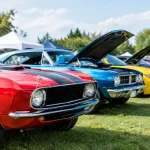

Turn up at a country estate packed with polished classics, club displays, supercars and trade stands, and you know you are at something built for a full day out. Pull into a retail park or seafront gathering where owners are chatting beside their cars over a coffee, and the mood is very different. That is the heart of the car show versus car meet debate. Both matter to UK car culture, but they offer different experiences, different expectations and different reasons to go.
For enthusiasts, the distinction is not about which is better in absolute terms. It is about what sort of day you want, how far you are willing to travel, and whether you are turning up as a visitor, an exhibitor, a club member or simply someone who loves being around interesting machinery.
Car show versus car meet: the basic difference
A car show is usually a planned, organised event with a venue, scheduled opening times, exhibitor areas and a broader visitor experience. It is designed to bring together a wide mix of vehicles and people in a structured setting. You are likely to find everything from classic saloons and restored bikes to modified builds, sports cars, performance models and prestige marques, often with food, traders, club stands and family-friendly attractions around them.
A car meet is generally more informal. It might be a regular local gathering, an evening meet-up, a club-arranged session or a spontaneous social occasion that grows through word of mouth and social media. The emphasis is less on presentation and more on the community itself – owners arriving, parking up, talking spec sheets, comparing projects and enjoying the shared passion without much ceremony.
That difference in structure shapes everything else, from the atmosphere on arrival to the type of crowd each one attracts.
Atmosphere and experience
Car shows tend to feel bigger, more varied and more destination-led. You are not only going to look at vehicles. You are going for the setting, the scale and the sense that there is always another row, another club display or another standout car waiting around the corner. When a show is held at a stately home, parkland venue or historic hall, the backdrop adds to the occasion. It feels like an event.
Car meets are usually more relaxed and more conversational. They often have a grassroots energy that many enthusiasts love. There is less distance between owner and visitor because there may not really be a line between them. People arrive in what they drive, stand by the car, and get talking. If you enjoy the social side of motoring culture as much as the display side, that can be a major advantage.
There is a trade-off, though. The informality that makes a meet feel authentic can also make it less predictable. One month may bring an excellent turn-out and a brilliant mix of cars. The next may be quieter, weather-hit or dominated by one particular scene. A good show is usually more consistent because it has been planned that way.
Why shows often suit a wider audience
If you are bringing family, friends or someone who is interested in cars but not deeply involved in the scene, a show often works better. There is more to see, more space to explore and more reason to make a proper day of it. The curation helps casual visitors too. You do not need insider knowledge to enjoy a line-up that moves from classics and concours-level restorations to race-inspired builds and modern exotica.
That wider appeal is a big part of why organised events continue to draw such strong crowds across the UK. They make motoring culture accessible without watering it down.
Display quality and vehicle variety
One of the biggest differences in the car show versus car meet conversation is presentation. At a car show, vehicles are usually selected, grouped or positioned with a display standard in mind. Clubs may prepare their stands carefully. Owners often arrive early, clean their cars properly and set up with the expectation that the public will spend time looking.
That matters if you want to compare eras, marques and styles in one place. It also matters if you are a photographer, a trader or an exhibitor hoping to be seen by a large, engaged audience.
Car meets can still attract exceptional machinery, of course. In fact, some of the most memorable vehicles appear at meets precisely because the environment is so casual. Owners bring them out to enjoy them, not to compete for attention. But the line-up is rarely as broad or as intentionally balanced as it is at a well-run show.
If your ideal day involves seeing a classic Jaguar, a slammed hatchback, a row of American muscle, a collection of bikes and a handful of modern supercars all within walking distance, a show is much more likely to deliver that mix.
Planning, facilities and what you can expect on the day
Shows are built around logistics. Parking, ticketing, exhibitor access, toilets, catering, trade areas and site flow all affect the visitor experience. When they are handled properly, the day feels easy. You can arrive knowing there will be structure, enough to do and enough variety to justify the trip.
That is particularly important for larger groups, clubs and traders. If you are exhibiting a vehicle, selling products or travelling with family, organisation is not a boring extra. It is part of what makes the event worthwhile.
Car meets usually ask less of attendees and offer less in return. That is not necessarily a criticism. Many enthusiasts like the simplicity. No ticket queue, no programme, no formal judging, no set route round the site. You just turn up and enjoy it. But if the weather turns, parking gets awkward or the venue is not really equipped for a crowd, the limitations show quickly.
The role of venues
Venue choice says a lot about the event itself. Shows often use locations that elevate the experience – estates, halls, showgrounds and destination sites that give the cars the stage they deserve. A special venue does more than look good in photos. It improves access, creates space and turns a few hours of car spotting into something closer to an outing.
Meets, by contrast, are often shaped by convenience. They happen where people can gather easily, whether that is a café, pub car park, promenade or industrial estate. That can make them brilliantly local and easy to join, but not always especially scenic or suitable for a bigger audience.
Which one is better for owners and exhibitors?
It depends on what you want from your vehicle and your time.
If you are proud of the presentation, history or uniqueness of your car, a show gives it the setting it deserves. There is a stronger chance of being seen by enthusiasts who genuinely appreciate the details. Clubs also get more room to tell a story through grouped displays, banners and themed stands. For businesses and traders, the footfall is another obvious advantage.
If you simply want to drive out, meet like-minded people and chat without any pressure, a meet can be more appealing. There is usually less expectation, less prep and less formality. That makes it ideal for project cars, evolving builds and owners who enjoy the social side more than the display side.
The same owner can enjoy both. In fact, many do. A local meet keeps you connected to the community between bigger event dates, while a major show gives you the scale and spectacle that a car park gathering cannot match.
Car show versus car meet: which should you choose?
Choose a car meet if you want something quick, local and social. It suits evening runs, casual catch-ups and owners who enjoy talking cars as much as polishing them. It can also be the easier entry point if you are new to the scene and do not want the commitment of a full event day.
Choose a car show if you want range, atmosphere and a stronger sense of occasion. It is the better option when you want a proper day out, a better setting, more vehicle categories and the confidence that there will be enough to see and do. For many enthusiasts, that mix of quality, variety and venue is what keeps organised shows firmly at the centre of the motoring calendar.
That is why events such as those presented by Great British Motor Shows continue to appeal to such a broad audience. They bring together the heritage, performance and community side of motoring in one place, with the sort of setting and scale that turns admiration into a real experience.
The best answer, really, is not car show or car meet. It is knowing what mood you are in. Some weekends call for a quick local gathering and a chat by the bonnet. Others call for rows of standout machinery, a great venue and the feeling that the whole motoring world has turned up for the day.