A classic motorcycle can stop people in their tracks before they know its make, model or year. The right stance, a clean tank and a thoughtfully prepared display tell visitors that this machine matters. Use this classic bike display checklist to make sure your bike arrives safely, presents properly and gives fellow enthusiasts something worth talking about.
Whether you are bringing a concours-restored British single, a well-used Japanese icon, a café racer or an original survivor, the aim is not to make every bike look identical. It is to show it at its best, with enough care around it for visitors to appreciate the engineering, history and character that brought it to the event.
Start with the bike, not the accessories
A display board and a polished helmet cannot distract from a machine that has been rushed out of the garage. Start your preparation a few days before the show, rather than trying to finish everything on the morning. That leaves time to spot a weeping fuel tap, a soft tyre or the small fastener that has worked loose since the last ride.
Give the bike a careful wash, dry it fully and use appropriate cleaner on painted surfaces, chrome, alloy and plastics. Avoid spraying dressing or polish near brake discs, tyres, grips, footrests and the seat. A high shine can look superb under showground light, but oily residue on a tyre or control is never worth the risk.
Chrome should be bright, but originality still counts. If your machine wears honest patina, faded paint or age-earned marks, do not feel pressured to turn it into something it is not. A clean, mechanically sound survivor with a clear story will often attract more interest than an over-restored bike with no sense of its past.
Check the details visitors notice first
Walk around the bike at standing height, then crouch down to inspect it as a keen visitor might. Pay attention to the front mudguard, wheel rims, spokes, fork legs, engine cases, exhaust headers and the lower frame rails. These are the areas where road grime and fingerprints tend to linger.
Check that the registration plate is secure and legible, lights and lenses are clean, and cables are routed neatly. If the bike has a centre stand, make sure it operates freely and sits evenly. For machines displayed on a paddock stand, test the stand at home on level ground and bring the correct bobbins or adaptors.
Classic bike display checklist: safety and showground essentials
A smart display begins with a safe arrival. Even if the event is only an hour away, assume you will need to deal with changing weather, uneven grass and a busy unloading area. Pack your kit in one clearly marked box or bag so you are not searching through the car while other exhibitors are waiting to get into position.
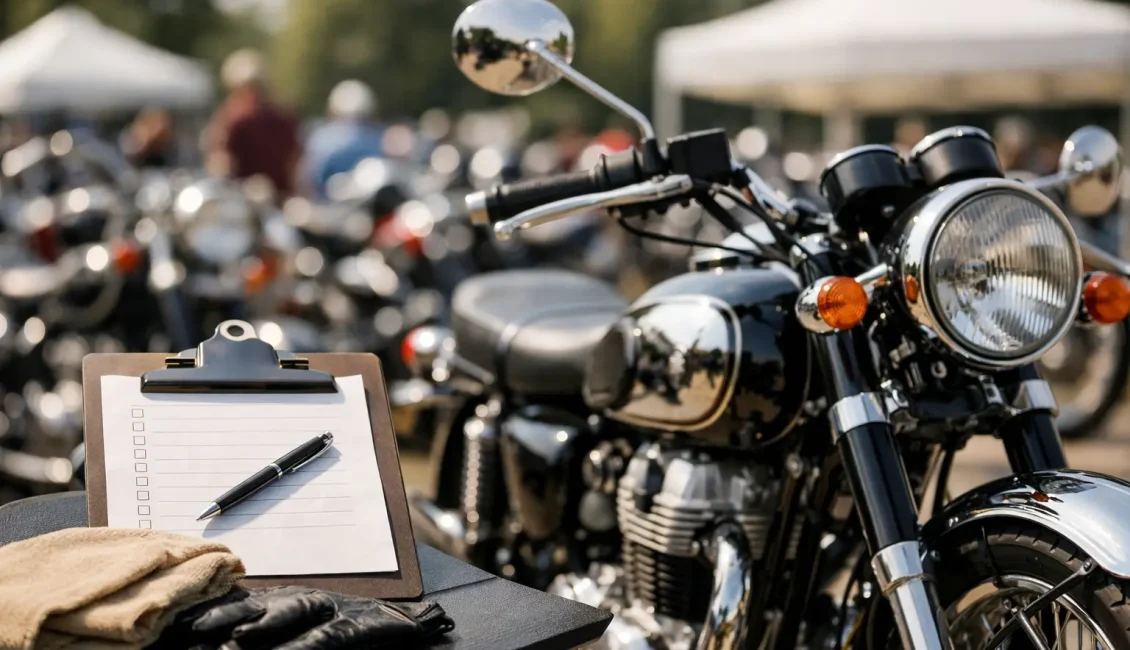
Before leaving, work through these essentials:
- Proof of entry, event instructions and any vehicle pass, saved on your phone as well as printed if you prefer a paper copy.
- Keys for the motorcycle, trailer, van, locks and fuel cap, plus a spare set kept separately.
- Ratchet straps, soft ties, a wheel chock and a puncture or tyre-pressure kit for transporting the bike securely.
- A basic tool roll with spanners, screwdrivers, pliers, electrical tape, cable ties, spare fuses and a small torch.
- A microfibre cloth, detailing spray, water, paper towels and a small brush for a final clean after unloading.
- A ground sheet or display mat, along with a side-stand puck if your bike will be parked on grass.
- A cover, waterproof jacket and sun protection. British show weather can change its mind before lunch.
Fuel deserves particular thought. Follow the event organiser’s rules on fuel levels and refuelling, especially at indoor or tightly packed displays. A nearly full tank can add unnecessary weight during loading and increase the chance of spills. Check for drips from taps, carburettors and fuel lines before you set off, then again once the bike is parked.
If your machine is temperamental to start, do not repeatedly kick or crank it in a crowded public area. Arrive with enough time to settle it into place, and be honest with visitors if it is a non-runner, a project or a bike awaiting its next stage of restoration. Enthusiasts respect the truth.
Build a display that suits the motorcycle
The motorcycle should remain the centrepiece. A simple mat, a well-positioned information board and one or two carefully chosen period items are usually more effective than filling every spare inch around the wheels. Visitors need room to see the profile, engine and controls without stepping over props.
For a concours machine, a clean black or neutral mat can frame the bike and protect it from damp ground. A period race replica may suit a discreet paddock-style board, while a 1960s commuter machine can look brilliant beside a period tool roll, handbook or correctly dated riding gear. Keep valuable original paperwork and rare parts supervised, particularly at a busy show.
Think about height as well as floor space. A small sign at handlebar height is easier to read than one laid flat on the ground. If you bring a display board, make it stable in wind and avoid sharp edges or trip hazards. Nothing should lean against the bike, touch hot exhausts or obstruct the route around neighbouring displays.
Write a sign people will actually read
A good display card gives people a reason to stop, then lets the bike do the rest. Include the make, model, year, engine size and a short note on why this particular motorcycle is special. That might be its restoration journey, a rare factory specification, a family connection, competition history or simply the fact it has been ridden regularly for decades.
Keep the text readable from a couple of steps away. Large type and a few strong facts beat a dense paragraph. If the bike has unusual controls, an interesting engine layout or a rare feature, point it out. You will spark better conversations and spend less of the day repeating the same explanation.
Be selective with trophies and awards. One or two add useful context, but a crowded table can shift attention away from the machine. Likewise, ropes and barriers can help protect a particularly rare bike, though they can make a friendly club display feel distant. It depends on the venue, expected footfall and how comfortable you are with close viewing.
Plan for transport, arrival and positioning
Many display problems start before the gates open. Check the route, arrival window and unloading instructions in advance. Historic venues can have narrow access roads, grass parking and long walks between the exhibitor entrance and the main show field. A bike that looks perfect at home still needs to get there without a damaged lever, scratched exhaust or flattened battery.
When loading onto a trailer or into a van, use a proper ramp and take your time. Secure the motorcycle upright with soft ties around strong points such as the lower yoke or handlebars where appropriate for the machine, without over-compressing old forks or straining delicate components. Put the bike in gear if suitable, but do not rely on the gearbox alone to hold it in place.
At the venue, unload on level ground where possible and complete your first wipe-down before moving into the display line. Position the bike with the best side visible to the main visitor flow. For many machines that means the drive side or the side with the most distinctive engine detail, but check the surrounding space before deciding. A dramatic exhaust or polished timing cover loses impact if it faces a hedge, fence or neighbouring van.
Leave enough room for visitors to circulate and for fellow exhibitors to manoeuvre. If you are displaying with a club, agree a consistent layout but retain enough variety to let each bike stand out. Rows of motorcycles look stronger when handlebars, front wheels and signs are aligned with a little breathing space between them.
Be present without hovering over the bike
The best classic-bike areas have an easy, knowledgeable atmosphere. Bring a chair if the event allows it, but place it to one side rather than directly in front of the motorcycle. Greet people, answer questions and enjoy the stories that come back your way. A visitor who once owned the same model or remembers seeing one race in period may have a detail you have never heard before.
Stay aware of the practical side too. Wipe off rainwater when needed, keep loose items packed away and check that the bike remains stable if the ground softens. If you need to leave the display, lock away valuables and ask a neighbouring exhibitor to keep a casual eye on things.
At a Great British Motor Shows event, the appeal is not only the individual machine but the shared spectacle: classic metal, performance engineering, clubs, traders and conversations across the showground. A well-presented bike helps create that atmosphere for everyone.
Leave as professionally as you arrived
When the show closes, resist the temptation to rush the load-out. Wait for the organiser’s instruction, pack your display items first and bring the bike to the loading point only when it is safe to do so. Check straps, lights and tyre condition before heading home, especially after a wet day on grass.
Then give the bike one final look when you are back in the garage. Note anything that needs attention before the next event, from a smear of chain lube to a loose mirror or a display sign that could be clearer. The real reward is seeing people pause, smile and swap memories around a motorcycle you have kept on the road. Prepare it with care, give it room to shine, and let its story do the work.