A strong club display starts long before the first bonnet is raised. This guide to car club display days is for the organisers, regulars and first-time members who want their stand to look the part, run smoothly and give every vehicle the attention it deserves.
At a great motoring show, the best club areas do more than line up nice cars. They tell a story: a marque’s evolution, a shared obsession with a particular model, a carefully restored era, or the colourful variety that makes a club worth joining. With a little planning, your pitch can become one of the places visitors remember.
Start with the purpose of your display
Before reserving spaces, decide what you want the display to say. A club celebrating 50 years of a model will arrange cars differently from a local owners’ group simply looking to bring a broad, welcoming cross-section. Both approaches work, but they need a clear plan.
You may want to show a timeline, from early examples through to later editions. Or perhaps the appeal lies in contrast: a concours original beside a well-executed track build, a family saloon alongside a rare homologation special. A mixed display can be brilliant, provided it feels intentional rather than accidental.
Agree a realistic target for numbers, too. Ten committed cars presented well will usually make a stronger impression than 20 spaces with gaps by mid-morning. Ask members to register their interest early, then confirm their attendance closer to the event. If the organiser needs vehicle details in advance, collect them in one place rather than chasing replies across several group chats.
Booking your club space
Every show has its own process, deadlines and site rules, so read the club-display information before promising members a place. Check whether bookings are made by the club organiser or by each driver, whether entry tickets are included, and what vehicle standards or eligibility criteria apply.
Give the event team accurate information. State the club name clearly, estimate the number of cars, and flag anything unusual, such as a large vehicle, trailer, display tent or anniversary feature. Historic venues can have tight access points, protected grass and carefully managed arrival windows, so assumptions cause problems quickly.
It is also worth nominating one main contact and one backup. On show morning, event staff need a person who can answer a phone, direct arriving members and make sensible decisions if a late cancellation changes the plan. This does not need to become a military operation, but a named organiser makes the day easier for everyone.
Set a fair attendance policy
Popular display days can attract more interest than available spaces. Be open about how places are allocated. Some clubs prioritise paid-up members, others use a first-confirmed system, while a special feature may require cars that fit a particular theme.
Whatever you choose, make it clear from the outset. Also ask members to tell you as soon as they cannot attend. A last-minute replacement from a reserve list is far better than an empty bay in the middle of the stand.
Plan arrivals as carefully as the cars
A neat display is difficult to create once visitors are already walking through the gates. Most events therefore ask display vehicles to arrive during a set morning window. Treat that time as part of the show, not as an optional suggestion.
Arrange a meeting point nearby if it makes sense, especially for members unfamiliar with the venue. A fuel station or supermarket car park can work well, but avoid gathering anywhere likely to obstruct customers or local traffic. Share a simple route, departure time and the lead driver’s contact number. Convoys look fantastic on the road, yet they are not essential. For a club spread across several counties, asking everyone to travel independently and arrive by a stated deadline may be more practical.
Send a final message a few days before the event covering the entrance to use, arrival time, booking reference, vehicle pass if applicable, and what to do if someone is delayed. Remind drivers that marshals are there to position vehicles safely. Following their direction, even if it means a slightly different spot from the imagined line-up, keeps the whole site moving.
Make the stand look like a club, not a car park
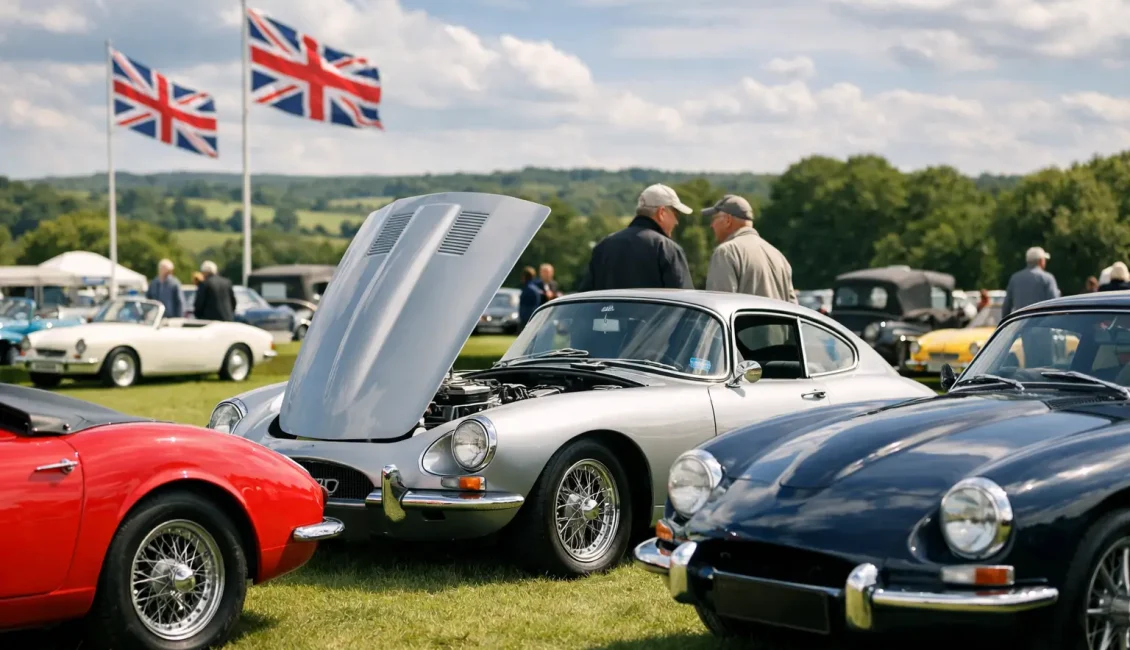
Once cars are parked, spacing and consistency do much of the work. Leave enough room for doors, photographs and visitors to move around without brushing against paintwork. If the event layout allows, angle vehicles gently towards the public route rather than presenting a wall of front bumpers or number plates.
Think about visual rhythm. Group similar generations together, balance colours where possible, and place a particularly unusual or eye-catching car where it draws people into the display. If your club has a flagship vehicle, avoid hiding it behind a gazebo or at the very back.
Club flags, feather banners and a modest gazebo can make a display easier to spot across a busy show field. Keep it tidy and proportionate, though. The cars should remain the main attraction. Secure all equipment properly, keep pathways clear, and follow the event’s rules on gazebos, pegs, weights and promotional materials.
A small information board can turn interest into conversation. It might explain the club’s history, list upcoming meets or identify significant cars on display. Laminated windscreen cards are useful too, especially for vehicles whose rarity or restoration story is not obvious at first glance. Keep copy short, readable and accurate. Visitors are there to look at cars, not read an essay in 10-point type.
Prepare every car for a full day outdoors
You do not need concours paint to take part in a display day. A well-used road car with an honest story belongs at many shows just as much as a freshly restored example. What matters is that it is clean, safe, presentable and something its owner is happy to discuss.
The evening before, check tyre pressures, fluid levels, lights and fuel. Bring a basic kit: screenwash, microfibre cloths, detailing spray, a tyre inflator, cable ties, a small tool roll and something to place beneath the engine bay if a minor drip is possible. A classic car may be forgiven for marking its territory, but the venue’s grass and hardstanding should not suffer for it.
Weather changes the equation. British display days can start with bright sunshine and finish with a soaking. Pack waterproofs, sun cream, hats and something warm, plus chairs if permitted. A windscreen sunshade, car cover and towel can be useful, but do not cover the vehicle for the whole day if the aim is to show it. For clubs with open-top cars, agree in advance whether roofs should be raised during rain or left down for the display. It depends on the car, the forecast and the owner’s comfort level.
Put people at the centre of the day
A club display is not a museum rope line. The people standing beside the cars create the welcome. Encourage members to say hello, answer questions and share the details that make their vehicle special. The engineer’s solution nobody notices, the difficult part sourced after months of searching, or the family history behind a car often matters as much as its power figure.
That does not mean every owner must be on duty all day. Agree informal cover so somebody is around while others explore the show, grab food or watch arena action. It also helps to set expectations for children, dogs and visitors near valuable cars. Friendly conversation is always welcome; leaning on paintwork is not.
For newer members, display days are one of the easiest ways to feel part of the club. Introduce them, include their cars in the main line-up and avoid creating an inner circle around the most expensive machinery. The variety is usually what makes a club stand worth visiting.
Capture the day without missing it
Take photographs early, before the public arrives and while the cars are cleanly arranged. Get a wide shot of the whole stand, then capture details, owner-and-car portraits and the venue in the background. Ask permission before posting close images of number plates or people, particularly if you are using photographs for club promotion.
A short post after the event can help thank attendees, celebrate award winners and encourage fresh interest for the next date. Great British Motor Shows bring together every kind of enthusiast, and a lively club display is often the spark that persuades a visitor to bring their own car next time.
The final touch is simple: leave the pitch as clean as you found it, thank the marshals, and make a note of what worked while the day is fresh. The best car club display days build momentum – one well-organised stand can turn a good gathering into the start of next season’s biggest turnout.