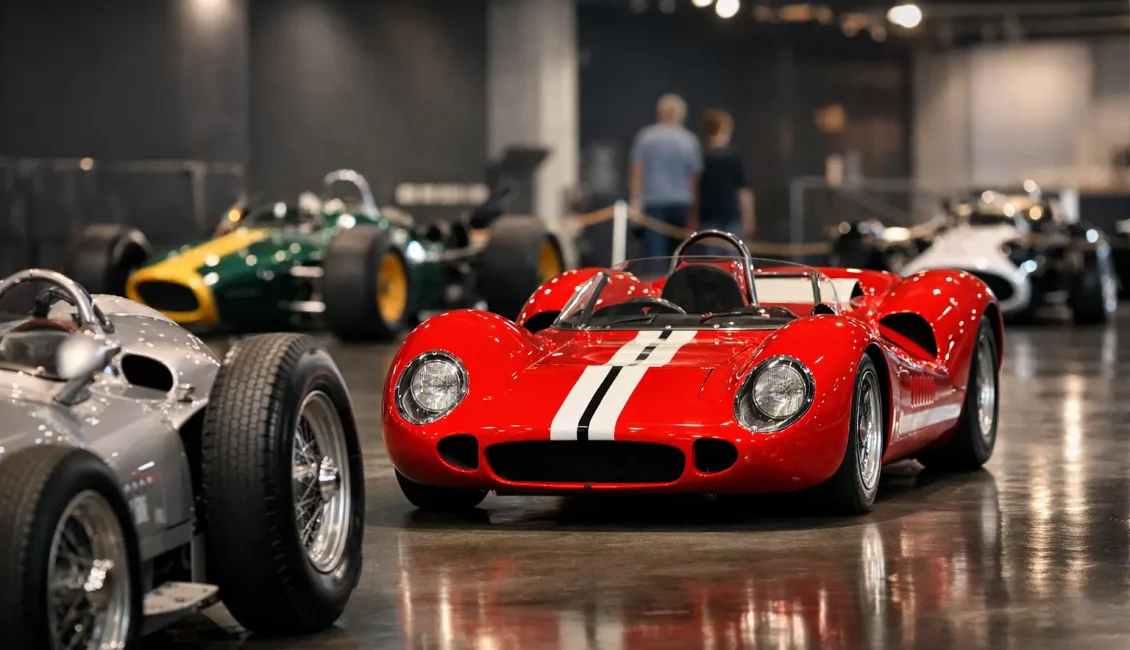
A historic racer does not need to turn a wheel to make an impression. Park a purposeful Group B rally car, a low-slung sports prototype or a period touring car among the right crowd, and the stories start before the bonnet is even lifted. The best historic racing car displays turn a row of remarkable machines into something far bigger: a living connection to the circuits, drivers, rivalries and engineering that shaped motorsport.
For enthusiasts, that connection is the point. Photographs and television footage are brilliant, but they cannot replace standing beside a car that once ran flat-out at Silverstone, Goodwood, Brands Hatch or on a rain-soaked rally stage. You notice the compact cockpit, the battle scars, the smell of fuel and oil, and the ingenious details that rarely make it into a history book.
Why Historic Racing Car Displays Matter
Race cars are built to solve problems at speed. Every vent, splitter, flare and oddly positioned switch has a reason for being there. That makes them especially rewarding show cars. A concours classic may invite admiration for its condition, but a competition car invites questions. Why is the bodywork so wide? Where did that brake cooling duct lead? How did the driver see through that tiny windscreen?
Historic racing displays also put familiar road cars in a fresh light. Seeing a competition Escort, Mini, 911, MGB or Jaguar alongside the road-going version reveals just how far a manufacturer, privateer or race team could push a basic platform. The link is often clear in the silhouette, then completely transformed by roll cages, suspension geometry, lightweight panels and a cockpit designed for one job only.
There is a human element too. Many cars at regional shows have been preserved, restored and campaigned by owners who know every chapter of their vehicle’s story. A proper conversation beside the car can lead from a famous race result to a long restoration, a hard-to-find gearbox component or a weekend spent preparing for the next historic meeting. That is the sort of knowledge that makes live events special.
A Great Display Needs More Than Rare Cars
Rarity helps, of course, but it is not the only measure of a memorable line-up. The strongest displays have a clear thread. It could be a collection of British Touring Car heroes, a tribute to a particular marque, rally machines from a defining decade, or a club stand showing how members race and preserve their cars.
Context brings the collection together. A well-presented board showing the car’s competition history, key drivers and specification gives newcomers a way into the story without asking owners to repeat every detail all day. Period photographs, race numbers and sympathetic display pieces can add atmosphere too, provided the cars remain the main attraction.
Variety matters within that theme. A display of identical cars may delight the dedicated specialist, but a mix of eras, classes and specifications gives every visitor something to compare. The contrast between a nimble 1960s saloon, a fire-breathing 1980s turbocharged machine and a modern historic racer shows how quickly motorsport technology has evolved.
That said, bigger is not always better. A small, carefully chosen group can have far more impact than a crowded stand where visitors cannot get close enough to appreciate the details. Space around each car, sensible signage and room for owners to chat are part of the experience, especially at a busy family-friendly motor show.
The value of an honest story
Not every historic race car needs to be a famous works entry. A well-used club racer with a documented history can be every bit as interesting as a headline machine. Grassroots motorsport is where generations of drivers, mechanics and volunteers learned their craft, and those cars deserve their place in the paddock.
Honesty is key. A faithful recreation or tribute car can look spectacular and introduce visitors to an important era, but it should be presented clearly for what it is. Provenance matters to serious collectors, while transparency builds trust with everyone else. The real appeal lies in celebrating the car’s engineering and the effort behind it, not overstating its past.
The Details That Pull Crowds In
People naturally gather around a car with an open bonnet, but the most effective historic racing car displays offer several ways to look closer. Engine bays reveal purposeful plumbing and hand-fabricated solutions. Cockpits show the driver’s world: sparse instruments, harnesses, extinguishers and controls positioned for quick decisions rather than comfort.
Sound is equally powerful when the setting permits it. A scheduled, carefully managed engine start can stop visitors in their tracks and give a sense of a car’s character that static presentation cannot match. It must always be done responsibly, with the right safety arrangements and consideration for the venue, nearby displays and young families. A screaming historic engine is memorable; an all-day noise battle is not.
Owners should also think about the details people will photograph. A clean car, correctly fitted race numbers and a tidy display area go a long way. Original helmets, period jackets, programmes or tools can add colour, but avoid turning the stand into a props shop. A race car has enough visual drama on its own.
Heritage Venues Add Another Layer
A historic estate, hall or park creates a natural stage for competition machinery. The contrast between a grand setting and an uncompromising race car is part of the appeal, whether visitors are admiring a pre-war special on a lawn or a 1990s touring car outside a country house.
Venue-led events also make the day work for different kinds of visitors. One person may arrive determined to inspect every rally car; another may be there for classics, supercars, motorcycles, traders or a relaxed day out with the family. A broad show format means no one has to choose between serious motoring content and a good day away.
For exhibitors and clubs, the setting can make a display feel like an occasion rather than simply a car park gathering. The trade-off is practical: grass, weather and access all require preparation. Bring suitable ground protection if required, arrive with enough time to position the car properly, and follow the organiser’s guidance on vehicle movement. A smooth arrival protects both the venue and the show atmosphere.
How Visitors Can Get More From the Paddock
The quickest way to enjoy a racing display is to slow down. Read the boards before reaching for the camera, look for the details that distinguish one car from another, and speak to owners when they are free. Most enthusiasts are delighted to explain why a particular component matters or share the moment they first found the car.
It also pays to look beyond the obvious headline names. The immaculate prototype or famous rally replica may draw the crowd, but an unassuming historic saloon could have a brilliant club-racing story behind it. Ask what class it raced in, where it competed and what it takes to keep it on track now.
If you are bringing children, historic racing cars offer an easy route into the wider world of motoring. Let them choose a favourite livery, spot the differences between road and race versions, or listen for the change in engine note between a four-cylinder touring car and a V8-powered machine. Curiosity is often all it takes to create a new enthusiast.
Bringing a Competition Car to a Show
For owners, displaying a historic racer is a chance to share the work that normally happens away from the public eye. The preparation starts with the basics: check the car is presentable, make its history available in a few clear points, and bring someone along if you expect to spend time away from the stand.
A car does not need to be concours-perfect. In fact, genuine signs of use can be part of its charm. What matters is that it is safe, clean enough to be appreciated and presented with pride. If it is fresh from a race weekend, tell that story. If it is mid-restoration, explain what remains to be done and why the project matters.
At Great British Motor Shows, the strongest vehicle displays are the ones that encourage conversation between owners, clubs and visitors. They celebrate serious machinery without making the experience feel exclusive. That balance is what keeps people returning: there is always another detail to spot, another owner to meet and another chapter of motorsport history waiting in the next row.
Next time you see a historic racer standing still, give it the time it deserves. Look past the paintwork, ask about the scars and imagine the noise it made in period. The journey from paddock to display may be quieter now, but the competition spirit is still very much alive.