
Some cars stop people mid-stride. A perfectly restored E-Type. A rally-bred Escort with the right stance. A supercar that sounds outrageous before you even see it. That is the pull of the masters of motoring – not just the machines themselves, but the people, stories and moments that turn a showground into something far bigger than a car park full of polished metal.
For enthusiasts across the UK, motoring has never been only about transport. It is about craft, memory, engineering and presence. It is about hearing an engine note you have not heard in years and being taken straight back to a driveway, a first job, a Sunday run or a poster on a teenage bedroom wall. The phrase masters of motoring fits because the best cars, bikes and builds do not happen by accident. They are shaped by skilled hands, sharp eyes and years of obsession.
Who are the masters of motoring?
At first glance, you might think the masters of motoring are the famous names – the marques that built legends and the drivers who made them famous. That is certainly part of it. British motoring culture has always had its heroes, from coachbuilders and race engineers to manufacturers that created cars with genuine character. Their influence is everywhere, whether you are looking at pre-war elegance, muscular touring cars or modern performance machinery.
But spend any time at a proper show and the meaning broadens quickly. The masters are also the restorers chasing factory-correct detail, the club members preserving rare models, the owners who have kept a beloved machine on the road for decades, and the modifiers creating something personal without losing respect for the base car. They are the traders who know every part number by heart, the specialists who can set up twin carbs by ear, and the families who pass a car from one generation to the next.
That is what makes live events so compelling. You are not only looking at finished vehicles. You are seeing years of decision-making, patience and pride parked in front of you.
Why live motoring shows still matter
You can scroll through thousands of photos in an evening. You can watch walkaround videos, auction clips and track footage without leaving the sofa. Yet none of that replaces standing beside a car and taking it in properly.
Scale matters. Sound matters. Smell matters. Even the way a vehicle sits on the grass or gravel tells you something that a screen never quite captures. A classic saloon with arrow-straight bodywork, a line of performance cars under the morning light, a row of motorcycles with decades of design evolution on display – these things land differently in person.
Live shows also give motoring culture its social side. Owners get to talk to people who understand what they are looking at. Visitors can compare marques, eras and styles in one place. Families can enjoy the spectacle without feeling shut out by technical jargon. That mix is vital. A healthy show scene needs the serious collector, the weekend enthusiast and the curious first-time visitor all sharing the same space.
The venue matters too. Put outstanding vehicles in a setting with heritage, space and atmosphere, and the day feels elevated from the outset. That pairing of motoring culture with great British locations is a big part of why crowds keep returning. It is not just about attendance. It is about occasion.
The many faces of motoring excellence
One of the best things about the UK show scene is that there is no single definition of what deserves admiration. The masters of motoring come in many forms, and that variety is exactly what keeps events fresh.
Classic cars bring heritage and craftsmanship to the forefront. A beautifully restored Jaguar, MG or Triumph offers elegance, proportion and a reminder of when design teams were willing to give a car real personality. For many visitors, classics are the emotional centre of a show because they tie directly into memory and nostalgia.
Modified vehicles bring a different energy. Done well, a modified build is not random noise and oversized bodywork. It is a clear expression of taste, engineering choices and hours of labour. Some are built for stance, some for speed, some for both. Not every enthusiast will agree on the ideal setup, and that is part of the fun. Motoring culture is healthier when there is room for debate as well as appreciation.
Performance and sports cars deliver instant theatre. They draw crowds because they combine design, engineering and aspiration in a way few other objects can. Some visitors arrive knowing every output figure and production number. Others simply know that the car looks extraordinary and sounds even better. Both responses are valid.
Motorcycles deserve equal billing. A great bike can stop people just as quickly as a rare car, and often for the same reasons – rarity, craftsmanship and sheer presence. Including two wheels alongside four makes for a fuller day and reflects how broad British enthusiast culture really is.
What separates a great show from an average one
Anyone can assemble vehicles in a field. That alone does not create a memorable event.
The best shows are curated with purpose. Variety is essential, but so is balance. If every display feels similar, visitors drift. If the categories are too scattered, the event loses shape. Strong shows understand how to mix prestige metal with club displays, modified icons with classics, bikes with supercars, and family appeal with genuine enthusiast credibility.
Organisation matters more than people sometimes realise. Easy access, clear signage, sensible layout and quality trade stands all shape the day. So does the atmosphere. A show should feel busy, but not chaotic. Welcoming, but not bland. Aspirational, but still accessible. That balance is not easy to get right.
The strongest events also create reasons to stay longer. Good food, well-placed traders, display quality, strong venue presentation and enough going on across the site all make a difference. Visitors want a full day out, not a quick walk around followed by an early drive home.
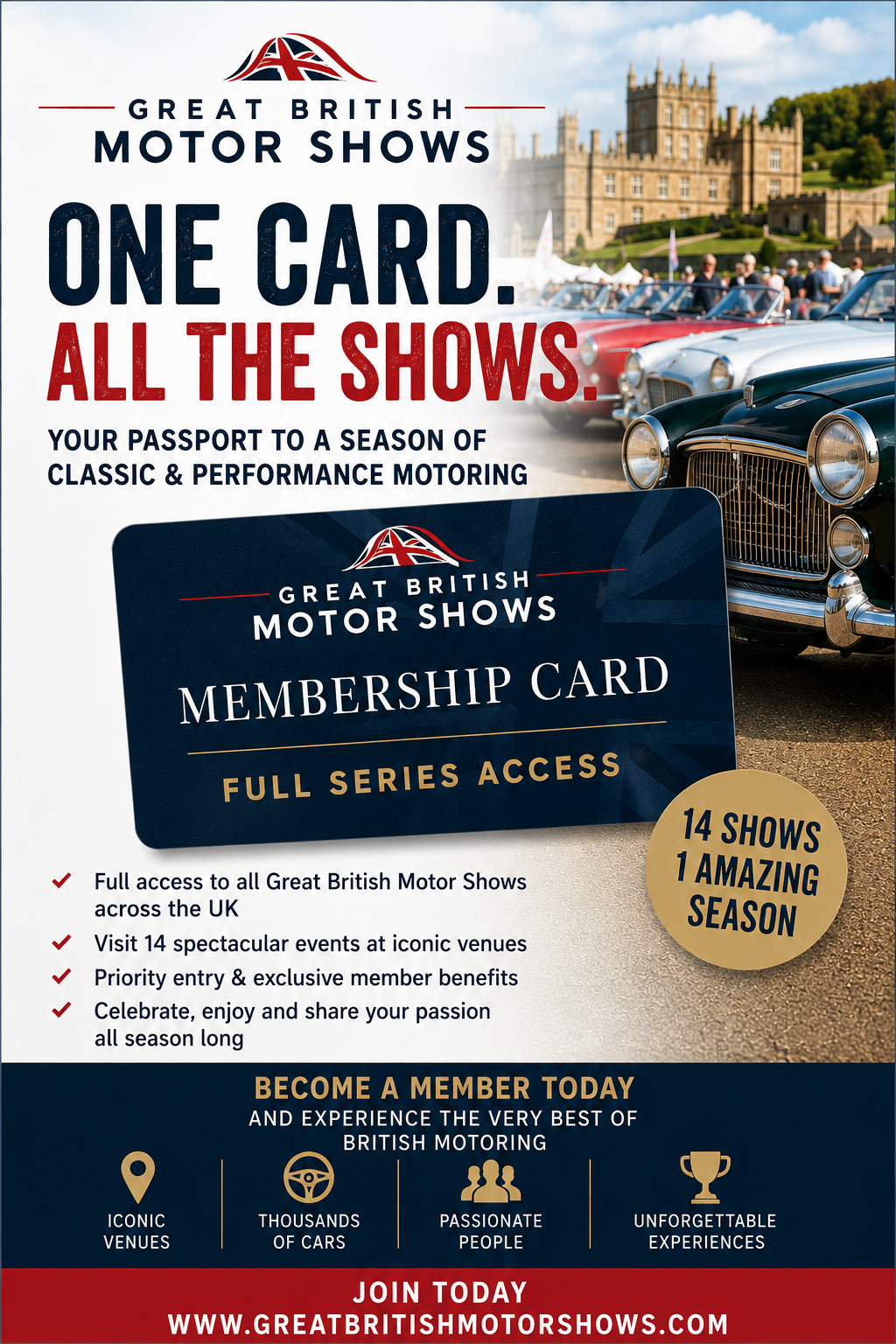
This is where brands such as Great British Motor Shows have found their stride. A broad event calendar, strong regional reach and venues with real character can turn a day among cars into something people actively build into their year.
Masters of motoring as a community, not a slogan
Motoring can sometimes be presented as exclusive, but the reality on the ground is often much friendlier. The best events prove that enthusiasm is not limited to one age group, one budget or one type of vehicle.
You might see a collector standing near a six-figure classic while, a few rows over, a young owner proudly explains the first project car they have built themselves. You might hear detailed talk about period-correct trim, then turn around and find a family photographing a supercar because the children have only ever seen it on a screen. All of that belongs.
That matters for the future of the scene. Heritage only survives when it is shared. Skills only continue when someone takes the time to explain them. Interest only grows when people feel welcome enough to ask questions, take photos and come back next year.
There is also something deeply British about the whole thing. The blend of heritage venues, mixed weather, club displays, polished bonnets, tea in paper cups and conversations that start with one car and somehow end with ten more – it has its own character. It feels rooted, familiar and full of life.
Why the fascination is not fading
There is a lot of talk about change in the wider motoring world, and some of it is justified. Technology is moving quickly. Ownership patterns are shifting. The relationship younger audiences have with cars is not always the same as previous generations. But fascination has not disappeared – it has simply broadened.
People still care about design. They still care about speed, rarity, sound and story. They still want to see machines that represent a high point in engineering or an era in culture. What may change is how those interests are expressed. Some visitors arrive for classics, others for modern performance, others for modified builds or bikes. A strong show does not force one version of enthusiasm over another. It gives each one room to breathe.
That is why the phrase masters of motoring still feels right. It speaks to excellence, yes, but also to dedication. It suggests that behind every standout machine is somebody who cared enough to preserve it, improve it, race it, rebuild it or simply keep it alive.
And that is why people keep turning up. Not for a generic day out, but for the sight of something special in a place that makes it feel even more special. If you love motoring in any form, the best advice is simple – make time for the shows, talk to the owners and look closely, because the next car that stops you in your tracks might stay with you for years.