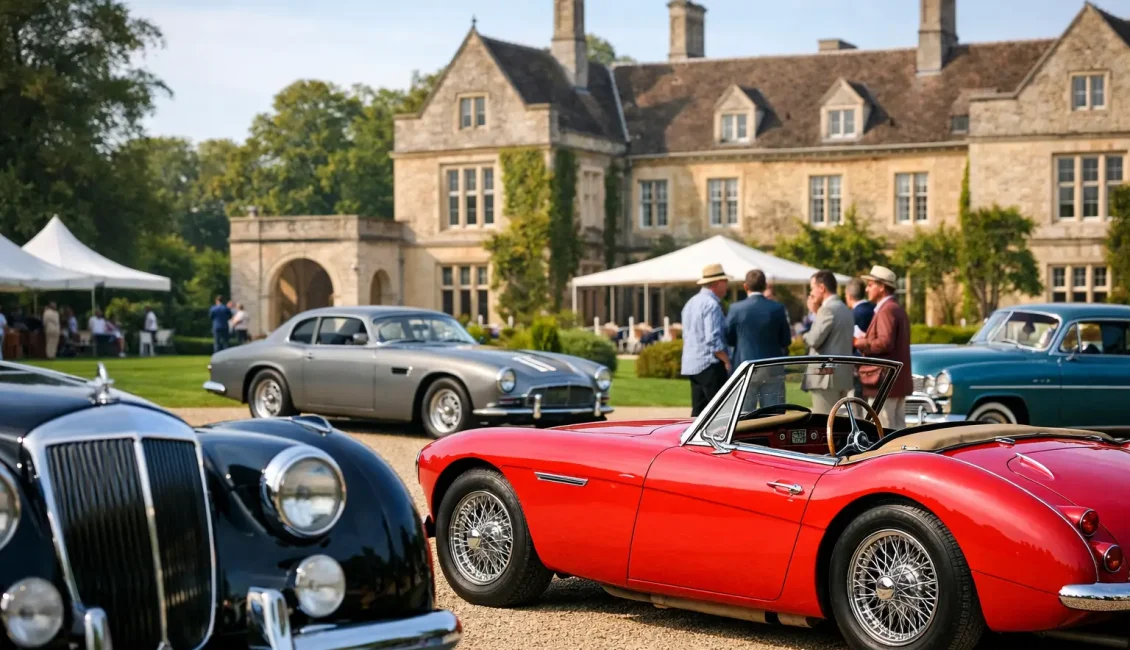
Set a line of polished classics, modern supercars and club displays against a grand country house or historic estate, and the whole event changes. That is the real appeal behind any heritage venue motor show review – not just what turns up on four wheels, but how the setting lifts the day from a standard meet to a proper occasion. For enthusiasts, families and exhibitors alike, the venue is never just a backdrop. It becomes part of the draw.
A good heritage site gives a motor show something hard to fake on an open retail park or basic exhibition ground. You get arrival roads with a bit of theatre, landscaped grounds that frame the cars properly, and architecture that adds character before you have even reached the first display. It suits classic machinery particularly well, but it also creates a striking contrast for performance cars, modified builds and newer prestige metal. Old stonework and high-revving modern engineering make a strong pairing because each makes the other stand out.
What makes a heritage venue motor show worth the trip
The first thing that tends to impress people is atmosphere. At a heritage venue, the event starts earlier. It begins when visitors come through the gates, hear engines in the distance and see rows of cars set out across lawns, courtyards or estate roads. There is a sense that you are going somewhere, not simply parking up in a field and wandering around.
That matters because most visitors are not judging a show on vehicle numbers alone. Variety still counts, of course. If you are promising classics, bikes, modified cars, sports cars, supercars and club displays, the line-up has to deliver. But the strongest events also feel well matched to their setting. A heritage venue can make a mixed-category show feel more curated, more premium and more memorable.
There is also a practical advantage. Established venues often have the infrastructure to support a larger day out. Toilets, catering areas, overflow space, formal entrances and pedestrian routes all make a difference once crowds build. Not every historic location gets this right, and that is where the trade-offs come in. Some look spectacular in photographs but struggle with access, traffic flow or uneven ground. A beautiful venue is only doing half the job if visitors spend too long queueing to get in or exhibitors are left wrestling with awkward set-up areas.
The cars matter – but presentation matters too
A strong motor show at a heritage venue does not rely on the venue to cover weak content. The metal still has to be good. You want depth across categories, not just one row of tidy classics and a handful of late arrivals. The best events build interest as you move around, with enough contrast to keep different types of visitor engaged.
For classic fans, heritage sites are a natural fit. Period bodywork, chrome details and coachbuilt lines look right at home in front of historic halls and landscaped grounds. You can take your time with them. The setting encourages that slower pace, where owners are talking restorations, provenance and the small details that matter.
Performance and supercars bring a different energy. Here, the venue gives them scale and drama. A modern Ferrari or Lamborghini in the car park of a supermarket would still attract a crowd, but on the approach to a stately home or lined up beside formal gardens, it becomes part of a bigger spectacle. The same goes for well-judged modified displays. When they are presented properly, they do not feel out of place. They add edge and variety, which is exactly what many regional shows need if they want broad appeal.
Presentation is where the better events pull ahead. Clear zoning helps. Club stands need enough room to look deliberate rather than squeezed in. Trader areas should feel connected to the main event rather than dumped off to one side. Demonstration areas, paddocks and feature displays need to be easy to find. Visitors may not say it in those terms, but they notice when a show flows properly.
Heritage venue motor show review – the details visitors actually notice
Enthusiasts will always talk about headline cars, but visitors remember the day as a whole. That means basic event delivery matters more than some organisers like to admit.
Parking is one of the first tests. If general parking is poorly managed, the mood drops quickly. The same applies to spectator entry, signing and queue times. At a busy show, that front-end experience shapes the whole day. Heritage venues can be brilliant for atmosphere, but they can also create pinch points because many were not built for modern event traffic. Good planning is what turns a grand site into a workable one.
Once inside, people want enough to do without feeling rushed. That usually means a healthy mix of display vehicles, owner clubs, trade stands, food and drink, and somewhere to pause without leaving the action completely. Families especially appreciate shows that give them room to enjoy the setting, grab a bite and still feel part of the event. Not every visitor is there to inspect wheel fitment or debate factory options. Some just want a lively, good-value day out with plenty to see.
That is why venue choice can be such a strong advantage. When the grounds are attractive, the non-motoring part of the experience improves too. You do not lose your edge as a car event by admitting that. You widen the appeal. A proper motoring crowd still gets the machinery, while casual visitors get a destination that feels worth the ticket.
Where heritage venues really lift the event
The strongest point in any heritage venue motor show review is usually the same one – the event feels bigger than the sum of its parts. Even before the engines fire up, the location gives the day a sense of occasion.
Photography is a big part of that. Enthusiasts want good backdrops. Owners want their cars seen in the best possible light. Clubs want displays that look sharp in person and online. Historic houses, estate roads, courtyards and mature grounds all help. They give shape and identity to the show. A well-positioned display can look exceptional without any need for overblown staging.
There is a commercial benefit as well. Traders and partners tend to perform better at events where footfall moves naturally and people stay longer. Heritage venues encourage that slower dwell time. Visitors are less likely to do one quick lap and leave if the site itself is part of the attraction. That extra time helps everyone, from food vendors to specialist automotive retailers.
For exhibitors, there is also pride in showing at the right venue. Owners put time, money and effort into preparing vehicles. Displaying them in a setting with real presence feels appropriate. It rewards that effort. The same goes for car clubs trying to recruit members and present themselves well. A quality location adds credibility before anyone has even started a conversation.
The trade-offs are real
This is not to say every heritage venue automatically produces a great motor show. Some sites are restrictive. Load-in can be awkward, ground conditions can be unpredictable and British weather does what it likes. If the surface is soft after rain, some display areas become a headache very quickly. Accessibility can also vary. Older sites may have uneven paths, longer walks or limited covered areas.
There is a pricing question too. Premium locations can bring premium expectations. Visitors are usually happy to pay for a stronger day out, but only if the event content matches the venue. If the line-up feels thin or the site is underused, people notice. A grand setting raises the standard the show has to meet.
That is why the best organisers treat the venue as one part of the package, not the whole pitch. The event still needs proper category balance, good club support, smart traffic management and enough action throughout the day. Heritage adds value. It does not replace substance.
Why this format keeps growing
There is a reason regional motor shows at heritage venues continue to attract attention. They strike a balance that works for the modern audience. Serious enthusiasts get quality displays and a more memorable setting. Families get an experience that feels broader than a simple car park meet. Exhibitors and traders get stronger presentation and a crowd that stays engaged.
For brands like Great British Motor Shows, that mix makes perfect sense. It brings together the things UK motoring audiences already love – classic style, engineering interest, club culture, performance appeal and a venue that gives the whole day a lift. You are not asking people to choose between a car show and a destination day out. You are giving them both.
If you are deciding whether a heritage venue event is worth attending, the short answer is usually yes – provided the organiser respects both halves of the formula. Get the cars right and the venue makes them shine. Get the venue right and the day gains character before the first bonnet is lifted. That combination is hard to beat, and even harder to forget.