You can park two old bikes side by side and only one of them will get people talking. That is the first clue when asking what is a classic motorcycle. Age matters, of course, but it is never the whole story. A true classic has presence. It captures a moment in motorcycling, whether that is through design, engineering, racing pedigree or the simple fact that riders still stop for a proper look.
For many enthusiasts, the phrase brings to mind polished British twins, smoky two-strokes, landmark Japanese fours and Italian machines with real flair. But classic status is not reserved for the glamorous or the expensive. Some bikes become classics because they changed the market. Others earn it because they represent an era so perfectly that they still stir memories decades later.
What is a classic motorcycle in practical terms?
In the broadest sense, a classic motorcycle is a machine recognised for its age, character and significance. In the UK, people often start the conversation at around 20 to 30 years old, but there is no single universal cut-off that settles the matter for everyone. Insurance providers, clubs, show organisers and owners may all use slightly different thresholds.
That is why the question can get lively at any bike gathering. One rider may call a 1990s sports bike a modern classic, while another insists a proper classic should be older, simpler and built in a very different age of motorcycling. Both can be right, depending on context.
If you are talking about tax, registration categories or insurance, definitions can become technical. If you are talking about enthusiast culture, the answer is broader. A bike tends to be seen as classic when it has moved beyond being merely old and started to represent something worth preserving, celebrating or showing.
Age helps, but it does not decide everything
The easiest test is age, because it gives people a clear starting point. A machine that has survived for decades has already separated itself from countless ordinary bikes that were used hard, neglected or broken for spares. Longevity carries weight.
Even so, age on its own does not guarantee classic status. Plenty of motorcycles become old without becoming especially desirable. A classic needs a stronger claim than survival alone. It should have style, influence, rarity, technical interest or cultural value that keeps enthusiasts engaged.
That is why some younger bikes achieve modern classic status surprisingly quickly. Think of machines that introduced a new design language, dominated a racing scene or defined a generation of road riding. They may not be ancient, but they already feel historic.
When does an old bike become a classic?
Usually, it happens when opinion shifts. A bike stops being seen as just outdated and starts being appreciated for what it represents. That turning point often comes once original examples become harder to find and people begin restoring, collecting and displaying them.
You can see that shift clearly with 1980s and 1990s machines. For years, many were simply second-hand bikes. Then enthusiasts began to view them as markers of a specific era of styling, sound and engineering. Once nostalgia meets scarcity, classic status often follows.
The qualities that make a motorcycle classic
A classic motorcycle usually brings together several qualities rather than one single feature. Heritage is a big part of it. If a bike comes from a famous marque, a respected factory or an important chapter in motorcycling history, it already has a head start.
Design matters as well. Some machines have lines that remain instantly recognisable, whether it is the shape of the tank, the stance, the chrome, the fairing or the exposed mechanical detail. A bike can be mechanically modest yet visually unforgettable.
Then there is significance. A motorcycle that broke new ground, won races, introduced new technology or became wildly popular in its day has a stronger case than one that quietly came and went. The best classics tend to tell a story. They mark a shift in engineering, culture or the way people rode.
Rarity can help, but it is not essential. Limited-production bikes often become sought after, yet mass-market models can be just as classic if they mattered enough. In fact, some of the most beloved classics were ordinary working motorcycles in their time. Their appeal now comes from memory, authenticity and the fact that so few honest examples remain.
What is a classic motorcycle to different enthusiasts?
Ask a restorer, a collector and a weekend rider, and you may get three different answers. That is part of the fun.
For a collector, a classic may be judged by provenance, originality and long-term desirability. Matching numbers, period-correct parts and documented history can make a real difference. For this crowd, condition and authenticity often matter as much as the model itself.
For a rider, the answer can be more emotional. A classic motorcycle may simply be a bike that delivers a riding experience modern machines do not. More vibration, more sound, more involvement, more character. It may be less refined, but that is often the point.
For show visitors and general enthusiasts, a classic is usually the bike that stops them in their tracks. The one with visual drama, period charm or a badge that carries real weight. It does not need to be perfect. Sometimes a well-kept, lightly worn machine tells a better story than a bike restored to within an inch of its life.
Classic, vintage and modern classic – not quite the same thing
These terms are often used loosely, but they do have different meanings in enthusiast circles. Vintage generally refers to much earlier machines, often from the pre-war period or the earliest decades of motorcycling. They belong to a different world of design and engineering.
Classic is wider. It commonly includes post-war motorcycles through to machines from the late twentieth century, depending on who is defining the category. This is where many of the bikes most people picture at a traditional show tend to sit.
Modern classic is the flexible one. It can describe older bikes from the 1980s, 1990s and even early 2000s that now carry collector interest. It can also refer to newer motorcycles designed in a retro style, though enthusiasts often separate those from genuine period machines.
Is every retro bike a classic?
Not automatically. A new bike with classic styling may look the part and offer a brilliant ownership experience, but it is usually considered classic-inspired rather than a true classic. Time still counts for something. Heritage cannot be manufactured overnight.
That said, plenty of retro models deserve respect. They keep older aesthetics alive and open the door for newer riders who love classic style without wanting the maintenance demands of an older machine.
Why classic motorcycles still draw a crowd
Classic bikes have a special place at live motoring events because they connect generations. Older visitors remember them from the road, the workshop or the showroom. Younger enthusiasts discover details that feel fresh precisely because they are so different from current machines.
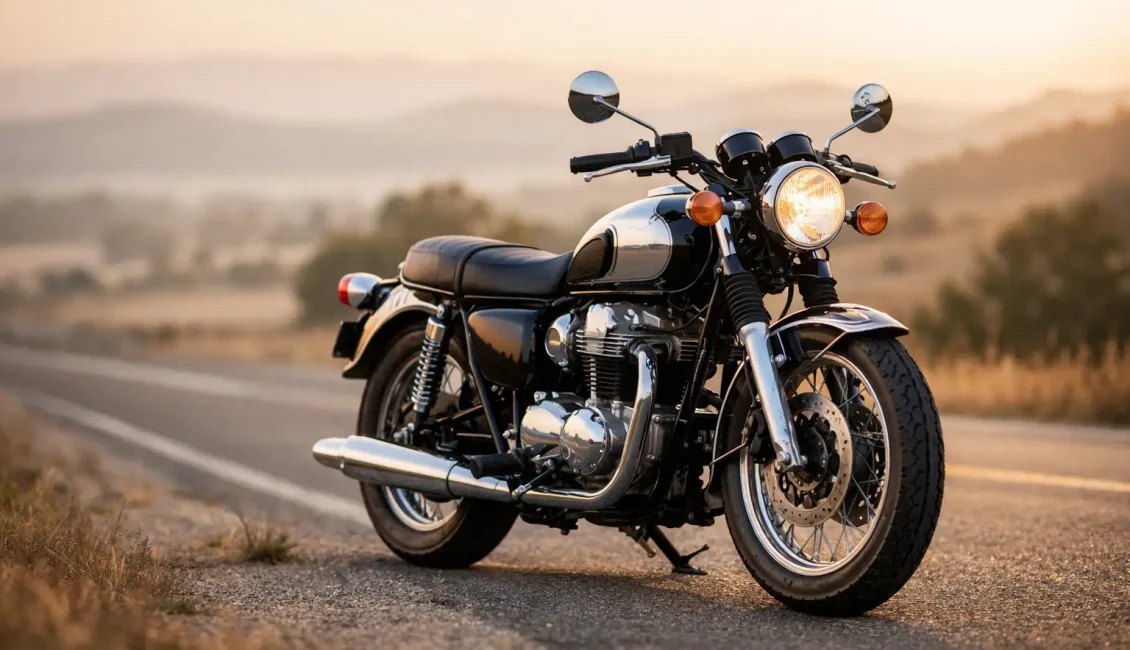
They also reward closer inspection. With many classics, the engineering is visible. You can see the frame, the fins, the carburettors, the exhaust routing and all the little touches that gave each model its identity. They invite conversation in a way that more uniform modern bikes sometimes do not.
That is why classic motorcycles remain such a strong part of the show scene. They bring nostalgia, craftsmanship, rarity and a proper sense of occasion. At a well-curated event, they sit comfortably alongside performance machinery, modified builds and modern exotica because they offer something timeless – character you can hear before you even see it.
Should you buy one because it is a classic?
Only if you like the reality as much as the romance. Owning a classic motorcycle can be hugely rewarding, but it comes with trade-offs. Older bikes may need more maintenance, more patience and a better understanding of parts availability. Riding them can be more involving, but also more demanding.
Originality versus usability is another choice. Some owners want factory-correct restoration. Others are happy with sensible upgrades that make the bike easier to live with, such as improved electrics or better tyres. Neither approach is wrong, but the balance depends on whether you want a showpiece, a rider or a bit of both.
If you are drawn to the scene, seeing a wide mix of machines in person is still the best way to understand what counts as classic and why. At events such as those staged by Great British Motor Shows, you quickly see that the label is not about snobbery. It is about recognition. Certain bikes have earned a place in the story of motorcycling, and enthusiasts know it when they see it.
The best way to answer what is a classic motorcycle is this: it is a bike that still matters. Not just because it is old, but because people still care enough to preserve it, ride it, talk about it and gather around it.