
A great vehicle can stop visitors in their tracks. A great display gives them a reason to stay, ask questions, take photographs and remember who brought it. For motor show exhibitors, that difference matters. Whether you are presenting a prized classic, promoting a specialist business, representing a car club or bringing a performance build to its first public outing, your space is part of the show experience.
At a proper motoring event, people come ready to look closely. They want to hear the story behind the restoration, spot the rare factory option, compare engineering details and talk to people who care as much as they do. The most successful exhibitors make that enthusiasm easy to share.
What visitors want from motor show exhibitors
A motor show is not a showroom floor. Visitors are not only judging a vehicle on its price, power output or concours finish. They are responding to character. A weathered rally car with a brilliant competition history can draw as much attention as an immaculate supercar, provided its story is visible and the owner is happy to talk.
That is why variety makes a show memorable. A line-up of British classics, a row of carefully modified hatchbacks, modern performance machinery, bikes, restoration projects and rare imports all give visitors something different to discover. For families and casual enthusiasts, that breadth keeps the day moving. For serious collectors and owners, it creates the conversations that make an event worth returning to.
If you are exhibiting commercially, the same principle applies. Visitors do not want a hard sell before they have had time to look around. They respond far better to a welcoming stand, a clear idea of what you offer and someone who can answer a technical question without the sales patter. Interest first, business second. The best leads usually follow naturally.
Start with the right display plan
Your display should suit the vehicle, the venue and your goal for the day. A pristine E-type, a modified Nissan Skyline and a local club’s mixed-make line-up should not be presented in exactly the same way. Think about what makes your entry distinctive, then make that feature easy to see.
For a vehicle exhibitor, preparation starts well before arrival. Clean the car or bike properly, including wheels, glass, engine bay and the areas people often inspect when they crouch down for a closer look. Bring practical essentials too: a cloth for morning dew, a small cleaning kit, a battery pack if needed and weather protection that does not overwhelm the display.
A simple information board can do a lot of work. Include the model, year, key specification and a short account of why the vehicle matters. If it is a restoration, tell visitors where it began and what has been completed. If it is a rare survivor, explain what is original. If it is modified, highlight the work that has gone into making the build your own.
Keep the wording concise. People should be able to understand the headline while walking past, then find the detail if they want it. A dense sheet of text rarely gets read, but a few well-chosen facts can start an excellent conversation.
Make the stand feel welcoming
There is a fine line between protecting a valuable vehicle and making it feel off limits. Sensible barriers, signage and careful positioning are often necessary, especially for prestige cars, rare classics and competition machinery. But an overly closed-off stand can discourage the people you hoped to meet.
Leave room for visitors to view the key angles of the vehicle and avoid placing chairs, bags or boxes where they block the display. If you are with a club, arrange cars with enough space to appreciate each one rather than packing them bumper to bumper. A well-spaced line-up also photographs better, which helps the show reach further through visitors’ posts and club pages.
For traders, presentation is equally important. Keep stock tidy, prices clear and your most eye-catching products at the front. A stand selling detailing products, period clothing, workshop tools or automotive artwork should be easy to browse without visitors feeling they have stepped into a cramped stall.
Tell a story people can take home
People remember stories long after they have forgotten registration numbers. A vehicle’s past can be the deciding factor between a quick glance and a ten-minute chat.
Perhaps your Mini was bought new by a family member and has stayed with you for decades. Perhaps your bike was rescued from a shed, rebuilt over several winters and finally returned to the road. Perhaps your race car has competed at a famous circuit, or your modern performance car has been developed with a specific road or track purpose in mind. These are the details that turn metal, paint and horsepower into something personal.
You do not need to stand beside the vehicle every second, but someone should be available during busy periods. A friendly owner or club member who can share honest knowledge adds enormous value. If you need to step away, leave a clear display card and consider a small folder of restoration photographs or period images. Before-and-after shots are especially effective because they let visitors see the hours behind the finished result.
Arrive prepared, then enjoy the day
The best show days begin with an unhurried arrival. Read your joining instructions, know your entry time and have any exhibitor pass or booking reference ready. Historic estates, parks and destination venues can have specific vehicle routes, access points and ground conditions, so following the event guidance helps everyone get parked safely and keeps the show looking its best from opening time.
Bring what you need, but avoid bringing half the garage. Essential tools, cleaning materials, food, drinks, sun cream, waterproofs and a folding chair are sensible. Large piles of kit can make even a superb vehicle display feel untidy. If the forecast is mixed, plan for it. British motoring events are built on enthusiasm, not perfect weather, and a prepared exhibitor is far more likely to enjoy the day.
Also give yourself permission to look around. Exhibiting is a chance to meet owners, discover suppliers, find ideas for your next project and see vehicles you may never encounter elsewhere. If you are part of a club, arrange breaks so each member gets time away from the stand.
Clubs, traders and individual owners all shape the show
A strong event is built by more than headline cars. Clubs bring community, knowledge and impressive numbers. Individual owners add unexpected gems and personal stories. Traders give visitors the chance to buy parts, artwork, clothing, accessories and products that feed the hobby long after the gates close. Automotive businesses create useful connections for restoration, maintenance, insurance, tuning and ownership.
Each group has different priorities, so the right event matters. A car club may want space for a coordinated display and a venue that makes a day out feel special. A trader needs the right audience, practical access and enough dwell time for conversations to become sales. An individual exhibitor may simply want to share a cherished vehicle with people who will appreciate it.
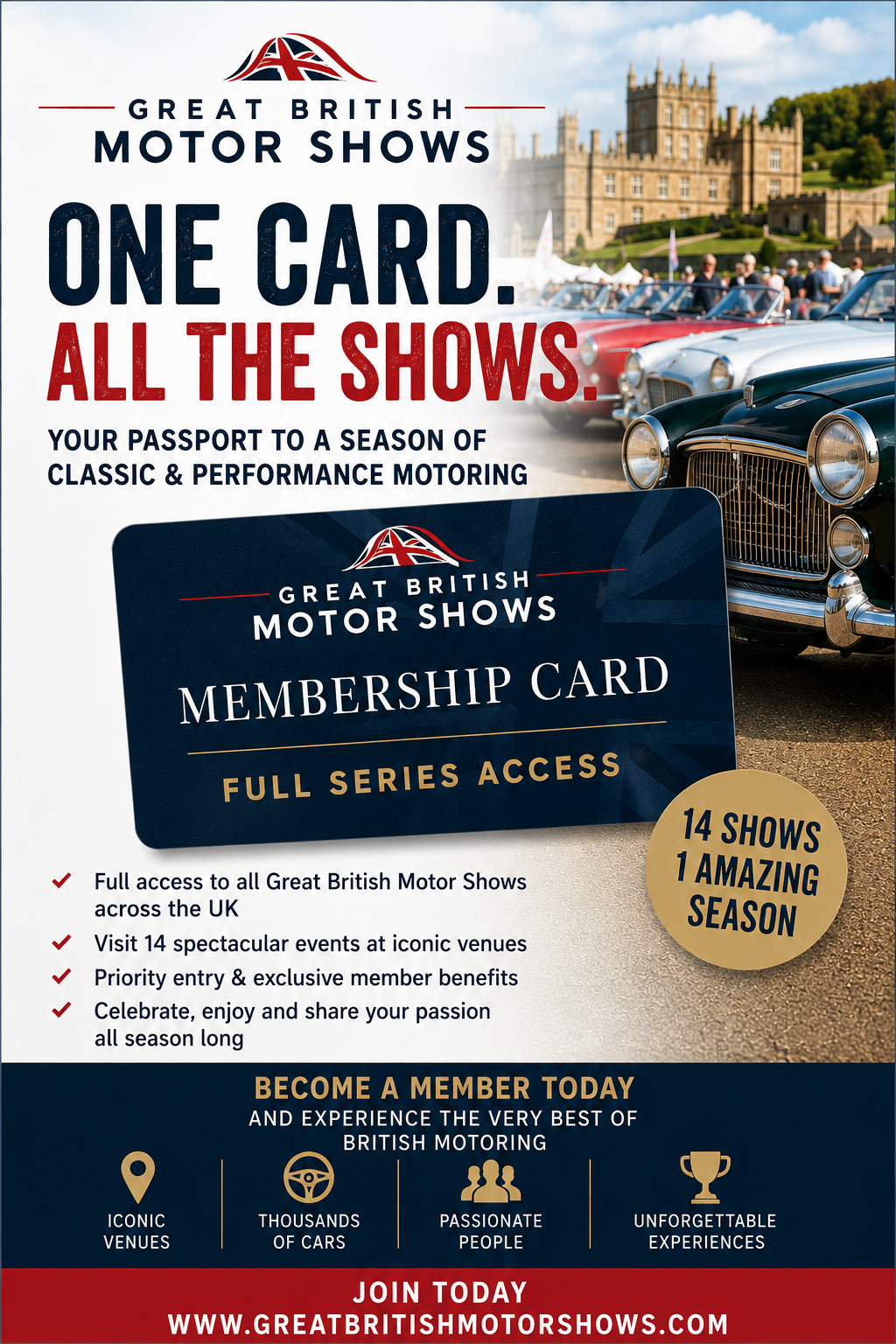
Great British Motor Shows brings these audiences together in venue-led settings designed for the full motoring experience. That mix is the point. A visitor may arrive to see supercars and leave talking about a beautifully restored motorcycle, a rare estate car or a local specialist they had not known before.
Turn attention into a lasting connection
If you run a business, club or automotive page, make it simple for interested visitors to find you again. Display your name clearly and have printed information available if it suits your audience. A QR code can be useful, but it should support a real conversation, not replace one. Plenty of enthusiasts still value a proper leaflet, a business card or a club contact they can keep in a wallet.
Collecting contact details can help, but be respectful. Ask only when there is a clear reason, such as a club membership enquiry, a booking request or a product follow-up. Visitors will remember good advice and genuine enthusiasm far more fondly than a forced data capture attempt.
Photographs are part of the event now, so consider what your display looks like from a phone camera. Keep signage straight, remove clutter and make sure the best side of the vehicle is visible. If someone asks to take a picture, welcome it. Every shared image can introduce your vehicle, club or business to another enthusiast.
The strongest exhibits are not always the most expensive or the loudest. They are the ones with care behind them, a story worth hearing and people who are pleased to be part of the day. Prepare well, bring your passion, and give visitors a reason to stop for that second look.