
A packed showground tells you something digital ads rarely can. When people stop, look closely, ask questions and bring their family or car club over for a second look, you get a proper read on real interest. That is exactly why a strong guide to motoring event sponsorship matters. For brands that want to be seen in the right setting, by the right crowd, live automotive events can deliver far more than logo space if the partnership is built with purpose.
Motoring events sit in a sweet spot. They bring together passion, lifestyle, heritage, performance and spending intent in one place. Whether the audience comes for classic saloons, modified builds, bikes, supercars or a full family day out at a landmark venue, they are there by choice. They have carved out the time, made the journey and arrived ready to engage. That changes the value of sponsorship straight away.
Why motoring event sponsorship works
The best motoring shows are not passive environments. Visitors are moving, comparing, photographing, chatting and buying. That creates more natural opportunities for a sponsor to be remembered. A stand can become a conversation. A vehicle display can become a photo point. A hospitality area can become a place where deals start.
There is also a credibility factor that matters. In automotive culture, people can spot a lazy sponsorship from a mile off. If a brand appears to understand the audience, respects the venue and adds to the atmosphere, it lands well. If it feels bolted on, it fades quickly. Sponsorship in this space works best when it feels like part of the event rather than an interruption around the edges.
That is particularly true in the UK market, where regional shows often bring together broad audiences. You may have serious collectors, first-time enthusiasts, families, clubs, traders and local businesses all on the same site. That mix is valuable, but it also means sponsors need clarity on who they actually want to reach.
A practical guide to motoring event sponsorship goals
Before budgets, branding or stand designs, start with the commercial reason for sponsoring. Awareness is one goal, but it is rarely enough on its own. Most worthwhile partnerships sit across a few objectives at once.
A tyre brand may want visibility with enthusiasts, but it may also want retailer leads and content for later campaigns. A finance provider might want face-to-face conversations with owners thinking about their next purchase. A detailing brand may care less about sheer footfall and more about product demos, direct sales and repeat custom after the event.
That is where many sponsorship deals become sharper. Instead of asking, “How many people will see us?”, the better question is, “What do we want people to do because we are here?” The answer might be to sample a product, scan a code, enter a competition, book a test drive, join a mailing list or simply associate the brand with quality cars in a quality setting.
If the event organiser and sponsor agree that early, the whole package improves. Signage, content, vehicle placement, PA mentions and on-site activity can then support a clear outcome rather than a vague promise of exposure.
Match the sponsor to the crowd, not just the category
One of the easiest mistakes in motoring event sponsorship is assuming any automotive audience will do. In reality, the fit between sponsor and crowd matters far more than broad sector overlap.
A prestige insurer may be better suited to a heritage venue with strong classic and collector attendance than a heavily modified scene event. A family car brand may get more value from a mixed-format show where younger visitors, parents and casual enthusiasts all spend the day together. A specialist tools or restoration company may prefer a crowd that likes getting hands-on and talking technical detail.
Venue also shapes perception. A sponsor attached to a stately home setting, for example, borrows some of that sense of occasion. A sponsor at a performance-led event may gain more energy and edge. Neither is automatically better. It depends on the brand and what it wants the audience to feel.
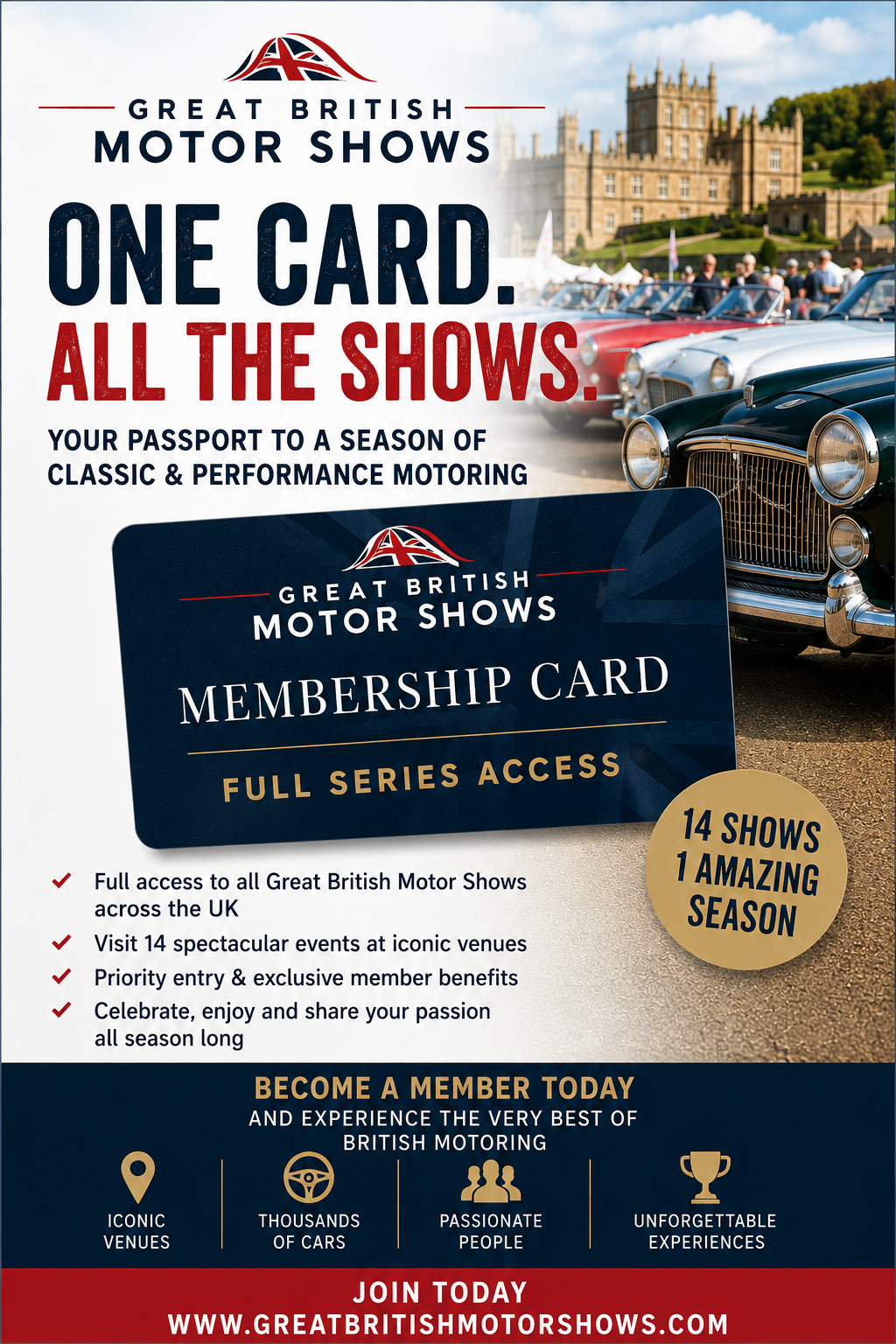
This is where experienced event organisers earn their keep. They know which shows draw clubs, which venues attract lifestyle-led visitors, and where traders, exhibitors and enthusiasts overlap best. Great British Motor Shows, for example, builds around that mix of vehicle culture and destination venues, which gives sponsors more than a field full of parked cars. It gives them an atmosphere people want to spend time in.
What a good sponsorship package should include
The best packages are flexible enough to fit different budgets but clear enough to show what is being bought. A sponsor should not be left guessing whether they are paying for reach, prominence, access or activation.
Branding is the obvious starting point. That can include event naming rights, show guide placement, arena signage, stage backdrops, ticketing mentions, digital promotion before the show and visible on-site positions. But branding on its own is only part of the story.
Activation is where the partnership starts to work harder. That might be a display area, product demonstration zone, hospitality space, competition mechanic, owners’ club feature, live interview slot or sponsored judging award. The format should suit both the sponsor and the crowd. A premium watch brand probably does not need a noisy hard sell. A parts retailer might benefit from exactly that sort of lively interaction.
Good packages also include content. Pre-event announcements, social features, event previews and post-event coverage all extend the value beyond one day on site. That matters because sponsorship value now sits across physical attendance and the audience reached before and after the gates open.
Budgeting properly for motoring event sponsorship
The headline fee is only one part of the spend. Brands often underestimate what it costs to activate well, and that is where mediocre results begin.
If a sponsor books a decent package but arrives with tired graphics, underprepared staff and no clear call to action, the event will not rescue it. On the other hand, a smaller package with smart activation can punch above its weight. A well-briefed team, attractive display, simple data capture and a reason for visitors to stop can outperform a more expensive but passive presence.
Travel, staffing, vehicles, insurance, print, stock, hospitality and follow-up all need to be factored in. So does timing. If the event sits in a busy summer calendar, internal resources may already be stretched. It is better to sponsor fewer events properly than spread budget too thinly and show up half-ready.
How to measure success without kidding yourself
This is where a guide to motoring event sponsorship has to be honest. Not every result is immediate, and not every benefit fits neatly into a spreadsheet by Monday morning. Brand lift, audience trust and quality conversations matter. But there still needs to be some discipline around measurement.
Start with metrics that match the objective. If the goal is lead generation, track leads and what happened to them after the event. If the aim is retail sales, measure on-site revenue and post-event uplift. If the purpose is awareness, use reach, content engagement, brand recall and footfall around the activation area.
It also helps to compare like with like. A heritage venue show and a high-energy performance event may produce different styles of engagement. One may deliver fewer but higher-value conversations. The other may bring greater reach and stronger social content. Both can work, but only if success is judged in context.
Post-event review should be candid. Were the right people there? Did the stand team have enough support? Did visitors understand the offer? Was the sponsor visible in the places that actually mattered? The strongest partnerships improve year on year because they use that feedback properly.
Common mistakes sponsors make
The biggest error is treating sponsorship as a badge rather than a live opportunity. A logo on an event asset has value, but not enough on its own. Visitors remember experiences, interactions and displays that feel worth their time.
Another common problem is poor fit. A sponsor may chase a large crowd when a more targeted audience would perform better. Bigger is not always better in this market. Enthusiast attention is valuable precisely because it is earned.
Finally, some brands expect instant return from one appearance. Motoring events can absolutely generate fast wins, especially for retail and lead capture, but the strongest outcomes often come from consistency. Showing up again, building recognition and becoming part of the event landscape can create momentum that a one-off booking never quite achieves.
Choosing the right event partner
A good event partner should be able to explain its audience clearly, not just quote big attendance numbers. Ask what types of vehicles feature strongly, how long visitors typically stay, what traders and exhibitors return year after year and how sponsors are integrated into the visitor experience.
You also want realism. Not every event suits every sponsor, and a trustworthy organiser will say so. That level of honesty is far more useful than a glossy package that promises everything to everyone.
The right sponsorship feels natural from the first announcement to the last car leaving the showground. It gives the audience something useful, memorable or enjoyable, and it gives the brand a credible place within the day. Get that balance right and sponsorship stops being a line in the marketing budget. It becomes part of the experience people talk about on the drive home.