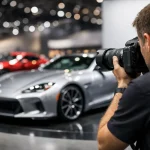

A polished bonnet can turn into a mirror, a barrier rope can spoil an otherwise perfect frame, and the car you came to see may be surrounded by people within minutes. To photograph cars at motor shows well, you need more than a decent camera. You need an eye for the details, patience around crowds and a plan for making the most of a busy day.
The good news is that a great motor show gives you everything worth photographing: rare classics, immaculate restorations, wild modified builds, performance machinery and the atmosphere that comes from thousands of enthusiasts sharing the same passion. Whether you are using a mobile phone, a compact camera or a DSLR or mirrorless setup, these techniques will help you come home with images that do the cars justice.
Arrive early and walk the show before shooting
The first hour of a motor show is photographic gold. The light is usually softer, display areas are less crowded and exhibitors are still putting the finishing touches to their stands. If you can arrive as gates open, take a quick lap without taking many photos. Look for vehicles that catch your eye, note where the sun is falling and identify backgrounds that will look clean rather than cluttered.
Historic venues add another layer to the shot. A line of sports cars in front of a grand hall, a classic saloon beneath mature trees or a superbike beside an estate drive can give an image real sense of place. At the same time, do not force the venue into every frame. Sometimes the best photograph is simply a tight, honest view of a car’s shape, badge or beautifully finished interior.
Check the forecast, but be ready for British weather to change its mind. Bright overcast conditions are often ideal because clouds soften reflections and reduce harsh shadows. Strong midday sunshine can still work, particularly for dramatic side-lit details, but it demands more care with highlights on white paintwork and chrome.
How to photograph cars at motor shows with clean angles
A car can look sensational in person but disappoint in a photograph if the angle is wrong. Start low, around headlight height or slightly below, to give the car presence. A three-quarter front angle is a dependable choice because it shows the grille, headlights, bonnet line and side profile in a single frame. For rear-engined icons, bespoke exhausts and serious aero, the rear three-quarter angle can be even more revealing.
Before pressing the shutter, study the edges of your frame. A bright gazebo, a portable loo, a sandwich van or half of another car can pull attention away from the subject. Take two steps left, crouch down or move closer to simplify the background. Small adjustments make a huge difference.
Avoid photographing every car from standing height. That viewpoint is useful for a documentary record, but it rarely shows the design at its best. Get low for muscular arches and aggressive front ends. Shoot slightly higher when you want to show a sweeping bonnet, an open engine bay or the pattern of a carefully trimmed cabin. For details, fill the frame with a wheel centre, gear selector, carburettor, bonnet vent or the stitching on an original seat.
Reflections deserve special attention. They can reveal your own silhouette, nearby visitors or an untidy stand. Change your position until the reflection becomes flattering, such as trees, sky or a period building, rather than distracting. A circular polarising filter can reduce glare on paint and glass, although it can also make windscreens look uneven at certain angles. Use it thoughtfully rather than leaving it on for every shot.
Give the whole vehicle room to breathe
When photographing a full car, do not crop tyres, mirrors or bumpers by accident. Either include the whole vehicle with enough space around it, or crop deliberately for a closer, graphic composition. A half-cut wheel at the bottom of the frame usually looks like a mistake, not a creative decision.
If the display is packed tightly, focus on what makes that vehicle special. A full side profile may be impossible, but a clean image of the wing, badge and wheel can tell a stronger story than a compromised wide shot.
Use settings that suit the subject and conditions
Cars at rest do not require fast shutter speeds, but people walking through the frame and breezy flags certainly can. For handheld shots, aim for at least 1/125 second, and increase it if you are using a longer lens. If light is limited under trees or indoors, raise the ISO rather than risking soft images. A sharp photo with a little grain is far better than a blurred one.
For complete cars, an aperture around f/5.6 to f/8 usually provides enough depth of field to keep the front and rear reasonably sharp. For badges, interior details and close-ups, try f/2.8 to f/4 to soften the background and isolate the feature. Just remember that very wide apertures can leave only a narrow slice of the subject in focus.
A 24-70mm-style zoom is a brilliant all-round choice at a show, covering wide venue scenes, full cars and tighter details without constant lens changes. A short telephoto can help compress the background and remove distractions when the crowd is heavy. Mobile phone photographers can achieve similar results by using the standard lens for natural proportions and stepping closer, rather than relying too heavily on digital zoom.
Shoot in RAW if your camera allows it. Motor show scenes often contain deep shadows, bright skies and shiny bodywork, so the extra editing flexibility is valuable. On a mobile phone, use the highest-quality setting available and tap the car’s brightest area before taking the photo to avoid blowing out highlights.
Make crowds part of the story when you cannot avoid them
A busy show is proof that the event has energy. You do not have to remove every person from every frame. A family admiring a classic, an owner chatting proudly beside their car or enthusiasts gathered around an engine bay can make a photograph feel alive.
The key is intention. If people are in the shot, place them purposefully. Wait for someone in an interesting position, such as looking into a cabin or pointing out a detail, rather than catching a random passer-by halfway through the frame. A slightly slower shutter speed can even add motion blur to the crowd while keeping the parked car sharp, creating a sense of bustle.
For clean vehicle photographs, patience wins. Set up your composition, wait for gaps and take several frames. Do not lean on a car, move barriers or step into a display area to get the shot. Exhibitors have invested time, money and pride in bringing their vehicles, and respecting the display always comes first.
Photograph the details that make each build personal
The best galleries do not only show rows of full cars. They reveal the craftsmanship that enthusiasts notice up close: period tax discs, hand-painted signwriting, polished cam covers, rally stickers, leather patina, brake hardware and the tiny imperfections that prove a car is used and loved.
Look for contrast. Photograph old against new, elegant against outrageous, original against modified. A weathered classic next to a sharply detailed supercar can capture the range that makes a proper motor show such a memorable day out. If you speak to an owner, ask what they are most proud of. Their answer will often point you towards the image everyone else misses.
Edit for impact, not artificial perfection
A quick edit can lift a good photograph, particularly when show conditions are changeable. Straighten horizons, crop distractions, recover bright highlights and gently raise shadows where needed. Keep paint colours believable. It is tempting to push saturation and clarity until every car looks like a computer game, but natural colour and faithful textures tend to have more lasting appeal.
Create a varied set of images: one wide scene that establishes the venue, a few hero shots of standout cars, closer detail images and moments involving owners or visitors. That mix tells the story of the day far better than 50 nearly identical front-three-quarter shots.
At Great British Motor Shows, there is always more to see than one camera roll can hold. Take your time, respect the cars and the people around them, and keep looking for the angle that captures why that particular machine stopped you in your tracks.