The gates are open, the exhaust notes are already bouncing across the showground, and there is a concours classic you have wanted to see in the metal for years. The last thing you want is to be distracted by wet feet, a flat phone battery or a ticket buried somewhere in your inbox. So, what should I bring to a motor show? A little preparation goes a long way towards making it a brilliant day of motoring.
Whether you are heading out to admire rare classics, compare modified builds, find parts for a restoration or make a family day of it, pack for the venue, the forecast and the way you like to enjoy a show. Great British motor shows are made for wandering, talking cars and discovering something unexpected around the next row.
What should I bring to a motor show?
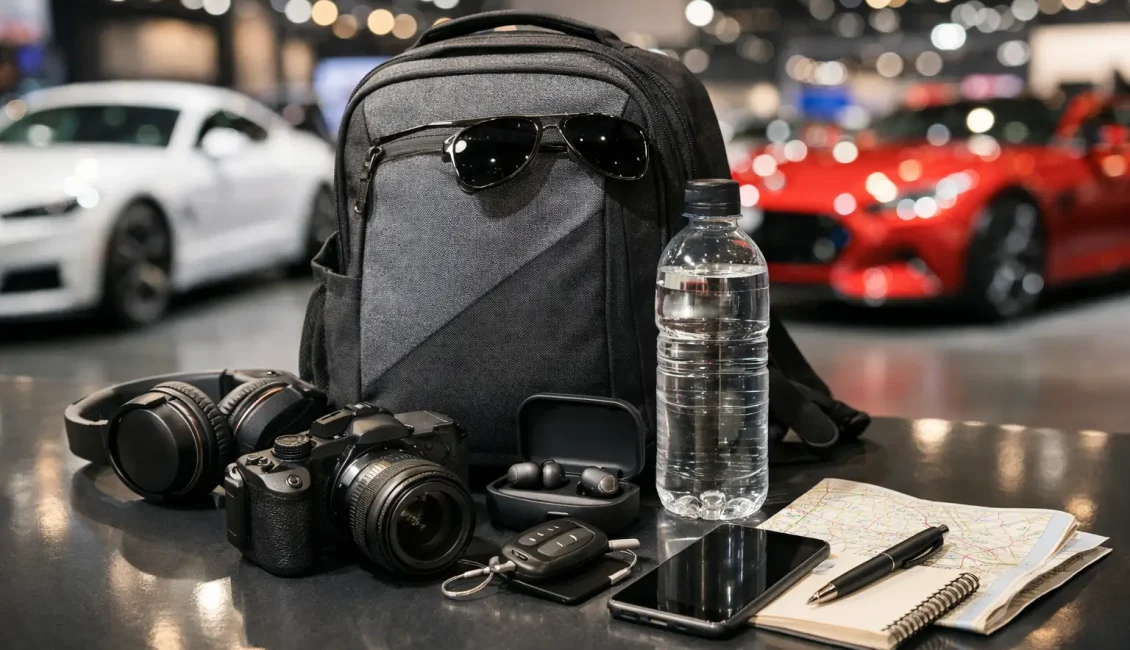
Start with the essentials that remove the usual day-out friction. Keep them together in a small rucksack or cross-body bag, ideally one that leaves your hands free for photographs, a coffee and the occasional show programme.
- Your ticket and travel details. Save digital tickets to your phone wallet or take a screenshot before leaving home. Signal can be patchy at busy rural venues, and a printed copy is a sensible back-up. Check the event information for opening times, parking instructions and entry arrangements the night before.
- A charged phone and power bank. Your phone will become your camera, map, ticket wallet and group-meeting tool. A compact power bank and short cable are worth their weight by mid-afternoon, especially if you are taking plenty of photos and videos.
- Comfortable walking shoes. A proper motor show involves miles of browsing – display lines, club stands, trade areas, food traders and perhaps a historic house or grounds. Trainers or supportive walking shoes are usually the right call. Save the delicate footwear for a less grassy occasion.
- A weather layer. British weather can turn an open-air showground from bright sunshine to drizzle in a very short space of time. Bring a light waterproof jacket or packable poncho, even when the forecast looks favourable. In warm weather, add sun cream, sunglasses and a cap.
- Water and a few snacks. Food vendors are part of the event experience, and a proper bacon roll or ice cream has its place. Still, carrying water and a small snack keeps everyone comfortable while you decide where to stop rather than stopping because you have to.
- A card and some cash. Most traders take card payments, but small cash purchases can still be useful for parking-related extras, charity collections or that unexpected bargain from a fellow enthusiast. Set a spending limit if the autojumble is likely to test your resolve.
These basics suit most visitors. The rest of your kit depends on whether you are a photographer, a serious shopper, travelling with children or bringing a vehicle to display.
Dress for the showground, not just the forecast
Motoring events at heritage venues have a special atmosphere because the setting is part of the occasion. Lawns, parkland and estate paths look superb behind a line of sporting icons, but they can also be uneven, muddy after rain or dusty during a dry spell. Comfort does not mean abandoning style – it simply means choosing clothes that will still feel good after several hours on your feet.
Layering is the safest approach. A T-shirt and lightweight fleece work well for a cool start and a warmer afternoon, while a waterproof outer layer deals with a shower without taking up much room. If the event is expected to be particularly sunny, think about your neck and shoulders as well as your face. It is surprisingly easy to catch the sun while chatting beside a club stand.
If you are bringing children, spare socks and a light change of clothing can rescue the day after a puddle encounter or an ice-cream incident. Ear defenders are also a good idea for younger visitors at areas with demonstrations, revving engines or busy arrivals. The sound is part of the spectacle, but comfort matters more.
Bring the right kit for photos and conversations
A motor show is full of details that do not always come across in a quick phone snap: a hand-stitched interior, a beautifully patinated badge, a period racing sticker or the engineering tucked beneath an open bonnet. A phone is more than capable for most visitors, provided it is charged and has enough storage space. Wipe the lens before you start – it makes a bigger difference than you might expect.
If photography is a key part of your day, bring a compact camera or your preferred DSLR, but be realistic about carrying it. A heavy camera bag can become tiresome long before the best cars have arrived. One versatile lens, a spare battery and a microfibre cloth will cover most situations. Ask before leaning into a display vehicle or using a tripod in a crowded area, and keep an eye on where you are standing. Owners and exhibitors have put serious time into presenting their pride and joy.
For enthusiasts searching for their next project, keep a notes app open on your phone or pack a small notebook and pen. Recording a registration number, restoration supplier, paint code or club contact is far more useful than trying to reconstruct the conversation later. A notebook also feels fitting when you are talking to an owner who has spent decades with a particular car or bike.
Planning to shop? Leave room for the unexpected
Trade stands and autojumble areas are where a casual browse can quickly become a boot-full of parts, memorabilia and workshop treasures. If you are hunting for something specific, write down exact part numbers, dimensions and model years before you leave. A photograph of the component you need, including its mounting points or connectors, can prevent an expensive wrong purchase.
Bring a reusable bag for manuals, clothing, model cars and smaller finds. For valuable or fragile purchases, ask the trader whether they can hold the item while you continue around the show. It depends on the trader and the item, so do not assume, but it can save you carrying something awkward across the grounds.
Larger buys need a little thought. Measure the available space in your car before setting off, particularly if you are tempted by a wheel, panel, set of seats or bulky garage sign. A blanket, bungee cords and a few sturdy bags in the boot can be useful, although the sensible choice is sometimes to arrange collection rather than cram an irreplaceable find into a passenger footwell.
If you are arriving in a display vehicle
Bringing your own car or bike changes the checklist. Confirm your exhibitor pass, arrival time, display area and any vehicle-entry instructions before travel. Early arrivals are often part of the experience: the calm before opening, the final polish, and the sight of rows filling with everything from pre-war machinery to modern performance metal.
Pack any paperwork requested by the organiser, plus breakdown cover details and the practical items you would normally carry on a longer run. A clean cloth, quick detailer, tyre-pressure gauge and basic tool kit are sensible, but there is no need to turn the boot into a mobile workshop unless the event guidance calls for it. For bikes, a disc lock and a small cover may be useful depending on the weather and parking arrangements.
Display vehicles attract questions, and that is one of the best parts of the day. A small information card with the model, year, engine and a few lines about its story gives visitors an easy starting point while you are away getting a drink. If you have a restoration photo album on your phone, expect it to start conversations with people who truly understand the effort behind the finished result.
Make the day easier for your group
Agree a meeting point as soon as you arrive, particularly if your group has different interests. One person may be drawn to classic motorcycles, another to supercars, and somebody else to the food court. Pick a landmark and a time to regroup rather than relying entirely on phone signal.
It also helps to check the show map early. Mark the displays you do not want to miss, then leave room to wander. The most memorable moment at a Great British Motor Shows event is often not the car you expected to see, but the low-volume special, beautifully restored family saloon or owner story you find by chance.
Pack thoughtfully, travel comfortably and give yourself permission to slow down. The best motor show days are not about ticking off every vehicle before closing time. They are about hearing an engine fire into life, spotting a detail you have never noticed before and going home with fresh enthusiasm for the machines that bring people together.