
A great motor show starts long before the gates open. The moment a rare homologation special catches your eye, a perfectly restored classic fires into life, or a row of supercars fills the lawn, you will be glad you planned ahead. Knowing how to buy motor show tickets properly means less time dealing with queues and uncertainty, and more time enjoying the cars, bikes, clubs and traders that brought you there.
For many enthusiasts, a motor show is not simply a day out. It is a chance to see cherished marques in the metal, talk restoration with fellow owners, introduce younger family members to proper automotive engineering and find inspiration for the next project. Whether you are coming for British classics, modified builds, performance machinery or prestige cars, buying the right ticket is the first part of a cracking day.
Start with the event, venue and date
Before purchasing anything, check that you have selected the correct show and date. A busy calendar can include events at historic estates, country parks and destination venues across different regions, so it pays to confirm the location before you commit. Look at the venue address, opening times and the event description, particularly if a show runs across more than one day.
The event details should also give you a feel for what is on offer. Some visitors come specifically for classic cars and owner clubs; others want modified vehicles, sports cars, motorcycles or an impressive supercar line-up. Most large shows bring those worlds together, but every event has its own character. Choosing the show that best suits your interests makes the ticket far better value.
If you are travelling with friends, agree the date before anyone buys. It sounds obvious, but it is much easier to coordinate a convoy, a lift or a family day out before tickets are booked than afterwards.
How to buy motor show tickets online
The simplest route is normally to buy in advance through the event organiser’s official ticket page. Select the event, choose the day if required, then pick the ticket type and quantity. Enter your contact details carefully, check the order summary and complete payment using the available secure checkout options.
Once the booking is confirmed, keep the confirmation email somewhere easy to find. Depending on the event, your ticket may arrive as a digital ticket, a QR code or a confirmation to present on your phone. Take a screenshot as a sensible backup, especially if signal at the venue may be patchy. If you prefer paper, check whether a printed copy is accepted, but do not assume it is necessary.
Buy only through the official event channel or an authorised ticket partner named by the organiser. Unofficial resale listings can create needless hassle, from inflated prices to tickets that cannot be validated at the gate. A genuine ticket should make the day easier, not leave you wondering whether it will scan.
Choose the ticket type that fits your visit
The right ticket depends on who is coming with you and how you plan to arrive. Adult, child, family and concession tickets may be available, but age bands and eligibility rules differ by event. Read the description before checking out rather than relying on what applied at a previous show.
Children may need a ticket even where entry is free, so organisers can manage attendance safely. If you are booking for a group, count everyone before paying and make sure each attendee has the correct admission type. It is also worth checking whether carers, companion tickets or accessibility arrangements need to be requested in advance.
Do not confuse a visitor ticket with an exhibitor, club or trader booking. Bringing a display vehicle, selling goods or attending as part of a club usually involves a separate registration process. A standard admission ticket may get you through the gate, but it will not necessarily secure a display space, vehicle pass or trader pitch.
Why advance tickets are usually the smart choice
Advance booking is about more than avoiding the gate. It gives you confidence that your place is sorted, helps organisers prepare for visitor numbers and can make arrival more straightforward. Some events offer advance prices that are lower than on-the-day entry, while others have a limited capacity or certain ticket categories that can sell out.
It also gives you time to plan the practical details. You can check driving routes, train options, parking arrangements, weather forecasts and nearby places to stay if you are making a weekend of it. At a venue with acres of grounds and full display fields, an early start is often rewarded with quieter arrival, more time around the cars and first pick of the food and trade stands.
That said, on-the-day tickets can suit a last-minute decision if the event permits them. Just check the latest event information first. Availability, pricing and entry arrangements can change, particularly for popular dates or when weather and site conditions affect parking.
Check what your ticket includes
A ticket is your entry to the event, but the wider experience varies by venue and show. Before you travel, look for the information that matters to your day: opening and last-entry times, parking instructions, accessibility details, whether dogs are permitted, and any rules around bringing food or seating.
Parking is one of the most common questions. Some shows include general visitor parking with admission, while others may have separate arrangements. If you want to arrive in a special vehicle, meet a club or display a car, follow the specific instructions issued for that category. Do not assume that turning up in something interesting automatically gives you access to a show field.
Consider the venue itself as part of the ticket value. A motor show held at a grand estate or heritage location offers more than a car park full of machinery. There is space to wander, scenery for photographs, room for families to take a break and an atmosphere that suits everything from pre-war craftsmanship to modern performance cars.
Get your group organised before checkout
If you are booking for a family, a car club or a few mates, nominate one person to make the purchase and collect the details needed for each ticket. This prevents duplicate bookings and makes it easier to forward digital tickets later. Check names and email addresses before payment, especially where the organiser requires tickets to be assigned to individuals.
For a larger group, think beyond entry. Decide where you will meet, whether everyone is travelling together and what time you want to arrive. Big showgrounds are part of the appeal, but they can be busy and spread out. A clear meeting point near an entrance, café or landmark saves the familiar round of calls asking, “Where are you?”
If someone in the group has mobility requirements, contact the organiser early enough to understand the site layout and available support. Grass, gravel paths and historic grounds can be part of a venue’s character, but they also mean that access needs vary with weather and site conditions.
Be ready for the day, not just the gate
The ticket gets you in. A little preparation makes the day memorable. Check the forecast and dress for the venue rather than the sofa: comfortable shoes, a waterproof layer and sun protection can all be useful during a British show season. Bring a portable charger if your ticket is on your phone and you expect to take plenty of photographs.
Plan to arrive with enough time to park, walk to the entrance and get your bearings. Then resist the urge to rush straight to the biggest crowd. Some of the best conversations happen beside an owner-maintained classic, a meticulous modified build or a lesser-known bike that has attracted a knowledgeable audience.
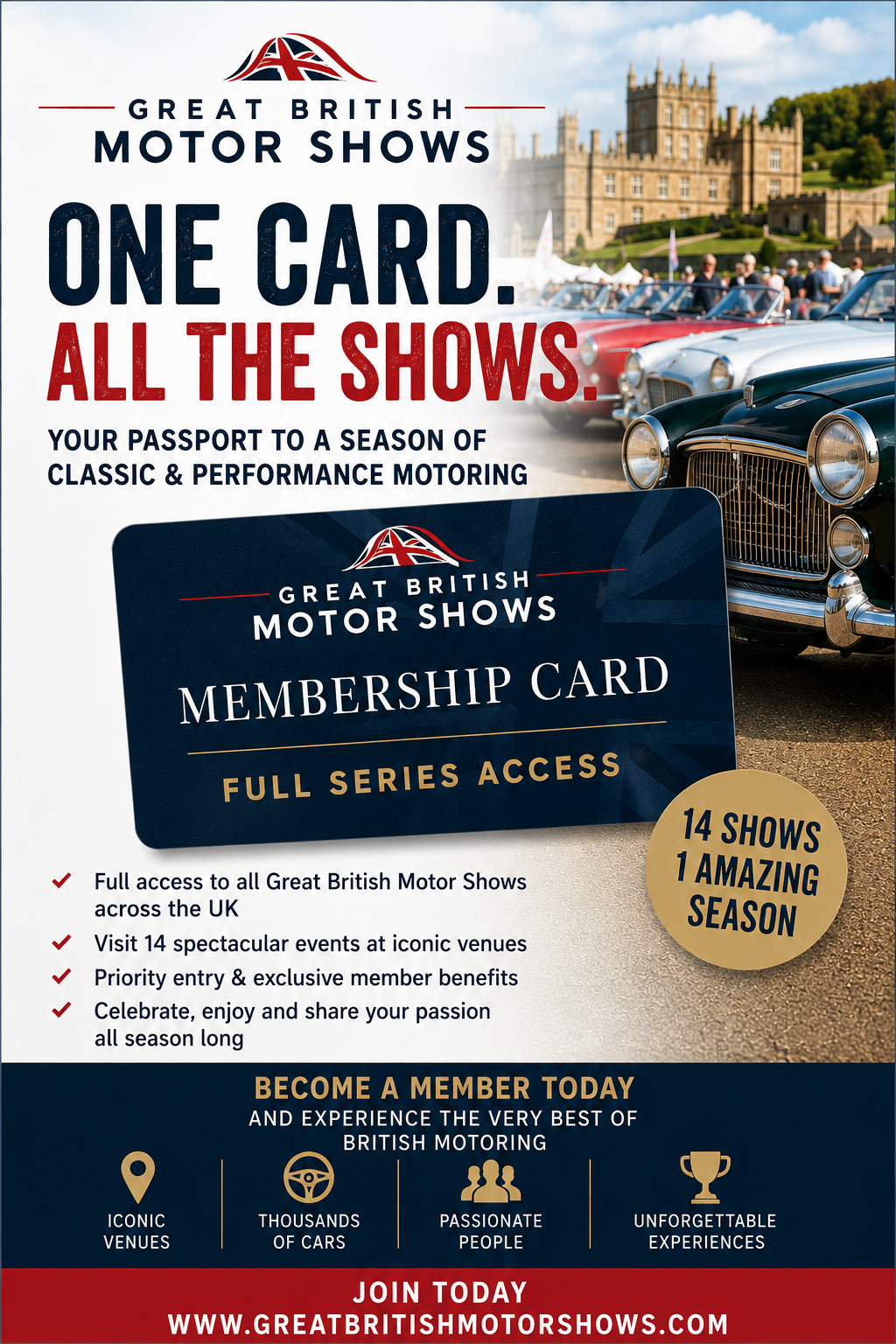
Great British Motor Shows are built around that shared enthusiasm. Book with care, arrive ready to explore and give yourself permission to linger when a vehicle has a story worth hearing. The best show ticket is not just an entry pass – it is the start of a proper motoring day out.