A polished chrome bumper catches the morning sun while, a few rows away, a supercar fires into life with a sharp crack from its exhaust. That contrast is the real magic of classic versus modern car shows. One celebrates the machines that shaped Britain’s motoring memories; the other puts visitors face to face with the speed, technology and design of the cars they see in magazines, on the road and on the racetrack.
For enthusiasts, the choice is rarely as simple as old or new. A beautifully restored Morris Minor can draw as much of a crowd as a McLaren, while a carefully modified hot hatch may attract questions all afternoon. The best days out make room for every kind of petrolhead – and for families who simply want an unforgettable day among exceptional vehicles.
What makes classic car shows special?
Classic car shows are built on stories. Every vehicle has survived changing fashions, changing roads and, often, years of dedicated work in a garage or workshop. Visitors are not just looking at paintwork and polished wheels. They are seeing the engineering, craftsmanship and character of another era.
A classic show can bring together everything from pre-war tourers and post-war saloons to British roadsters, American muscle cars, cherished family favourites and rare competition machinery. The variety matters because it turns a static display into a moving history of motoring. One owner might have spent decades restoring an original car to factory specification; another may have preserved a vehicle that has been in the family since new.
There is a relaxed, social rhythm to a strong classic event. Owners are usually close by, ready to talk about sourcing parts, tricky restorations or the first time they drove their car home. For visitors considering a first classic, those conversations can be more valuable than any brochure. They reveal the reality as well as the romance: the joy of ownership, the need for patience and the occasional battle with a reluctant carburettor.
Historic venues suit this atmosphere particularly well. A grand estate, country park or heritage hall provides a fitting backdrop for cars from the 1920s through to the 1980s and beyond. It becomes more than a car park full of vehicles. It feels like an occasion.
Heritage is not the same as perfection
Classic cars do not have to be concours examples to earn attention. A well-used Land Rover with honest patina, a period-correct modified Mini or a much-loved Ford that has been driven to every show for years can be just as compelling as an immaculate restoration. Originality has its place, but personality does too.
That is part of the appeal for newer enthusiasts. Classic ownership can feel more hands-on and approachable. You can often see the mechanical components, understand how they work and appreciate the owner’s effort without needing specialist diagnostic equipment. Of course, classics can demand time, storage and a healthy maintenance budget, so the dream is not always effortless. But at a show, the passion behind the ownership is impossible to miss.
Why modern car shows bring a different energy
Modern car shows are about the pace of motoring now. They showcase cutting-edge performance cars, prestige models, modified builds, sports cars and supercars that push design and engineering into exciting territory. The visual impact is immediate: sculpted bodywork, dramatic aerodynamics, huge brakes, carbon fibre details and colours that refuse to blend into the background.
For many visitors, modern displays offer the chance to get close to cars that are normally only glimpsed on the motorway, outside a hotel or through a screen. A current performance model can represent years of ambition, while a rare supercar provides the kind of presence that stops people mid-conversation. That sense of spectacle is a major part of the day.
Modern events also reflect how broad car culture has become. Modified cars, performance hatchbacks, Japanese icons, track-focused builds and luxury vehicles all have their own communities, each with distinct tastes and technical knowledge. A carefully engineered modified car deserves the same respect as a factory-fresh supercar when the work is thoughtful, safe and built around the owner’s vision.
Technology is another clear distinction. Modern vehicles can offer power figures that would once have belonged solely to racing cars, alongside advanced handling systems, hybrid assistance and increasingly sophisticated cabin design. For some, that makes them less mechanical and more digital. For others, it proves just how far the motor car has come. Both views are fair, and both create great conversations at a show.
The new generation of enthusiasts
Modern shows are often especially good at bringing younger enthusiasts into the scene. Someone who grew up admiring a Nissan GT-R, BMW M car, Audi RS model or high-performance Ford may not yet have the space, budget or confidence to own one, but seeing it in person makes the passion real.
That matters for the whole motoring community. Today’s modified daily driver or attainable performance car can be tomorrow’s sought-after classic. The vehicles that feel familiar now will eventually carry the nostalgia of a generation, complete with their own memories of road trips, first drives and weekends spent detailing them before a show.
Classic versus modern car shows: the real differences
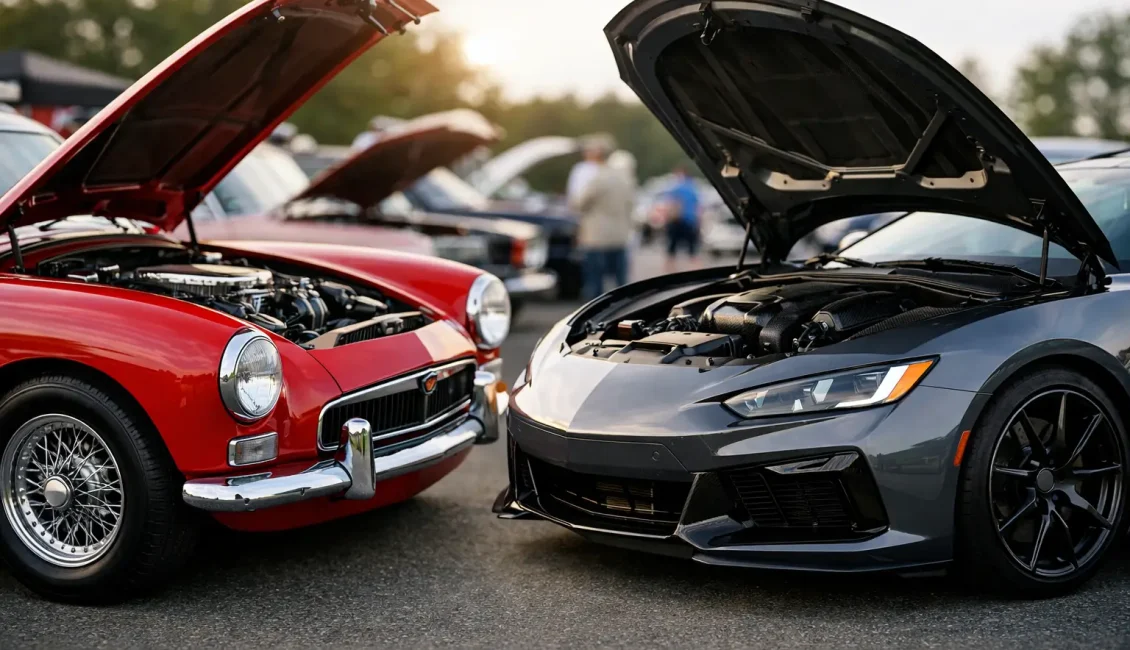
The biggest difference is often the feeling rather than the vehicle age. Classic events tend to encourage reflection. People pause over badges, interior details and restoration photographs. Modern events tend to create a faster, more visual buzz, with performance, sound and bold styling taking centre stage.
Yet there is plenty of overlap. Owners in both worlds care about condition, provenance, engineering and presentation. Both groups take pride in arriving early, parking up well and sharing their car with people who understand why it matters. Both also value the friendships formed through clubs, online communities and regular events.
The practical difference for visitors can come down to what they want from the day. Those seeking nostalgia, restoration inspiration and a quieter browse may naturally lean towards classics. Those wanting head-turning performance, contemporary styling and a high-energy atmosphere may favour modern machinery. Families do not need to choose at all. A wide-ranging show gives everyone a favourite, whether that is a vintage motorcycle, a modified hatchback, a sports car or a gleaming grand tourer.
Why mixed displays create the best show days
The strongest motoring events do not force a choice between heritage and horsepower. They create a route through both. A visitor can admire the delicate lines of a 1960s British sports car, hear the unmistakable note of a V8, then turn the corner and find a modern supercar or a meticulously built performance machine.
That variety keeps the day moving. It also gives exhibitors and clubs a broader audience. A classic owner may discover a new appreciation for modern engineering, while a younger performance-car fan may find themselves fascinated by a car they had only ever seen in an old photograph. Those moments are how enthusiasm grows.
At Great British Motor Shows, the aim is to celebrate that full picture of motoring culture. Cars, bikes, clubs, traders and fellow enthusiasts all bring something to the event, and the venue adds another layer to the experience. It is not simply about ticking off vehicles on a list. It is about sharing the excitement of seeing them together.
Choosing the right show for you
Before booking, think about what will make the day worthwhile for your group. If you are restoring a car, searching for parts, hoping to meet a club or keen to study original details, a classic-focused event may be the perfect fit. If your interest lies in performance, styling, prestige brands or modified builds, a modern-heavy show could be the one to watch.
But do not overlook an event with a broad vehicle mix. It offers more for families, gives first-time visitors a proper introduction to the scene and makes room for changing tastes. The enthusiast who arrives to see one particular model may leave talking about something completely unexpected.
Bring your camera, allow time to speak to owners and resist the temptation to rush past the vehicles you do not immediately recognise. The car that stays with you might not be the one with the biggest engine, the highest price tag or the most polished paint. It may simply be the machine with the best story – and there is always another great one waiting along the next display row.