A silent MGB pulling away from a country-house show lawn can divide a crowd faster than almost anything else on four wheels. For some, converting classics to electric? It is a thoughtful way to keep much-loved cars on the road. For others, removing the engine removes the very character that made the car special.
The honest answer is that both reactions are valid. An electric conversion can give a tired, unusable classic a lively second life, with instant torque, cleaner local running and fewer mechanical worries. But it can also be an expensive, irreversible job that weakens the appeal of a genuinely rare, original car. The best builds are not about chasing a trend. They start with respect for the vehicle, a clear idea of how it will be used, and engineering that is every bit as considered as a traditional restoration.
Why convert a classic car to electric?
There is a practical argument before there is an environmental one. Plenty of classics spend more time in garages than on the road because their engines are worn out, parts are difficult to source, or their owners have simply lost confidence in long journeys. A properly installed electric powertrain can make a familiar car easier to start, smoother in traffic and more dependable for regular use.
For urban drivers, the appeal is obvious. There is no choke to nurse on a cold morning, no carburettor hesitation in stop-start traffic and no need to worry about overheating in a queue outside a showground. Regenerative braking can also make a classic feel surprisingly relaxed to drive, especially when the original brakes and suspension have been upgraded to suit the new performance.
Then there is the driving experience. Electric motors deliver their torque immediately, so even a modestly powered conversion can feel brisk. A lightweight Mini, Morris Minor or classic Fiat 500 does not need supercar numbers to become enormous fun on a B-road. The car still has its compact dimensions, its steering feel and its period shape, but it gains a new kind of response.
That does not mean electric power suits every machine. The sound, vibration and mechanical theatre of a carburetted sports car, an air-cooled flat-six or a big-capacity V8 are central to the appeal. If the engine is the story, replacing it may leave the car technically impressive but emotionally incomplete.
The preservation question matters
The key distinction is between a car that is historically significant and one that is simply old. A matching-numbers, well-preserved example with a rare engine, important competition history or a strong original specification deserves serious caution. Its value lies not only in its bodywork and badge, but in the complete record of how it left the factory and how it has survived.
By contrast, a project car with a seized engine, missing drivetrain, extensive previous modifications or no realistic route back to originality may be an excellent candidate. Electric conversion can be a way of saving a vehicle that might otherwise remain unfinished for another decade.
Reversibility is worth discussing with any specialist. Some conversions are designed so the original engine, gearbox and ancillaries can be carefully stored and refitted later. Others involve cutting bulkheads, altering floorpans or permanently changing the structure to accommodate battery packs. The first approach may cost more and limit battery capacity, but it protects future options.
A useful rule for owners is simple: the rarer and more original the car, the stronger the case for preserving it. The more compromised its starting point, the stronger the case for giving it a usable new chapter.
Converting classics to electric without spoiling them
A good conversion is not judged by the size of its battery or the headline power figure alone. Weight distribution, braking performance, suspension geometry, cooling, electrical safety and charging access all matter. A classic chassis was not designed around a heavy battery pack, and poor placement can turn a nimble car into a compromised one.
This is why the best conversions tend to be tailored rather than assembled from a generic kit. Batteries may be split between the engine bay, transmission tunnel and former fuel-tank area to keep the centre of gravity low and maintain sensible front-to-rear balance. The motor needs secure mounting, appropriate reduction gearing and a control system calibrated for the car’s intended use.
Power should be treated with restraint. Doubling or tripling the original output may sound exciting, but old driveline components, narrow tyres and basic brakes may not be ready for it. More measured conversions often feel better because they preserve the car’s natural character instead of overwhelming it.
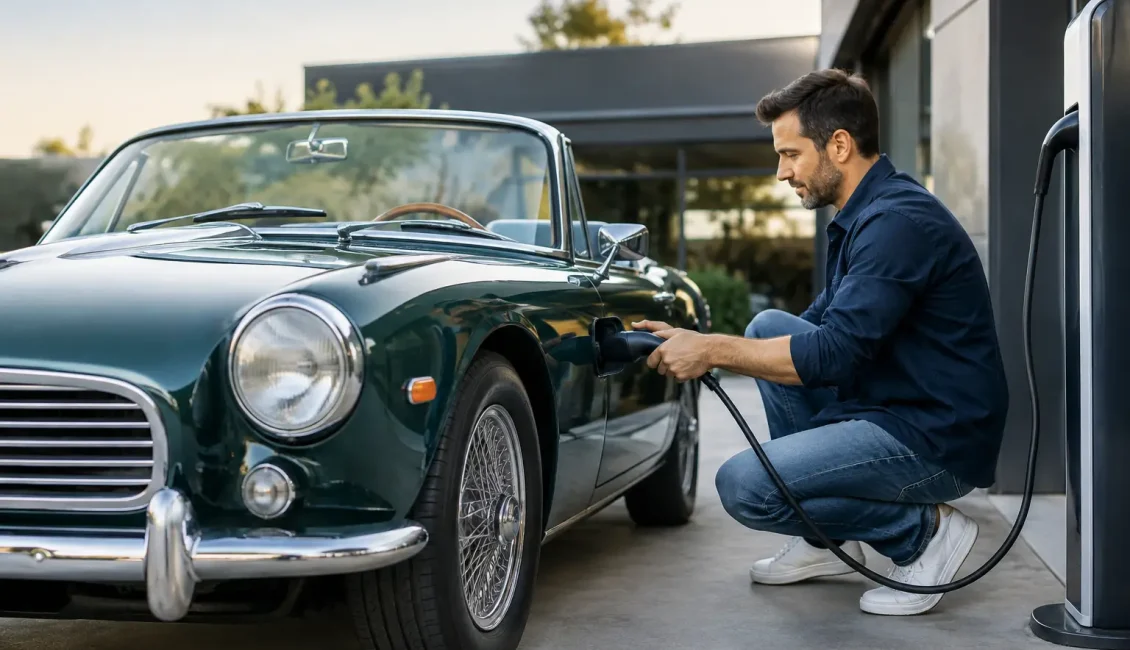
Attention to detail makes the difference at a show. Retaining the original gear lever as a drive selector, concealing charge ports behind a fuel flap, and presenting clean, purposeful wiring can keep the cabin and engine bay sympathetic to the period. The aim need not be to pretend nothing has changed. It is to make the change feel deliberate and well executed.
Range, charging and real-world use
Owners should be realistic about range. A compact classic converted for local runs, Sunday meets and regional events may only need 80 to 120 miles between charges. Chasing 250 miles can demand more batteries, more weight, more cost and more packaging compromises than the car can comfortably accept.
Think about the journeys the car actually makes. A weekend machine used for a run to a local gathering can work brilliantly with home charging. A vehicle expected to cover long motorway distances, tow a trailer or cross the country at short notice will need more careful planning. Rapid-charging capability is possible in some builds, but it is not automatic and can add considerable complexity.
Charging at home is often the easiest part of ownership, provided off-street parking is available. For anyone relying on public charging, connector type, charger reliability and battery capacity become much more significant. Electric classics can be wonderfully liberating, but they still reward owners who plan ahead.
Cost is more than the conversion quote
A quality conversion is a major investment. Costs vary hugely according to the vehicle, the battery size, fabrication required, donor components, charging specification and whether chassis, brakes and suspension need attention at the same time. A figure that initially looks attractive can rise quickly once hidden corrosion, tired bushes or unsuitable tyres are discovered.
It is also sensible to budget for insurance, professional inspection, upgraded brakes, electrical certification and any registration changes. The work should be declared to insurers from the outset. A conversion carried out by an experienced specialist, with clear records and photographs, is much easier to insure and sell than an undocumented home project.
Resale value is less predictable than many owners expect. An electric conversion may attract buyers who want classic style with modern usability, particularly where low-emission-zone access is a concern. Yet traditional collectors may value an original-engined car more highly. Do not convert solely because you expect a financial return. Convert because it suits the car and will make you use it.
UK legality and paperwork
In the UK, changing a vehicle from petrol or diesel to electric is not simply a mechanical job. The DVLA must be notified of the new fuel type, and the vehicle’s registration details need to reflect the change. Depending on the work undertaken, an Individual Vehicle Approval inspection may be required, particularly where alterations affect the vehicle’s identity or construction.
The rules can be nuanced, especially for older vehicles and heavily modified projects. Keep invoices, build photographs, chassis details and specifications for all major components. Speak to the relevant authorities, your insurer and a conversion specialist before work begins rather than discovering a paperwork problem after thousands of pounds have been spent.
MOT requirements also deserve attention. Historic vehicles may be exempt from routine MOT testing, but that does not remove the owner’s responsibility to keep the car safe and roadworthy. Electrical isolation, high-voltage cabling, battery protection, braking and suspension all need the same serious approach as any other safety-critical modification.
The right conversion is one you will drive
There is room at a great British motor show for an immaculate, factory-correct classic and for a thoughtfully electrified restomod. Both can celebrate craftsmanship, ingenuity and the joy of seeing distinctive machines being used rather than hidden away.
If you are considering the change, start with the car in front of you. Assess its originality, condition and real-world role, then speak to specialists who understand both classic engineering and high-voltage systems. A well-chosen electric conversion should not make every classic the same. It should give the right classic a reason to keep turning heads for years to come.