A concours lawn is not simply a line-up of expensive metal. The best cars for concours display have presence before the bonnet is raised, then reward a closer look with craftsmanship, provenance and the kind of finish that makes fellow enthusiasts stop mid-conversation. Whether you are entering a local class or preparing for a major heritage venue, the right car is one that looks at home in the setting and has a story worth sharing.
For some owners, that means a pre-war grand tourer with polished brass and a hand-finished body. For others, it is a beautifully original hot hatch, a landmark sports car or a working vehicle restored with real care. Concours is about standards, certainly, but the most memorable displays combine condition with character.
What Makes a Car Right for Concours Display?
Rarity helps, but it is not the whole ticket. A rare car with poor panel gaps, incorrect trim or a hurried engine bay will struggle beside a more familiar model restored accurately and presented intelligently. Judges may focus on originality, authenticity and detail, while visitors respond to visual impact, colour, engineering and the owner’s enthusiasm.
The strongest contenders usually have three things in common: an important place in motoring history, a specification that suits the era, and documentation that supports the car’s story. Matching-numbers components, period photographs, restoration records and factory build information can all add weight. Equally, a clean, well-considered display board lets visitors understand why your car matters without turning the stand into a museum exhibit.
12 Best Cars for Concours Display
1. Bentley 3 Litre or 4½ Litre
Few cars carry pre-war British sporting glamour quite like an early Bentley. A 3 Litre is elegant, purposeful and deeply significant, while a 4½ Litre brings extra theatre, especially in open tourer form. Correct fittings, properly finished brightwork and an authentic coachbuilt body make all the difference here. These are cars that suit a historic estate setting perfectly.
2. Rolls-Royce Silver Ghost
The Silver Ghost remains a benchmark for Edwardian engineering and coachbuilding. Its appeal lies in the detail: nickel lamps, immaculate leather, timberwork with depth rather than shine, and a presentation that respects the car’s original character. A well-documented example with an interesting first owner or coachbuilder has instant conversation value.
3. Jaguar XK120
The XK120 looks fast even when parked. Its sweeping wings, long bonnet and competition pedigree make it one of the most versatile choices for a classic display, equally at home among British sports cars or in a wider concours field. Roadsters tend to command the visual spotlight, although a Fixed Head Coupé in a correct period colour can be every bit as striking.
4. Jaguar E-Type Series 1
There are few safer crowd-pullers than a Series 1 E-Type, but it must be right. Original-specification wheels, correct interior materials and a tidy engine bay matter because visitors know these cars well and will spot shortcuts quickly. An early flat-floor roadster or Fixed Head Coupé has particular cachet, though the best example is often the one with honest history and exceptional preparation.
5. Aston Martin DB5
The DB5 brings British grand touring elegance with a level of recognition that extends well beyond the classic car world. Its appeal is not limited to the film connection. The proportions, straight-six soundtrack and craftsmanship make it a genuine concours contender. Keep the presentation restrained – the car has enough star quality without novelty props competing for attention.
6. Mercedes-Benz 300 SL
The Gullwing is a spectacular display car because it delivers drama from every angle. Those upward-opening doors create an immediate focal point, while the spaceframe, fuel-injected engine and motorsport pedigree give knowledgeable visitors plenty to explore. It is a blue-chip choice, but only if the restoration quality matches the occasion. Incorrect finishes are particularly obvious on a car of this status.
7. Ferrari 250 GT
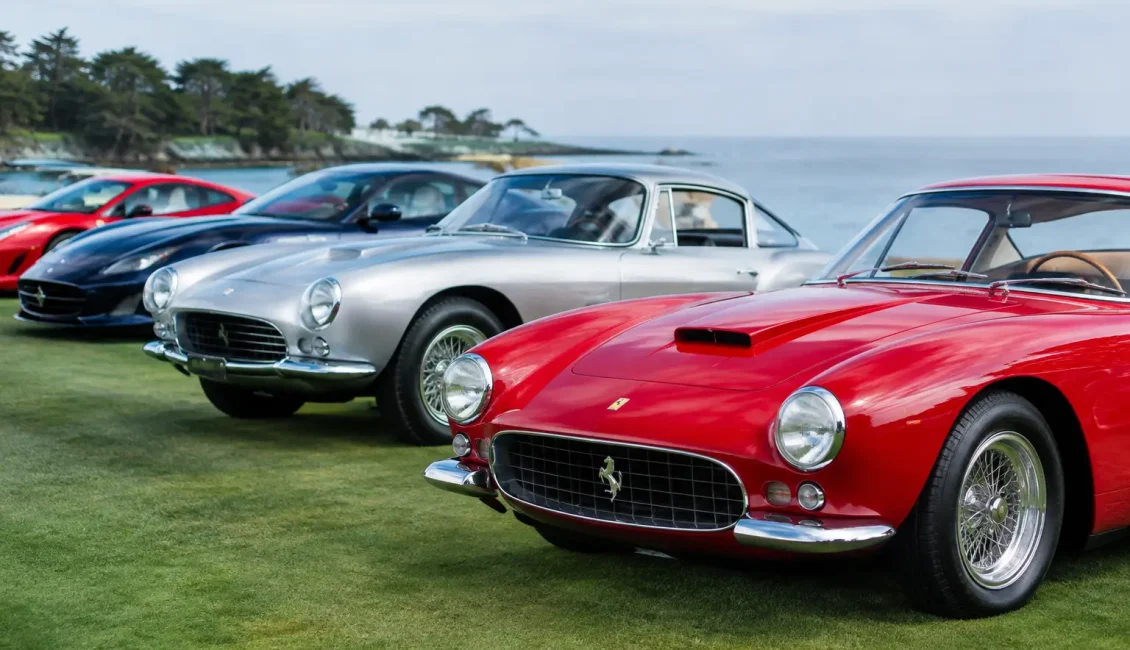
A Ferrari 250 GT is not simply valuable. It represents an era when coachbuilt style, road-going performance and racing credibility met in one extraordinary package. Whether it is a Lusso, Berlinetta or Cabriolet, provenance is central. This is the kind of car where ownership history, period competition appearances and factory specification should be presented clearly and confidently.
8. Porsche 911 from the 1960s
An early 911 provides a more understated route into serious concours territory. Its shape is instantly recognisable, yet the details reward the keen eye: Fuchs wheels, correct brightwork, houndstooth or pepita trim, and an engine bay that has not been over-restored. A matching-colour, matching-numbers car with sympathetic preservation can be more appealing than one made artificially perfect.
9. Alfa Romeo Giulia Sprint GT
The Giulia Sprint GT is a brilliant choice for owners who want style, motorsport flavour and genuine usability. Bertone’s compact design stands out in a field full of larger British and German classics, while the twin-cam engine gives the car proper mechanical interest. A period-correct colour, original cabin details and beautifully aligned panels create a display that enthusiasts will appreciate.
10. Mini Cooper S Mk I
Concours display does not have to mean twelve cylinders and six-figure values. A properly restored Mk I Mini Cooper S can attract a constant crowd because it is relatable, important and huge fun. Correct badges, interior trim, wheels and engine details are vital, as is resisting the temptation to add later accessories. A small car with big history can make a very big impression.
11. Ford Escort RS2000
The Escort RS2000 has become a modern classic with a fiercely loyal following. It works particularly well at a broad enthusiast event because it connects competition heritage with memories of everyday roads, garages and weekend rallies. Original shell integrity is a major consideration, and period decals should only be used where they are supported by the car’s history. A clean, factory-style RS2000 often speaks louder than an overdone replica.
12. Two-Door Range Rover Classic
A two-door Range Rover brings a different kind of prestige to a concours line-up. Early examples have a clean, almost architectural design, especially in a correct heritage colour with the right steel wheels and interior fabrics. It also broadens the display beyond sports cars and saloons, reminding visitors that great design is not limited to low-slung machinery.
Presentation Can Elevate the Best Cars for Concours Display
Even an exceptional car benefits from thoughtful preparation. Start with the basics: tyres dressed but not dripping, glass cleaned inside and out, shut lines checked, and no loose cloths or bottles left in view. Engine bays should be clean and correct, rather than coated in products that make every surface look unnatural. If the car is driven to the event, allow time for road grime, brake dust and heat marks to be dealt with before judging begins.
Bring a concise display board that explains the model, year, specification and a few points of genuine significance. A restoration album can be useful, but it should support the car rather than distract from it. Owners who are approachable and happy to talk through the details often make a display more memorable for families, first-time visitors and seasoned collectors alike.
Think about the category too. A beautifully preserved 1980s performance car may gain more attention in a carefully chosen youngtimer class than it would parked beside pre-war coachbuilt machinery. The right class gives a car context, and context helps people see the achievement in front of them.
At Great British Motor Shows, the most rewarding displays are the ones that give people a reason to pause, ask a question and share a memory. Choose a car you genuinely understand and enjoy, prepare it with care, then let its history do the talking.