
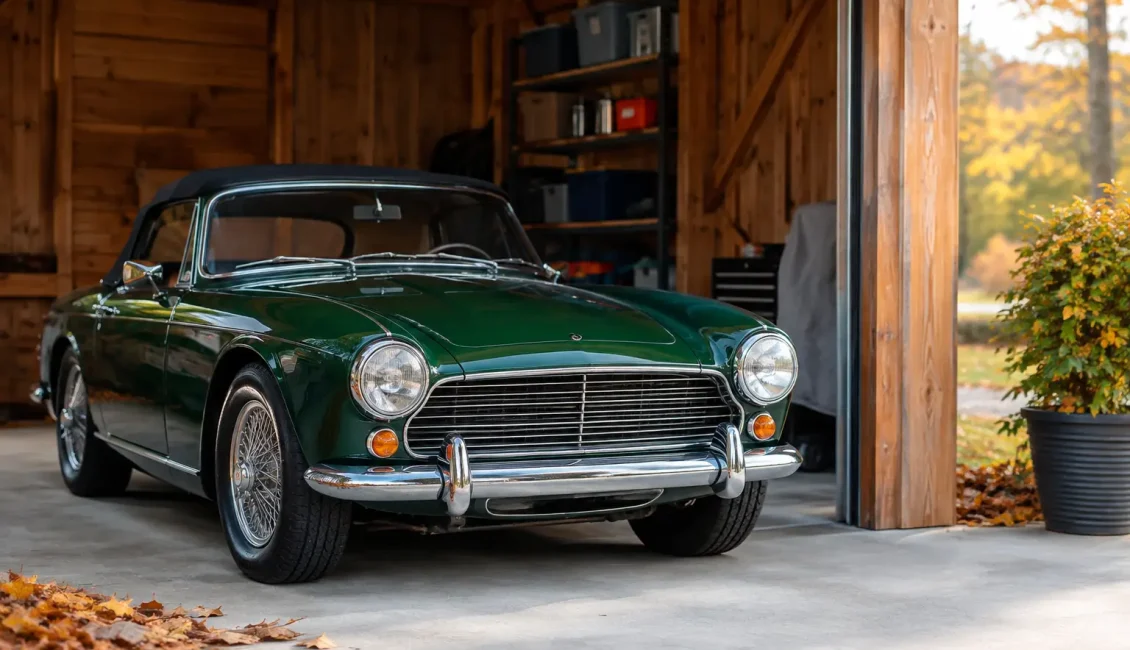
The last proper run of the season has a familiar feel: a clear road, the engine fully warm, and perhaps one final stop among fellow enthusiasts at a local meet. But once wet leaves, salted roads and dark afternoons take over, a little preparation makes a huge difference. These tips to prepare your classic for autumn and winter storage are about far more than putting it under a cover. Done properly, they protect the car you have worked hard to preserve and make that first spring outing something to look forward to, rather than a weekend of fault-finding.
Start with a proper clean and dry
A classic should never go into storage dirty. Road grime holds moisture against paint, chrome and vulnerable seams, while brake dust and oily deposits can mark wheels if left for months. Give the bodywork, wheel arches, underside and engine bay a careful wash, paying special attention to drain channels, the lip beneath the boot lid, door shuts and the lower edges of wings.
Drying matters just as much as washing. Take the car for a short run after cleaning to clear water from the brakes and exhaust, then use a clean microfibre cloth around badges, panel gaps and brightwork. If your car has a fabric hood, make certain it is completely dry before storage. Shutting away a damp interior or hood is an open invitation to mildew.
Once dry, apply a suitable wax or paint sealant. It is not a substitute for a dry garage, but it gives paintwork another layer of defence during the months when condensation can creep in. A light protective treatment on chrome and exposed metal components is sensible too, particularly on cars stored near the coast or in older outbuildings.
Choose the right winter home
A dry, secure, well-ventilated garage is the aim. It does not need to be heated, and excessive heat can create its own condensation issues when temperatures drop, but it must keep rain, frost and standing damp away from the car. If the garage floor is prone to moisture, consider a breathable floor barrier beneath the vehicle rather than relying on cardboard, which absorbs damp and soon becomes ineffective.
Avoid a tightly sealed plastic cover. It may look protective, but if moisture is trapped beneath it, the cover can do more harm than good. Use a breathable, well-fitting indoor car cover only after the car is spotless and fully dry. In an unheated garage, ventilation is usually more valuable than trying to turn the space into a tropical showroom.
A dehumidifier can help where a garage is consistently damp, although it needs emptying or a drain arrangement and should not be treated as a cure for a leaking roof. For a prized classic, a purpose-built car storage bubble or humidity-controlled space can be worthwhile. The right choice depends on the car’s value, the condition of its original metalwork and the quality of storage available at home.
Prepare the fuel system and battery
Modern petrol does not improve with age. If your classic will stand for several months, fill the tank with fresh fuel to reduce the air space where condensation can form, then add a fuel stabiliser designed for petrol engines. Run the engine afterwards so the treated fuel reaches the lines and carburettors or injection system.
There are exceptions. Some owners of race-prepared cars or vehicles with particular fuel-system concerns prefer to drain the system, but that approach brings its own risks, including dried seals and internal corrosion. For most road-going classics stored over one UK winter, a full tank and stabiliser is the practical route. Diesel classics need attention too, particularly if the fuel has been sitting for a long time.
Batteries are another regular source of spring frustration. A smart maintenance charger is usually the best answer, provided it is suitable for the battery type and your garage electrics are safe. It keeps the battery topped up without overcharging and helps avoid the slow decline that shortens battery life.
If a charger is not possible, disconnect the battery after ensuring any alarm or tracker requirements have been considered. Removing it and storing it somewhere dry and frost-free is often sensible, especially with older lead-acid batteries. Do not simply start the car every few weeks for five minutes. A brief idle rarely gets everything hot enough, adds condensation to the oil and exhaust, and can leave the battery worse off.
Protect tyres, brakes and moving parts
Tyres can develop flat spots when a car sits in one position for months, especially older crossply tyres or cars with firm suspension. Inflate them to the upper end of the manufacturer’s recommended pressure for storage, rather than guessing or overinflating. If you have the space and equipment, supporting the car on correctly positioned axle stands can take weight off the tyres and suspension, but only do this where the vehicle is stable and the handbook’s jacking points are understood.
Avoid leaving the handbrake on for a long lay-up. Brake shoes can stick to drums and pads can seize against discs, particularly after the car has been driven in wet weather. Leave the vehicle in gear on level ground and use sturdy wheel chocks instead. For automatics, follow the manufacturer’s guidance and use chocks as an additional safeguard.
A few small jobs now can prevent needless deterioration. Lubricate door hinges, catches and bonnet releases. Treat rubber door seals with an appropriate rubber conditioner so they are less likely to stick or crack. Check that coolant protection is suitable for the lowest temperatures your area might see, and make a note of the oil level, brake fluid condition and any jobs you plan to tackle before the new season.
Keep the cabin dry and unwelcome to pests
A classic’s cabin is often where winter storage damage becomes most dispiriting. Remove damp carpets, umbrellas, old event programmes and anything else that can hold moisture. Vacuum thoroughly, including under seats and inside the boot, because crumbs and nesting material attract mice. Mice are not fussy about heritage trim or wiring looms.
Leave moisture absorbers in the cabin if the car is stored in a damp area, checking or replacing them throughout the winter. Some owners leave a window slightly open for airflow, but that is only sensible in a secure, dry building where pests cannot gain access. In most situations, closed windows, a dry interior and regular checks are safer.
Do not rely on strong-smelling deterrents alone to keep rodents away. Blocking obvious entry points around garages, removing bird seed or pet food, and inspecting the car periodically are more dependable measures. Look for droppings, chewed insulation and disturbed cover edges before a small problem becomes an electrical restoration project.
Check it, but do not constantly disturb it
Winter storage is not about forgetting the car until March. Visit it every few weeks, inspect for water ingress, check the charger and moisture absorbers, and look beneath the car for fresh drips. If conditions are dry, roll the car slightly to vary the tyre contact patch, but only if this can be done safely without running the engine for a token few minutes.
When a genuinely dry day arrives, a proper drive can be beneficial – long enough to warm the oil, gearbox, differential and exhaust thoroughly, and to clear moisture from the brakes. Yet it depends on the roads. If they are covered in salt or grime, keeping a cherished classic tucked away is usually the wiser call. No winter blast is worth inviting corrosion into wheel arches and box sections.
Tips to prepare your classic for its spring return
Keep a simple storage log with the date, battery status, tyre pressures and any observations from each check. It gives you a useful record and makes recommissioning less of a guessing game. Before the first event of the year, inspect hoses and belts, check all fluid levels, return tyres to normal pressures, test lights and brakes, and allow time for a gentle shakedown run before committing to a longer journey.
The reward for care taken on a cold autumn afternoon is a classic that wakes up cleanly, confidently and ready to be enjoyed when the show season returns. Give it the winter it deserves, and the first polished arrival among the rows of fellow enthusiasts will feel even better.