
A prime spot at a busy motor show can put your cars, products or brand in front of exactly the people you want to meet. But knowing how to book exhibitor space is about more than completing a form and arriving with a gazebo. The best stands are planned around the audience, the venue and the result you want from the day.
Whether you are displaying a specialist vehicle, representing a car club, selling motoring merchandise or introducing a new service, a well-chosen pitch gives visitors a reason to stop, talk and remember you after the engines have gone quiet.
How to book exhibitor space with a clear purpose
Start by deciding what a successful event looks like for you. A trader may be focused on sales across the weekend. A detailing business may want bookings and local awareness. A dealer, specialist or restoration workshop may be looking for serious enquiries, while a club may simply want new members and a strong display of cars.
That aim affects almost every choice that follows. If you need to sell products, you will value footfall, access for stock and a pitch that is easy to browse. If you are showing rare machinery, the setting, security and space around the vehicle may matter more than being next to the busiest catering area. There is no universally perfect pitch. There is a pitch that works for your particular display.
Look closely at the event itself before applying. A broad motoring show that brings together classics, performance cars, modified builds, bikes and supercars can attract a varied crowd, but some dates and venues may better suit your offer than others. Think about journey distance, the likely visitor profile, the time of year and whether the show is predominantly outdoors, indoors or a mix of both.
For exhibitors with limited time and budget, it is often better to make a strong impression at one well-matched event than spread a thin display across several dates.
Choose the right exhibitor category
Most show organisers separate applications into categories such as vehicle exhibitors, traders, car clubs, sponsors and food vendors. Select the category that most accurately reflects what you are bringing. It helps the organiser place you correctly and makes the visitor experience better organised.
A vehicle exhibitor displaying a cherished classic is not the same as a commercial trader selling parts, clothing or tools. A club needs enough room to create a coherent line-up, while a business with a demonstration vehicle may need additional clearance or power. Be upfront about your requirements from the beginning.
If the application asks for photographs, use them well. A few clear images of your vehicle, stand, products or previous event set-up tell an organiser far more than a vague description. For clubs and display owners, include the makes, models and approximate number of vehicles you expect to bring. For traders, explain your product range and how the stand will look.
Organisers curate shows as well as sell space. A detailed, professional application gives them confidence that you will add to the spectacle visitors have paid to see.
Read the event information before you commit
The booking page is only the starting point. Check what your fee includes, the pitch dimensions, arrival times, vehicle passes, public liability insurance requirements and rules around gazebos, awnings, generators, flags and amplified sound. A low headline price can become less attractive if you need to add power, flooring, extra vehicle access or additional staff passes.
For an outdoor event at a heritage venue, ground conditions and weather planning deserve proper attention. Grass can be brilliant for creating a relaxed show atmosphere, but it changes how you load in, secure stock and keep visitors comfortable at your stand. Ask whether vehicles can remain on the pitch, whether there are restrictions on ground stakes, and what the wet-weather arrangements are.
You should also confirm the event timetable. Early arrival may be required for safe vehicle movement before gates open, especially where hundreds of display cars are being positioned. If you are travelling with a trailer, stock lorry or multiple vehicles, make sure the access route and unloading arrangements suit your set-up.
Questions worth asking before you pay
A good organiser will provide clear joining instructions, but it is sensible to clarify anything that affects your day. Ask about:
- exact pitch size and whether it includes room for your vehicle, awning and customer space
- power, water, Wi-Fi and other paid or limited services
- public liability cover, fire safety and any required risk assessment
- cancellation, transfer and wet-weather policies
- arrival windows, breakdown times and overnight security where applicable
These are practical details, not small print to skim past. They protect your investment and help avoid the awkward moment when a beautiful display vehicle arrives at the gate without the correct pass or paperwork.
Apply early for the best choice of space
Popular motoring events can fill quickly, particularly pitches near main visitor routes, key display areas and covered sections. Booking early usually gives you more choice and more time to plan a proper display. It also makes it easier to promote your attendance to customers, followers and fellow enthusiasts.
That said, do not choose a pitch solely because it appears closest to the entrance. High footfall is valuable, but congestion can make it harder for people to stop and talk. A stand positioned beside a relevant feature, such as a classic car display, club area or performance section, may bring fewer passing visitors but better conversations.
If the organiser offers a site plan, use it to picture how people will move through the event. Consider sightlines, nearby attractions, catering queues, toilets and the route from parking. A corner pitch can offer visibility from two directions. A wide frontage may suit merchandise. A deeper space can work better for a vehicle display with a branded backdrop.
Once you have submitted your application, keep an eye on your emails and respond promptly if the events team asks for more information. Delays can hold up approval, especially if the organiser is allocating limited categories or checking specialist requirements.
Build a stand that earns attention
Booking the space is only half the job. Visitors to a motor show have plenty to see, from meticulously restored classics to thunderous performance machinery, so your stand needs a clear focal point. It does not need to be expensive or over-designed. It does need to look intentional.
Keep the front of the pitch open and give people a clear reason to approach. For a vehicle, that might mean a clean presentation, a small information board and an owner ready to share the story behind it. For a trader, arrange stock so visitors can understand what you sell in a few seconds rather than digging through boxes. For a service business, show finished work, explain your offer simply and make it easy to take the next step.
Bring printed prices where appropriate, payment options that work in patchy signal, and a way to capture enquiries. A clipboard, notebook or QR code can all work, but do not rely entirely on technology. A paper backup is still a wise addition to the kit box.
Your team matters as much as the display. Friendly, knowledgeable people who can chat naturally about cars will always outperform a stand where everyone is staring at a phone. Enthusiasts can spot genuine passion straight away.
Promote your attendance before the gates open
Tell your existing customers, club members and followers that you will be there. Share the event date, venue and your stand location once confirmed. If you are bringing a standout car, a special offer or a new product, give people a reason to seek you out.
For businesses, an event can produce value well beyond sales made on the day. Use it to gather contacts, arrange workshop visits, start conversations with potential partners and create photographs or short videos for later. Just make sure any promises you make at the stand are followed up quickly after the event.
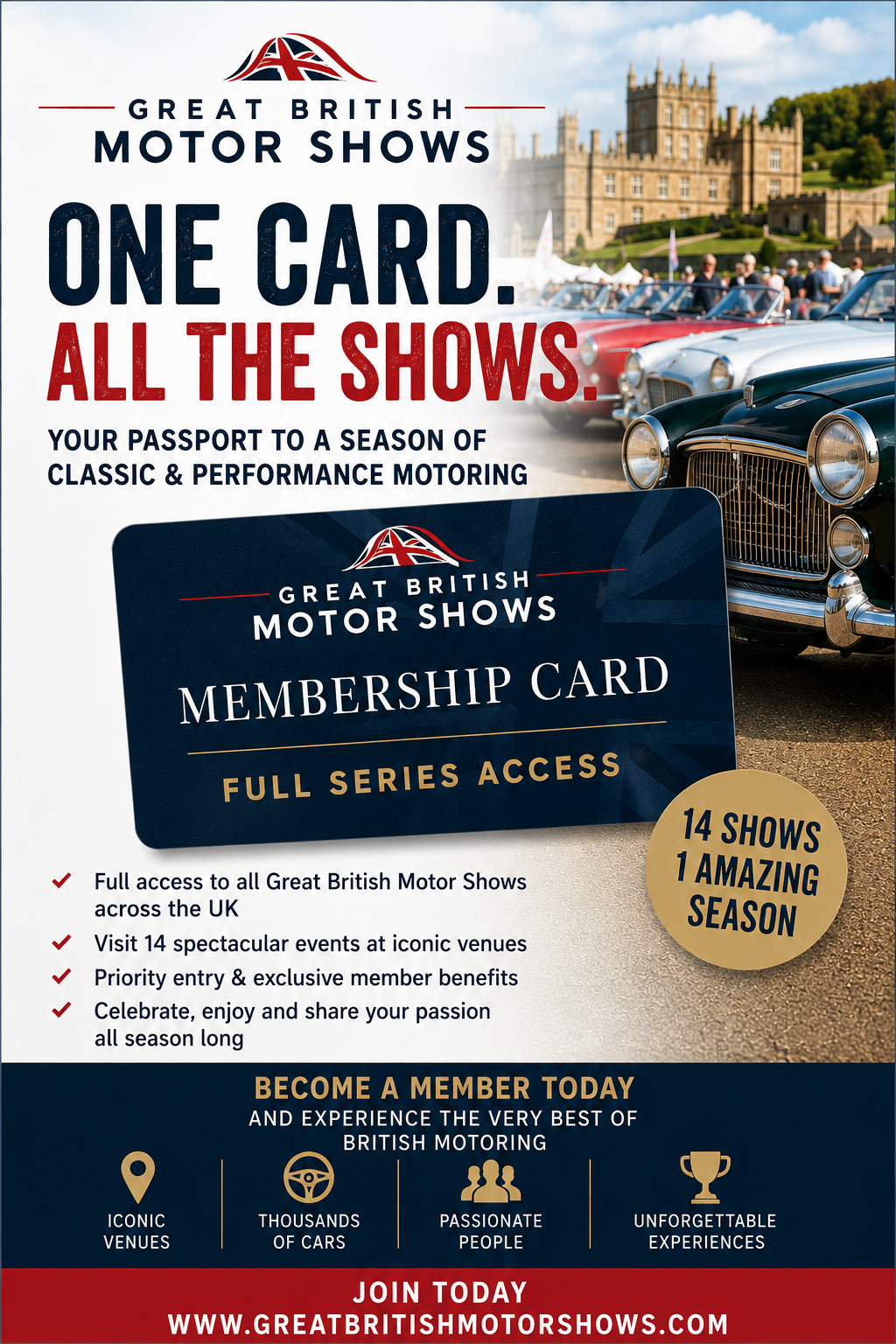
At Great British Motor Shows, the strongest exhibitor areas feel like part of the event rather than a row of separate stalls. They add expertise, character and plenty for visitors to enjoy between the headline displays.
A booked pitch is an invitation to join that atmosphere. Arrive prepared, present your passion with confidence, and give every visitor who stops by a reason to come back for a longer look.