
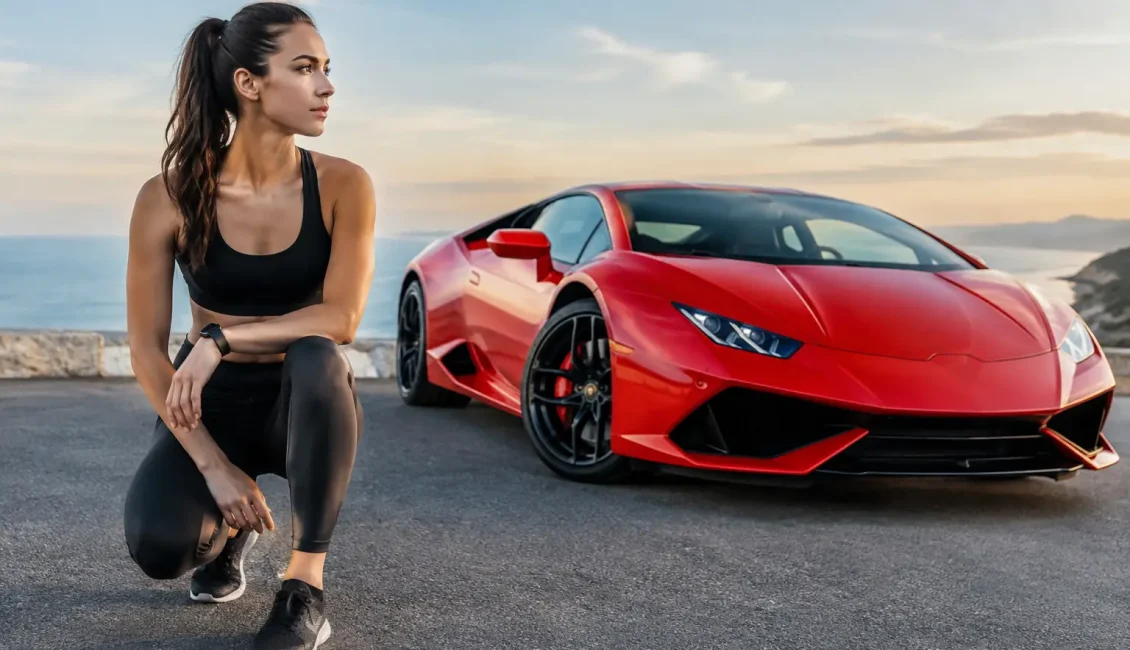
A Lotus Emira arriving with its exhaust crackling, a Porsche 911 sitting low and purposeful, and a McLaren turning every head on the show field may all be described as performance cars. Yet the sports and supercars difference is more than a question of horsepower or a famous badge. It is about engineering intent, theatre, accessibility and the feeling each car delivers when you see it, hear it and, if you are lucky, drive it.
At a great motoring show, the line can look wonderfully blurred. A beautifully specified Aston Martin Vantage might sit beside a Ferrari 296 GTB, while a Caterham, a Nissan GT-R and a Lamborghini Huracán draw equally enthusiastic crowds. They all offer pace and presence, but they occupy different corners of the performance-car world.
What is the sports and supercars difference?
A sports car is primarily built to make driving enjoyable. It is usually lighter, more agile and more involving than an ordinary saloon, hatchback or SUV, with a chassis designed around response and balance. It may be a compact two-seater, a grand tourer with occasional rear seats, or a roadster built for open-air weekends.
A supercar takes performance and occasion several steps further. It is typically more powerful, more exotic in its construction and more dramatic in its styling than a conventional sports car. It is designed not only to cover ground at remarkable speed, but to feel special before the engine has even started.
There is no official rulebook that separates the two. No single power figure, price point or top speed automatically turns a sports car into a supercar. Instead, the distinction comes from the whole package: layout, materials, rarity, capability, visual impact and the level of compromise the owner is prepared to accept.
A sports car puts the driver at the centre
The best sports cars make ordinary roads feel like an event. Their appeal is often found in the details: sharp steering, a well-judged manual gear change, a communicative chassis and an engine that encourages you to use its rev range. They do not need outrageous outputs to be memorable.
Think of cars such as the Mazda MX-5, Toyota GR Supra, Alpine A110, Porsche 718 Cayman or Lotus Emira. Their characters vary hugely, but they share a focus on connection. They are cars that reward a flowing B-road, a favourite stretch of tarmac or a carefully driven track session.
Practicality is relative, of course. A two-seat coupé will never swallow a family’s holiday luggage like an estate car, but many sports cars can cope with real ownership. They may offer a usable boot, reasonable visibility, civilised ride quality and running costs that, while not cheap, do not require supercar-level planning. A Porsche 911 is the classic example of a car capable of daily commuting, continental touring and enthusiastic weekend use.
That broad usability matters. For many enthusiasts, a sports car is not kept behind ropes or saved solely for special occasions. It is driven, improved, cleaned, displayed and enjoyed with fellow owners.
A supercar makes an occasion of every journey
Supercars tend to be built around a more extreme brief. Their engines may sit behind the driver, their bodies may use carbon fibre, and their aerodynamics may generate meaningful downforce at speed. Low seating positions, wide tracks and dramatic doors are not mandatory, but they fit the sense that this is something beyond everyday transport.
The McLaren Artura, Ferrari 296 GTB, Lamborghini Revuelto and Maserati MC20 illustrate the modern supercar approach in different ways. Advanced materials, active aerodynamics, electrified powertrains and immense acceleration are now part of the conversation. A supercar can reach speeds that once belonged only to racing machinery, while offering climate control, sophisticated infotainment and selectable driving modes.
But there is a trade-off. A car that is extraordinarily capable on a circuit or open road can feel wide in a multi-storey car park, delicate over poor surfaces and demanding in heavy traffic. Ground clearance, tyre costs, specialist servicing and insurance all need consideration. For some owners, those compromises are exactly what make the experience feel special. It is not meant to disappear into the background.
A supercar also carries a stronger element of spectacle. The proportions are often more dramatic, the exhaust note more theatrical and the badge more immediately recognisable. At a show, a supercar can gather a crowd within minutes because people do not simply admire the engineering – they react to the whole occasion.
Performance is not just about the numbers
It is easy to assume that a supercar is simply a sports car with more power. That is too simple. Plenty of sports cars are exceptionally quick, and some will challenge or beat older supercars in a straight line. A high-performance Porsche 911, Chevrolet Corvette or Nissan GT-R can deliver acceleration that would have seemed outrageous only a few years ago.
The difference lies in how that performance is achieved and presented. Sports cars often prioritise accessible pace, predictable handling and feedback at legal road speeds. Supercars are more likely to pair huge outputs with advanced cooling, high-speed stability, exotic materials and braking systems designed to withstand repeated hard use.
Weight is another useful clue. A lightweight sports car with modest power can feel alive at 50mph because it changes direction eagerly and communicates clearly. A supercar may be astonishingly fast, but its real abilities can be difficult to explore responsibly outside a circuit. Neither experience is automatically better. It depends whether you value involvement at everyday speeds or the sense of owning a machine with extraordinary reserves.
Price, rarity and ownership change the category
Cost is not a perfect dividing line, but it is significant. Sports cars cover an enormous range, from attainable used roadsters to high-specification grand tourers. Supercars generally occupy a higher financial tier, both to buy and to keep. Servicing, tyres, brake components and specialist repairs can quickly become substantial commitments.
Rarity adds another layer. A sports car can be popular because it is good enough to use often and practical enough for a wide ownership base. A supercar may be produced in smaller numbers, offered with extensive personalisation and owned as much for its design and collectability as for its driving experience.
That does not mean every expensive, rare car is a supercar. Some luxurious grand tourers are designed chiefly for effortless long-distance comfort. Others are limited-run track specials that sit in a category of their own. The labels are useful shorthand, not fixed laws.
Where do the grey-area cars belong?
This is where conversations at car shows become particularly good. Is an Aston Martin Vantage a sports car, a grand tourer or a junior supercar? Does a Porsche 911 Turbo S cross into supercar territory because of its pace, or remain a sports car because of its everyday usability? What about a Lotus Evija, whose electric powertrain changes many of the traditional clues?
The honest answer is that some cars sit between categories. The Corvette, Audi R8, Mercedes-AMG GT and high-end 911 models are often discussed as supercar rivals, even if their makers or owners may use different language. Age matters too: a Ferrari 360 Modena was a full-blooded supercar in its era, while a modern hot hatch may match parts of its performance data.
Context matters more than a badge. Look at the car’s intended use, architecture, sense of occasion and the compromises it asks of its driver. That tells you more than a claimed 0-62mph time ever could.
Why both belong at a great motor show
Sports cars and supercars create different kinds of excitement, which is exactly why they are brilliant to see together. The sports car invites you to imagine taking the keys home and heading out early on Sunday morning. The supercar stops you in your tracks, drawing you close to study the carbon weave, brake hardware, sculpted air intakes and improbable proportions.
For owners, both categories offer a reason to join a club, meet like-minded people and share the stories behind the car. A carefully preserved 1990s sports coupé can be every bit as cherished as a newly delivered supercar. A home-maintained roadster may start more conversations than a car worth several hundred thousand pounds.
When you next walk a show field, resist the urge to rank every car by power or price. Spend time with the details, speak to the owners and listen for the stories that brought each machine there. The right car is the one that makes you want to take the long way home.