
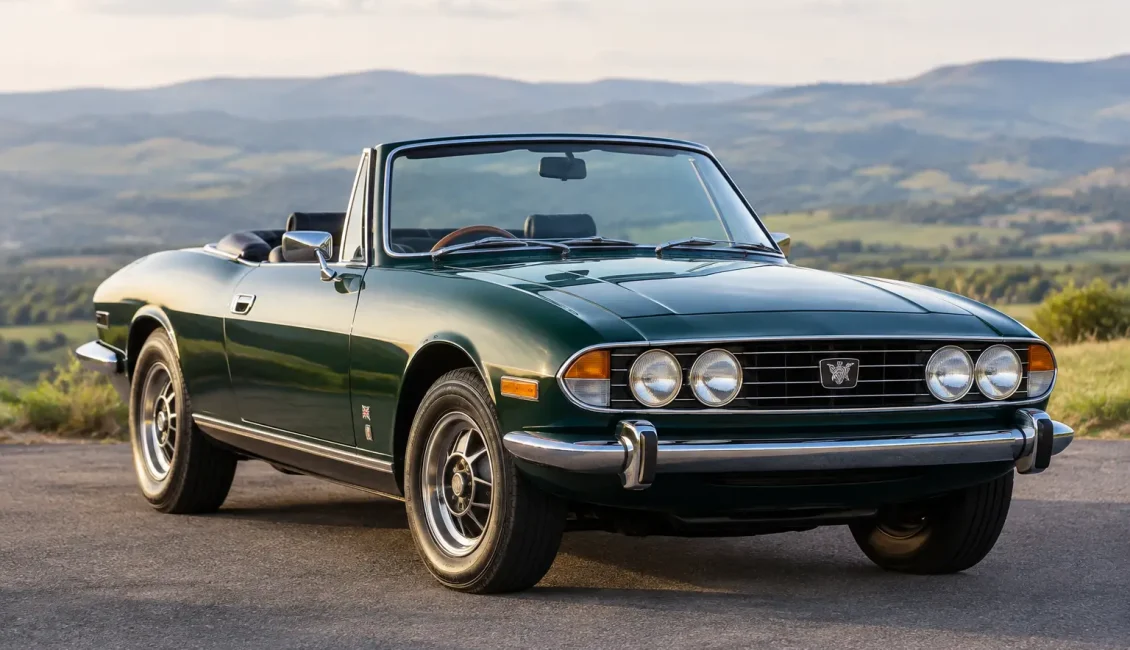
Park a the Triumph Stag beside almost any classic car and it has a way of drawing a crowd before the bonnet is even raised. The long nose, clean Michelotti lines and unmistakable T-bar give it real presence, while the promise of a British V8 beneath the bonnet adds the sort of theatre that enthusiasts never tire of discussing.
It was conceived as Triumph’s glamorous answer to the open grand tourers coming from Europe and America: a car for crossing counties, not merely commuting through them. More than 50 years on, the Stag remains one of the most recognisable classics of its era – loved for its style, debated for its engineering history and hugely rewarding when it has been properly cared for.
Why the Triumph Stag Still Has Such Appeal
Launched in 1970, the Stag arrived with a brief that sounded wonderfully ambitious. Triumph wanted a four-seat convertible that could deliver proper long-distance comfort, a refined V8 soundtrack and a sense of occasion every time its owner took the wheel. The resulting car was not a stripped-back sports car. It was a genuine grand tourer, with room for friends, luggage and the relaxed pace of a weekend road trip.
Its styling is a major part of the attraction. Italian designer Giovanni Michelotti took the familiar Triumph shape and made it more elegant, with a broad grille, sharp waistline and a cabin that looks especially handsome in period colours. The fixed T-bar hoop was more than a design flourish. It gave the convertible extra rigidity and made the Stag instantly identifiable, whether the roof was lowered on a sunny show morning or fitted for a run home later in the day.
Inside, the Stag feels more luxurious than many British classics of the period. There is wood veneer, proper instrumentation and a layout designed for covering miles rather than chasing lap times. It has the charm of a 1970s touring car without feeling like an austere museum piece. For owners, that means a Stag can be shown, driven and enjoyed with equal enthusiasm.
The 3.0-litre Triumph V8 is central to the experience. It is smooth, distinctive and delivers a cultured rumble rather than the raw bark of a muscle car. In a well-sorted car, the engine suits the Stag perfectly: effortless enough for fast A-road work, civilised enough for a long motorway journey, and characterful enough to make every arrival feel special.
The Reputation: Fair Warning, Not a Reason to Walk Away
No conversation about the Triumph Stag is complete without the question of reliability. The model’s reputation was damaged early on by cooling problems, timing-chain concerns and inconsistent maintenance at a time when British Leyland was under considerable pressure. Those issues are real, but they need context. A neglected Stag can be expensive and frustrating. A correctly rebuilt and regularly maintained example can be a very usable classic.
The original V8 was effectively developed from paired Triumph slant-four units, and it asks more of its cooling system than many owners once realised. Silted waterways, tired radiators, old hoses, incorrect coolant mixtures and poor servicing can create a chain of problems. Overheating is not something to dismiss as “just what Stags do”. It is a warning that needs dealing with promptly and properly.
That is why service history matters so much. A good ownership file should show attention to the cooling system, timing chains and tensioners, cylinder heads, water pump and regular fluid changes. Many specialists have developed proven upgrades and sensible preventative measures over the years, from improved cooling arrangements to modern ignition and charging components. The best cars tend not to be mysterious at all – their maintenance has simply been done by people who understand them.
Engine swaps are also part of the Stag story. Some cars have been converted to Rover V8 power, often during periods when the original Triumph unit had a less favourable reputation. A Rover-powered car can make sense for an owner who prioritises familiar parts availability and a different driving character. However, an original, correctly restored Triumph V8 will usually hold greater appeal for buyers who value authenticity. Neither route is automatically right; condition, workmanship and intended use matter more than the badge on the rocker cover.
What Makes a Good Stag to Buy or Display?
A shiny paint finish is never the whole story with a classic convertible. The Stag’s body structure deserves close inspection, particularly around the sills, floorpans, wheelarches, front valance, rear suspension mounting points and windscreen surround. Water can find its way into places that are difficult and costly to repair, so a thorough inspection is a far better investment than falling for fresh polish at first sight.
Check panel gaps and look beneath the car, not just around it. The doors should close cleanly, the T-bar should not suggest structural movement, and the hood should fit properly. Replacing trim, seals and hood components is possible, but costs can mount quickly if a car has been assembled without care.
Mechanically, a cold start tells a useful story. Listen for excessive timing-chain noise, watch the temperature gauge as the car warms, and check that the engine settles into a smooth idle. On a road test, the Stag should feel composed rather than vague, with confident brakes and no alarming clonks from the suspension. Manual cars with overdrive offer an engaging period-driving experience, while the Borg-Warner automatic suits the model’s laid-back touring character. It depends whether you want a Sunday cruiser or a more involved classic to take on longer runs.
Originality can add interest, but it should not become an obsession. Sensible upgrades that improve safety, reliability or usability are often welcome. Electronic ignition, better cooling provision and carefully fitted modern tyres can make a meaningful difference without spoiling the character that makes the car special. What matters is that modifications are documented, professionally completed and appropriate to the vehicle.
Colours, hardtops and the details enthusiasts notice
Stags look superb in bold 1970s colours: rich greens, blues, reds and warm metallic shades all suit the car’s optimistic design. The optional hardtop is especially desirable for some owners, giving the car a more formal winter touring look and making it easier to enjoy across the full season. A well-kept soft top is equally valuable, though, because the open-air experience is a large part of the point.
At a show, the details create the conversation. Period wheels, correct badging, a tidy engine bay and an interior that has not been over-restored all help a Stag stand out. Enthusiasts will naturally gather around the V8, but they also appreciate a car that looks used and loved rather than hidden away for years.
A Grand Tourer Made for the Event Field
The Stag has exactly the sort of personality that works brilliantly at a motoring event. It appeals to Triumph devotees, V8 fans, convertible collectors and visitors who simply remember seeing one on the road when they were younger. It is approachable, photogenic and packed with talking points – the ideal combination for a busy display field.
For owners, showing a Stag is also a chance to share knowledge. Someone may be searching for their first classic, another visitor may have childhood memories of a family member’s car, and a fellow owner may have a useful recommendation for a specialist or spare part. That is the value of bringing cars together in person: the stories are as memorable as the machinery.
If you are preparing a Stag for a show, focus on the basics that make a difference. Arrive with the cooling system checked, fluids topped up, tyres correctly inflated and the roof clean and dry. A modest display board with the car’s year, specification and restoration story gives visitors an easy way into the conversation. You do not need concours perfection to create a great display – a genuinely enjoyed car with an honest story is often the one people remember.
The Triumph Stag asks an owner to be engaged, informed and realistic about maintenance. In return, it offers something rare: proper four-seat grand touring with British V8 character, timeless design and enough presence to make even a simple day out feel like an occasion. Bring a good one to a Great British Motor Shows event, put the roof down if the weather allows, and let the conversations begin.