
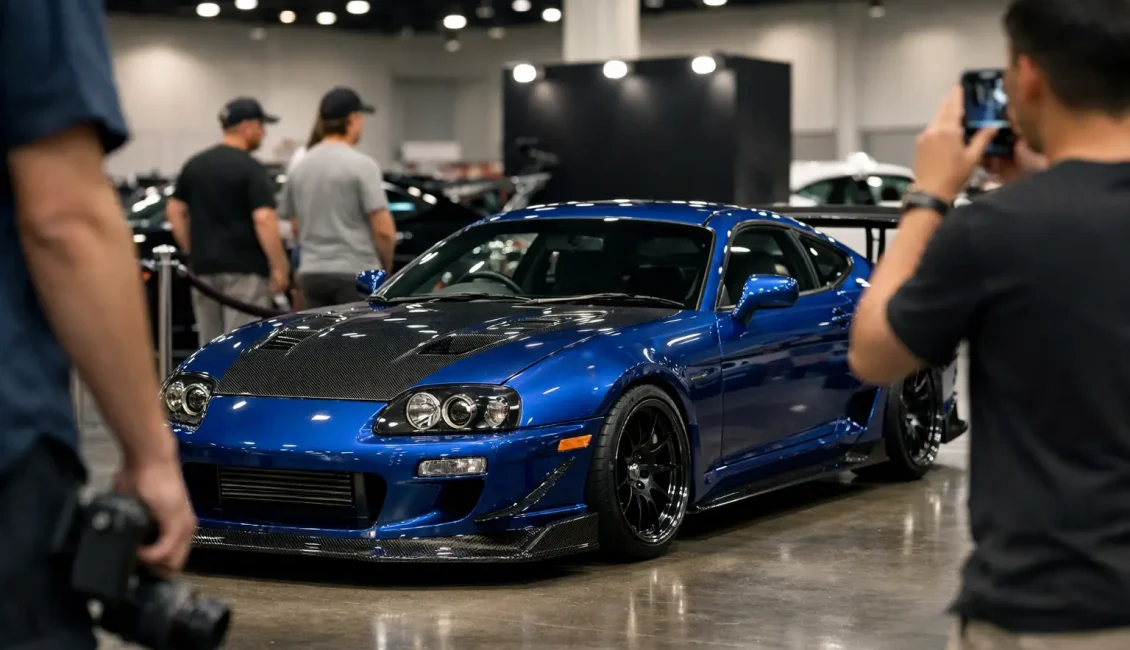
There is a big difference between owning a great build and exhibiting your modified car well. At a show, people are not just looking at power figures, wheel fitment or paint depth. They are reading the whole presentation – how the car sits, how clean it is, how the details come together, and whether the owner clearly cares about every part of the build.
That is exactly why showing a modified car is such a good part of the scene. It is not only about trophies or attention. It is about putting your work in front of people who understand what they are looking at, swapping ideas with fellow enthusiasts, and enjoying the buzz that only a live event can create.
Why exhibiting your modified car is different from a casual meet
A proper show crowd notices the finer points. They will spot the quality of the bodywork, the finish inside the engine bay, the choice of parts, and whether the modifications suit the car rather than overwhelm it. That means preparation matters far more than it does at a supermarket car park meet or a quick Sunday morning gathering.
It also means context matters. A modified hatch with a thoughtful period-inspired build can pull just as much attention as a high-horsepower performance car if it is presented properly. Visitors respond to authenticity. If your car has a clear identity, whether that is OEM+, track-focused, stance-led, retro custom or full show build, people tend to engage with it more readily.
There is also the venue itself to think about. At a major regional event, your car becomes part of a much bigger spectacle. That is part of the appeal. The setting, the variety of vehicles around you, and the steady flow of visitors all raise the standard. If you are exhibiting at a quality event, your car deserves to look ready for it.
Start with the details people notice first
Before anyone asks what turbo you are running or who mapped it, they will notice the basics. Paintwork, glass, wheels, tyres, trim and stance do the heavy lifting in those first few seconds. If the car looks sharp from ten feet away, people are far more likely to stop and take a proper look.
Cleanliness is the obvious starting point, but show prep goes beyond a wash. Tar spots, brake dust, cloudy plastics, water marks and greasy door shuts can undo an otherwise excellent build. The same goes for the interior. A spotless cabin with tidy mats, clean seats and no clutter instantly lifts the whole car.
Wheels deserve extra attention because visitors always look at them. Clean barrels, dressed tyres and blemish-free faces make a bigger impact than many owners realise. If your setup is one of the car’s headline features, make sure it earns that status on the day.
How to prepare for exhibiting your modified car
The best approach is to prepare in stages rather than leaving everything until the night before. Mechanical confidence comes first. If the car is going to a public event, it needs to arrive without drama. Check fluid levels, tyre pressures, battery health and anything else that could turn a good day into a recovery job.
Then think about what kind of show car you are presenting. A road-driven modified car can still look excellent, but it needs a realistic prep plan. If you drive to the venue in typical British weather, you may need a quick wipe-down kit for the final touch once parked. Microfibres, detailing spray, glass cleaner and tyre dressing can make all the difference.
If the car has quirks, be honest with yourself about them. A stripped-out track build with stone chips and hard-used tyres tells a different story from a polished indoor-style show car, and that is fine. What matters is that the condition matches the personality of the build. People can tell when a car is meant to be used, but they can also tell when it has simply been neglected.
Documentation can help too. If your modifications are unusual or technically interesting, a simple display sheet can give visitors context. Keep it clean and readable. You do not need to list every bolt-on part, just enough to explain the thinking behind the build.
Presentation on the day matters as much as the build
Once you are parked up, your pitch becomes part of the display. A well-positioned car with the wheels straight, the cabin tidy and the bodywork free of road grime looks instantly more professional. Small touches count. Remove rubbish, hide cleaning products, and avoid leaving bags or coats draped inside the car.
Bonnet up or bonnet down depends on the build. If the engine bay is a major feature and genuinely finished to a strong standard, show it off. If the exterior is the star and the bay is less developed, there is no shame in keeping it closed. The same applies to boots and doors. More open panels do not always mean a better display.
It is worth thinking about how people will move around the car. Give visitors room to appreciate it properly and take photos without having to squeeze past chairs, cool boxes or club kit. If you are part of a stand, work with the wider layout rather than treating your car like a separate island.
The story behind the car can be your biggest advantage
Some modified cars stop people because of the finish. Others do it because of the story. Maybe it is a long-term home build, a family project, a faithful recreation of a period style, or a platform that people rarely see modified well. Those details create conversation, and conversation is a huge part of show culture.
That is one reason exhibiting appeals to such a wide crowd. You do not need the most expensive build on the field to get noticed. If the car has character and you are happy to talk about it, people remember it. Enthusiasts love hearing why you chose certain parts, what challenges you faced, and what the next phase of the build might be.
Trade-offs matter here as well. A car built for outright performance may not have the pristine finish of one designed purely for display. A car with aggressive fitment may be harder to drive long distances. A period-correct build might skip modern conveniences in favour of authenticity. Those compromises are part of what makes modified cars interesting.
What judges, photographers and visitors often respond to
There is no single formula, which is part of the fun. Some people are drawn to immaculate detailing. Others care most about engineering, originality or period style. But consistency almost always stands out. When the wheels, ride height, paint, interior and engine bay all feel like they belong to the same vision, the car lands better.
Photographers also tend to favour clean presentation. Smudged glass, crooked number plates, dusty dashboards and uneven tyre shine can show up far more in pictures than they do in person. If you want your car to look strong in event coverage, think like a camera as well as a visitor.
Visitors, meanwhile, respond to enthusiasm. If you are approachable and clearly passionate about the build, people are more likely to stop, ask questions and share your car with others. That human side is one of the best reasons to bring a modified vehicle to a well-run event in the first place.
Make the most of the event, not just the parking spot
A good show day is not only about setting up your car and standing beside it. It is about being part of something bigger. Walk the venue, chat to traders, look at other builds and soak up the atmosphere. That wider experience is why major event weekends continue to draw such a loyal following across the UK.
If you are new to the scene, exhibiting at an established event can be the quickest way to raise your standards. You see what works, what does not, and where your own build sits among other cars in the category. Great British Motor Shows brings together exactly that kind of variety, from polished show builds to characterful road cars and serious performance machinery.
The key is to enjoy the process. Do the prep, present the car properly, and be ready for people to notice the details you spent months getting right. And if they also spot the bits you still want to improve, even better – that usually means they get it.