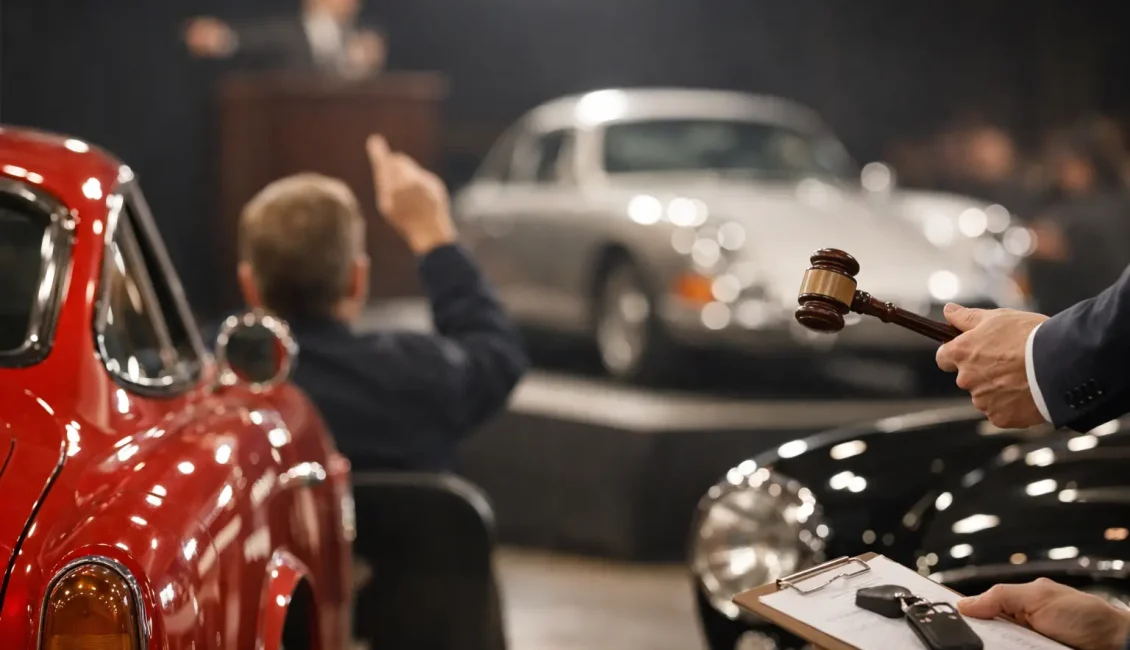
The saleroom falls quiet, the auctioneer calls for another bid and suddenly the car you have watched for months is within reach. Knowing how to buy your classic at auction means being ready for that moment long before the hammer comes down. A great auction can put you in front of rare machinery, honest usable classics and genuine projects, but excitement is no substitute for preparation.
Buying at auction should be brilliant fun. It is also a binding transaction, usually made at speed, with buyer’s fees and paperwork to consider. Go in with a clear plan and you can enjoy the spectacle while giving yourself the best chance of driving home with the right car.
Start with the right classic, not the loudest listing
Before browsing catalogues, decide what you want the car to do. Is it a sunny Sunday runabout, a family-friendly show car, a long-distance tourer, a track-day toy or a restoration project? The answer changes what matters most. A concours MGB may be worth paying a premium for if you want a pride-and-joy show vehicle. For regular use, a smart, mechanically sound car with a few honest cosmetic imperfections can be the more sensible buy.
Set your model, preferred specification and non-negotiables before auction day. Be realistic about colours, transmission, mileage and originality. If you only want a manual, matching-numbers car in a particular colour, you may need patience. If you are open to a later engine, a respray or a left-hand-drive example, the field broadens considerably.
Spend time following completed sales, not just guide prices. The strongest cars attract strong money, especially when they have comprehensive history, desirable options and a presentation that inspires confidence. Equally, a low estimate can reflect a genuine question mark rather than a hidden bargain.
Read the catalogue like a buyer
Auction descriptions are useful, but they are not a substitute for inspecting the vehicle. Pay close attention to the wording. Phrases such as “believed to be”, “appears to”, “reported to” and “requires recommissioning” tell you that a point has not been independently guaranteed. Read every available image, including underside photographs, engine-bay shots and pictures of panel gaps.
The important details are often in the documentation. Look for the V5C, chassis and engine numbers, MOT history, restoration invoices, old tax discs, handbooks and correspondence from previous owners. A thick history file is encouraging, but quality matters more than quantity. Invoices that show who carried out the work, when it was completed and what parts were used are far more valuable than a stack of unexplained receipts.
For imported cars, establish whether UK registration is complete and whether the NOVA position is clear. If you are buying a competition car, a modified classic or something unusual, check what is road legal, declared to insurers and supported by the paperwork. The car may be spectacular, but a missing document can turn a dream purchase into an expensive delay.
Understand condition and originality
A classic can look superb under bright auction lighting and still need serious work. Paint can conceal corrosion, freshly applied underseal can hide a tired underside, and a detailed engine bay does not prove a healthy drivetrain. On a classic, body structure is often the biggest financial question. Rust around sills, chassis rails, suspension mounts, floors, inner wings and screen surrounds can be far more costly than a worn interior or tired chrome.
Originality is not always a virtue in itself. Sensible upgrades such as improved cooling, electronic ignition, better brakes or a five-speed gearbox may make a car more enjoyable. Their value depends on the model and the buyer. A rare, highly original collector car may be harmed by irreversible modifications; a usable performance classic may benefit from well-documented improvements.
Inspect before you bid
Whenever possible, attend the viewing. Take a torch, wear clothes you do not mind getting dusty and allow enough time to look properly rather than rushing between lots. If you are new to the model, bring someone who knows it well or arrange a professional inspection. The cost can feel frustrating when you are chasing a bargain, but it is modest beside an engine rebuild or structural restoration.
Check panel fit, paint consistency, tyres, glass, trim and signs of water ingress. Look beneath carpets where practical, examine the boot floor and inspect the underside. Open and close doors, bonnet and boot. Start the car if the auction house permits it, listen for smoke or knocks, and watch for warning lights. A short start-up is not a road test, so do not assume the gearbox, clutch, brakes or cooling system are faultless.
Ask the auction specialist direct questions. Has the car been driven recently? Is there a condition report? Are there known faults? What documents are present? Do not be embarrassed to ask. Good specialists expect serious buyers to do their homework, and their answers can help you judge whether a car suits your appetite for risk.
Set your all-in limit before the auction starts
The hammer price is not your final price. You will normally pay a buyer’s premium, and VAT may apply to that premium or, in some cases, the lot itself. There may also be online bidding charges, card payment limits, storage fees if collection is delayed, transport costs and immediate insurance requirements.
Work backwards from the absolute maximum you can afford. Include a sensible contingency for first jobs after purchase: servicing, fluids, tyres, brakes, battery, recovery and the little consumables that soon add up. If you are looking at a project, add a much larger contingency. Restoration budgets have a habit of growing once the car is stripped down.
Write your maximum hammer bid down and keep it private. Auction adrenaline is real. One extra bid can feel harmless in the room, but it may take you past the point where the car remains enjoyable financially. There will always be another classic, even when this one looks perfect beneath the lights.
How to buy your classic at auction on the day
Register early and make sure you understand the auction house’s terms, accepted payment methods and collection deadlines. If you are bidding online or by telephone, test the process well before your chosen lot appears. A weak signal, an unverified account or a delayed call is a poor reason to miss a car you have researched properly.
When the lot enters the room, stay calm. The auctioneer may move quickly, and bidding can come from the floor, phones, internet and commission bids. Bid clearly and only when you mean it. There is no prize for being the first bidder, and waiting can give you a better read on where genuine interest lies.
If the car does not meet reserve, it may be marked as provisional. This is not a sale until the seller accepts the offer or a figure is agreed. If you are interested, speak to the specialist promptly and stick to your limit. A provisional negotiation can be useful, but it should not become an excuse to abandon the numbers you set earlier.
After the hammer: protect the purchase
Once successful, confirm exactly what you have bought and what is included. Collect the lot paperwork, settle the balance within the stated period and arrange insurance before moving the vehicle. Even a car with a valid MOT may not be ready for a long drive home, particularly if it has been standing or has just emerged from storage.
Professional covered transport is often the calmest option for an unfamiliar classic, a non-runner or a high-value car. If you plan to drive it away, check fuel, fluids, tyre condition and recovery cover first. Keep the first journey gentle and treat it as a shakedown, not a victory lap.
Then give the car a proper baseline check with a trusted specialist. Fresh fluids, a thorough safety inspection and an understanding of what needs attention now, soon and eventually will help you enjoy ownership from the start. The best classics are not always the flawless ones. They are the cars you understand, can maintain and genuinely want to bring out for the next show season.
A well-bought classic has a story before you even turn the key. Do the homework, hold your nerve and leave room in the budget for the miles, events and conversations that make ownership worthwhile.