
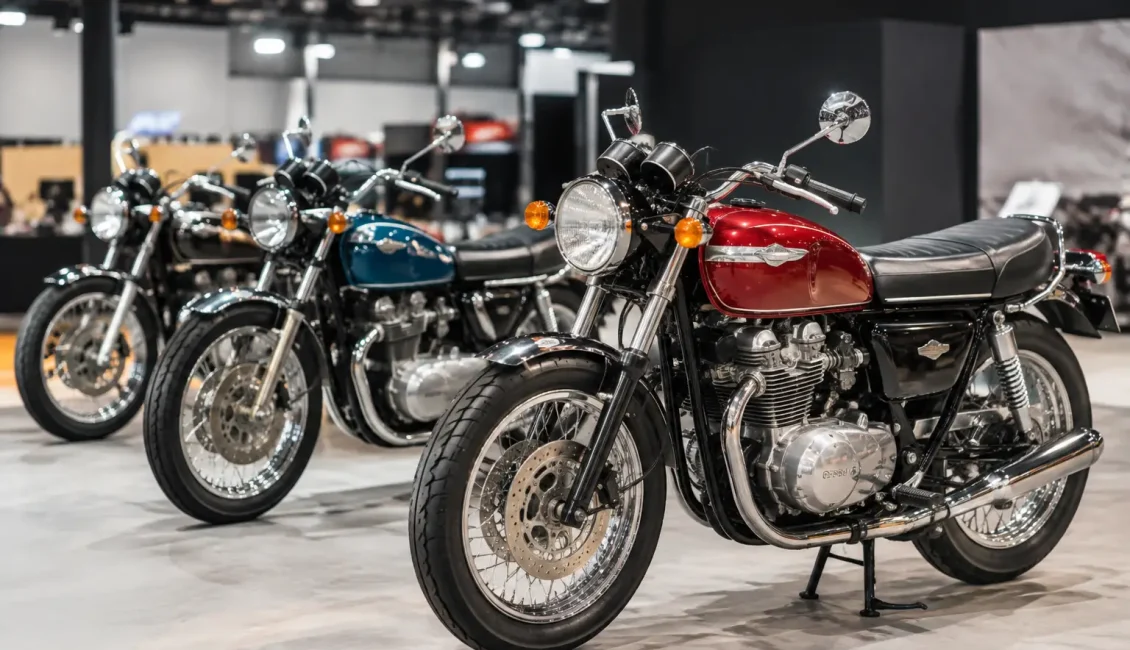
A classic motorcycle does not need a velvet rope to command a crowd. Park a well-used Vincent beside a polished Ducati 916, add the sharp crackle of a Norton twin firing up nearby, and you have the kind of moment that stops visitors mid-conversation. The best classic motorcycles at shows are not always the rarest or most expensive machines. They are the bikes with a story, a presence and enough character to make people lean in for a closer look.
At a great motoring event, motorcycles bring a different energy to the display field. Their engineering is on show, their details are close enough to study, and every machine seems to invite a conversation about first bikes, long rides, restorations and garage ambitions. Whether you are a lifelong rider, a collector or simply drawn to beautiful mechanical design, these are the classics worth seeking out.
Best Classic Motorcycles at Shows: What Draws a Crowd
A show-stopping classic is usually more than a catalogue-perfect example. Originality matters, particularly on a rare machine, but so does presentation. A lovingly ridden BSA with period luggage, old tax discs and a believable patina can be every bit as engaging as a concours restoration with flawless paintwork.
The strongest displays also reveal the range of motorcycling history. Britain’s great post-war twins and singles remain central to any classic show, yet visitors are increasingly drawn to Japanese engineering, Italian style, German touring capability and the smaller-capacity machines that introduced generations of riders to two wheels.
Condition will always spark debate. Some enthusiasts want every correct fastener and factory finish. Others would rather see a machine preserved honestly, with signs of a life spent on the road. Both approaches have a place at a show, provided the bike is presented with care and its owner is ready to share what makes it special.
British Legends That Never Lose Their Appeal
Triumph Bonneville
Few names carry more weight in British motorcycling than the Bonneville. The classic parallel twin has the proportions people expect from a traditional British bike: a long, slim tank, exposed engine, wire wheels and a purposeful stance. Early T120 models are especially prized, while later T140s offer a slightly different flavour and can be a more approachable route into ownership.
At a show, a Bonneville works because it appeals across generations. Older visitors may remember them as everyday transport or the machine they wanted in the 1960s and 1970s. Younger fans recognise a design that still looks right decades later. A clean standard bike is a winner, but period café racer conversions and tastefully modified examples can be just as compelling.
Norton Commando
The Norton Commando has real visual drama. Its muscular tank, upswept exhausts and famous Isolastic frame system make it a proper talking point, even before discussion turns to its road manners. Commandos were built in several forms, including the Fastback, Roadster and Interstate, each with its own following.
A beautifully presented Commando has a certain presence that suits a historic estate or parkland showground. Look closely and you will often find the details that define an owner’s restoration journey: correct instruments, carefully sourced badges, original switchgear and the right exhaust note. It is a bike that rewards a second look.
BSA Gold Star and Bantam
The Gold Star is one of the great single-cylinder sporting motorcycles, celebrated for its racing pedigree and unmistakable exhaust beat. Genuine examples are serious collector machinery, so a Gold Star on display will draw knowledgeable attention quickly. Provenance, engine specification and period-correct parts all matter here.
The BSA Bantam offers a different kind of charm. Small, approachable and full of post-war character, it reminds visitors that classic motorcycling is not reserved for big-bore performance machines. A well-restored Bantam often attracts as many smiles as a far more valuable bike because so many people have a family connection to one.
Vincent Black Shadow
The Vincent Black Shadow occupies rarefied territory. It was astonishingly advanced and fast for its era, and its blacked-out mechanical presence still looks formidable. Seeing one in person is an occasion, particularly when an owner is willing to explain the ingenious engineering that made the marque legendary.
It is worth remembering that rarity alone does not make a display. A Vincent parked with clear information about its history, restoration or long-term ownership becomes far more memorable than one left anonymous. The best show bikes create a link between the machine and the people who have kept it alive.
Japanese Classics With Serious Show Presence
Japanese motorcycles transformed the market, and they now hold a secure place among the most admired machines on show fields. Their build quality, innovation and enduring reliability make them particularly attractive to riders who want to enjoy their classics rather than only transport them in a van.
Honda’s CB750 is the obvious landmark. With its transverse four-cylinder engine, front disc brake and imposing proportions, it changed expectations when it arrived. Early sandcast cases are especially collectible, but later examples still have huge appeal and look superb as part of a line-up of 1970s superbikes.
Kawasaki’s two-stroke triples bring a very different atmosphere. The Mach III and later H2 are famous for their wild reputation, bright colours and unmistakable sound. They may not be the ideal choice for every rider, but on a show stand they deliver theatre in abundance.
Then there is the Suzuki GSX-R750, a machine now old enough to be recognised as a true classic. Early oil-cooled examples signal the arrival of race-replica culture, with their lightweight alloy frames and purposeful bodywork. They attract visitors who grew up with 1980s and 1990s performance bikes, proving that the definition of classic keeps moving forward.
Italian and European Icons Worth Finding
Italian motorcycles bring colour, sound and sculpture to a classic display. A Ducati 900SS, bevel-drive 750 Sport or early Monster has instant visual impact, while the brand’s racing heritage gives owners plenty to discuss. Bevel-drive Ducatis in particular reward close inspection, with their distinctive engine architecture and hand-built feel.
Moto Guzzi offers another unmistakable silhouette. The transverse V-twin, visible cylinders and shaft drive make models such as the Le Mans stand out in any row. They combine sporting intent with a sense of purposeful engineering, and a well-kept example often attracts riders who appreciate a machine with a strong mechanical identity.
BMW classics may be more understated, but they are no less important. The /5 and /6 airheads, along with earlier boxer twins, have a loyal following for good reason. Their horizontally opposed engines, practical design and touring heritage make them ideal examples of motorcycles built to cover real miles. A travel-worn BMW with period panniers can tell a richer story than a pristine museum piece.
How to Enjoy the Classic Bike Displays Properly
Start by slowing down. It is easy to scan a display for famous badges, but some of the most interesting machines are the less obvious ones: a Velocette with unusual competition history, a tidy Yamaha RD250, a restored Ariel or a humble commuter that has survived against the odds.
Talk to owners when they are free. Most have spent years sourcing parts, learning specialist skills or tracing a bike’s history. Ask what drew them to the model, whether it has been restored or preserved, and how it rides. You will usually leave with a better story than any specification board can provide.
Photography is part of the day, but take a moment without a mobile phone as well. Notice the casting marks on an old engine, the wear on a kickstart lever, the stitching on a seat or the way sunlight catches the chrome. These small details are why motorcycles have such power in a live setting.
For owners bringing a bike to an event, presentation need not mean perfection. Arrive clean, safe and proud of the machine you have brought. A simple display card with the model, year and a few lines on its history gives visitors an opening to engage. If the bike has travelled to the venue under its own power, say so. That is often the detail people remember.
Why Classic Bikes Belong at Every Great Motor Show
Motorcycles add scale, sound and personality to a broader motoring gathering. They sit naturally alongside classic cars, modified builds and performance machinery, but they offer a more intimate view of the engineering. Visitors can see the engine, suspension, controls and craftsmanship without opening a bonnet.
They also broaden the day out. One member of the family may arrive to admire a rare sports car and leave talking about a childhood Bantam. A collector may come looking for a particular model and discover a local club, a restoration specialist or the encouragement to finally start a project. That sense of shared enthusiasm is exactly what makes live events worth attending.
At Great British Motor Shows, the strongest vehicle displays are built by people who care enough to bring their stories with them. Keep an eye on the bike line-ups, make time for the quieter corners of the showground, and you may find the machine that stays in your mind long after the engines have gone silent.




 Image: CORGI
